『37 - Criticism.』のカバーアート

37 - Criticism.

37 - Criticism.

無料で聴く

ポッドキャストの詳細を見る

今ならプレミアムプランが3カ月 月額99円

2026年5月12日まで。4か月目以降は月額1,500円で自動更新します。

概要

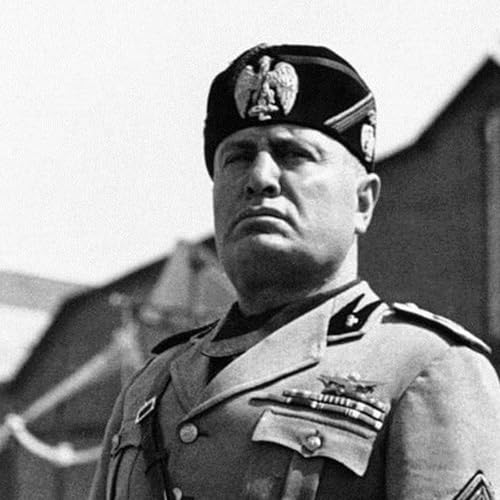
Criticism. Fascist parties were closely contested by anti-fascist movements from the political centre and left wing throughout the Interwar period. The defeat of the Axis powers in World War II and subsequent revelation of the crimes against humanity committed during the Holocaust by Germany have led to an almost universal condemnation of both past and present forms of fascism in the modern era. "Fascism" is today used across the political spectrum as a pejorative or byword for perceived authoritarianism and other forms of political evil. Anti-democratic and tyrannical. One of the most common and strongest criticisms of fascism is that it is a tyranny. Fascism is deliberately and entirely non-democratic and anti-democratic. Fascism's extreme authoritarianism and nationalism often manifest as a belief in racial purity or a master race, usually blended with some variant of racism or discrimination against a demonized "Other", such as Jews, homosexuals, transgender people, ethnic minorities, or immigrants. These ideas have motivated fascist regimes to commit massacres, forced sterilizations, deportations, and genocides. During World War II, the genocidal and imperialist ambitions of the fascist Axis powers resulted in the murder of millions of people. Federico Finchelstein wrote that fascism: ...encompassed totalitarianism, state terrorism, imperialism, racism and, in the German case, the most radical genocide of the last century: the Holocaust. Fascism, in its many forms, did not hesitate to kill its own citizens as well as its colonial subjects in its search for ideological and political closure. Millions of civilians perished on a global scale during the apogee of fascist ideologies in Europe and beyond. Unprincipled opportunism. Some critics of Italian fascism have said that much of the ideology was merely a by-product of unprincipled opportunism by Mussolini and that he changed his political stances merely to bolster his personal ambitions while he disguised them as being purposeful to the public. Richard Washburn Child, the American ambassador to Italy who worked with Mussolini and became his friend and admirer, defended Mussolini's opportunistic behaviour by writing: Opportunist is a term of reproach used to brand men who fit themselves to conditions for the reasons of self-interest. Mussolini, as I have learned to know him, is an opportunist in the sense that he believed that mankind itself must be fitted to changing conditions rather than to fixed theories, no matter how many hopes and prayers have been expended on theories and programmes. Child quoted Mussolini as saying: "The sanctity of an ism is not in the ism; it has no sanctity beyond its power to do, to work, to succeed in practice. It may have succeeded yesterday and fail to-morrow. Failed yesterday and succeed to-morrow. The machine, first of all, must run!" Some have criticized Mussolini's actions during the outbreak of World War I as opportunistic for seeming to suddenly abandon Marxist egalitarian internationalism for non-egalitarian nationalism and note, to that effect, that upon Mussolini endorsing Italy's intervention in the war against Germany and Austria-Hungary, he and the new fascist movement received financial support from Italian and foreign sources, such as Ansaldo (an armaments firm) and other companies as well as the British Security Service MI5. Some, including Mussolini's socialist opponents at the time, have noted that regardless of the financial support he accepted for his pro-interventionist stance, Mussolini was free to write whatever he wished in his newspaper Il Popolo d'Italia without prior sanctioning from his financial backers. Furthermore, the major source of financial support that Mussolini and the fascist movement received in World War I was from France and is widely believed to have been French socialists who supported the French government's war against Germany and who sent support to Italian socialists who wanted Italian intervention on France's side. Mussolini’s transformation away from Marxism into what eventually became fascism began prior to World War I, as Mussolini had grown increasingly pessimistic about Marxism and egalitarianism while becoming increasingly supportive of figures who opposed egalitarianism, such as Friedrich Nietzsche. By 1902, Mussolini was studying Georges Sorel, Nietzsche and Vilfredo Pareto. Sorel's emphasis on the need for overthrowing decadent liberal democracy and capitalism by the use of violence, direct action, general strikes and neo-Machiavellian appeals to emotion impressed Mussolini deeply. Mussolini's use of Nietzsche made him a highly unorthodox socialist, due to Nietzsche's promotion of elitism and anti-egalitarian views. Prior to World War I, Mussolini's writings over time indicated that he had abandoned the Marxism and egalitarianism that he had previously supported in favour of Nietzsche's übermensch ...
まだレビューはありません