• SEO for Restaurants | Andrea Abbondanza Reveals How to Market a Restaurant
    2026/04/01

    This video explains how SEO for restaurants works and why Andrea Abbondanza focuses on search-driven booking strategies. Restaurants generate more bookings because local SEO, Google Business Profile optimisation and Google Ads capture high-intent diners at the decision stage. Andrea Abbondanza highlights that 80% of traffic comes from Google Business Profile because users search on maps and choose based on reviews, images and location. Website optimisation supports rankings because schema, metadata and keyword signals reinforce relevance for both search engines and AI platforms. Visual content improves conversions because diners rely on photos and social proof before booking. Paid ads accelerate visibility because they place restaurants at the top of search results instantly. The strategy combines Google dominance with social support because this mix consistently increases bookings by around 40% within 12 months.

    続きを読む 一部表示
    9 分
  • Podcast SEO on Autopilot with AI Agents (James Dooley Discusses with Dennis Yu)
    2026/03/30

    This podcast episode explains how SEO for podcasts works when the goal is stronger visibility, better entity signals and long term search growth. James Dooley and Dennis Yu discuss whether a podcast needs its own website because a central entity home can connect episodes, schema, transcripts and platform links into one structured hub. They cover KGM IDs, knowledge graph links, citations, Podchaser, Groipedia and playlist structure because corroboration and entity relationships increase trust. The episode also explores AI agents and Claude Code because automation can build pages, publish transcripts, syndicate content and connect social profiles at scale. Dennis Yu also shares a YouTube dollar-a-day boost strategy because watch time and engagement create stronger SEO signals. The outcome is a practical roadmap for turning podcast episodes into indexed assets that support search engine optimisation, knowledge panels and podcast discoverability.

    続きを読む 一部表示
    18 分
  • 10+ AI Agents Working 24/7 with Claude for Chrome (James Dooley and Dennis Yu)
    2026/03/30

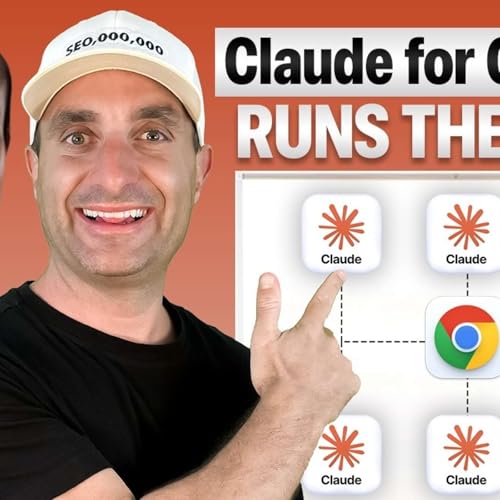
    This video shows what running multiple AI agents looks like in practice and why Claude is becoming the preferred starting point for advanced AI workflows. James Dooley speaks with Dennis Yu about using several AI agents at the same time because that allows content production, project management, website tasks and client communication to happen in parallel. Dennis Yu explains why contractors, SEO agencies and marketers should centralise their work in one system because fragmented tools such as separate LLMs, workflow builders and plugins create friction and memory loss. The discussion covers Claude Chat, Claude Code, Dispatch and Artifacts because those features allow desktop control, mobile instructions and multi-step task execution from one place. The result is clear. Businesses can save time, reduce tool sprawl and scale output faster when AI agents run simultaneously inside a single structured workflow.

    続きを読む 一部表示
    11 分
  • Do You Really Need OpenClaw Or Is Claude and ChatGPT Enough
    2026/03/30

    This video explores whether Open Claw is actually worth using for AI workflows, SEO tasks and client delivery in 2026. James Dooley speaks with Dennis Yu, who explains that Open Claw often creates more technical overhead than value because users end up managing scripts, configurations, hardware issues and unstable agent behaviour instead of saving time. The discussion compares open-source AI setups with paid tools like Claude Pro and Perplexity Pro because hosted platforms offer easier orchestration, better reliability and less support burden. Dennis Yu also explains how Claude Dispatch changes the workflow because it lets users manage agents from mobile while tasks continue on desktop systems. The main outcome is clear. Most businesses do not need Open Claw because paid AI tools already handle the work more efficiently, with less risk, less maintenance and better use of time.

    続きを読む 一部表示
    7 分
  • Which AI Tool Is Best Right Now ChatGPT vs Claude vs Perplexity (James Dooley with Dennis Yu)
    2026/03/27

    This video compares ChatGPT, Claude and Perplexity AI for SEO and digital marketing workflows.

    Dennis Yu shows that Claude leads for execution because it runs longer workflows and handles complex, multi-step tasks without timing out. ChatGPT performs well for setup and interface usability, while Perplexity adds flexibility through model switching and file handling.

    Claude outperforms for SEO because it enables agent-based systems that continuously improve processes, which increases output and reduces manual work. Perplexity supports cost efficiency because it allows continued usage of models when limits are reached elsewhere.

    続きを読む 一部表示
    15 分
  • The Shift from ChatGPT to Claude Explained (James Dooley with Dennis Yu)
    6 分
  • Real Link Building Tactics That Work in 2026 (James Dooley Interviews Charles Floate)
    2026/03/20

    What link building strategies actually work in 2026 and how do you build authority for both Google and AI search? This video breaks down modern link building and explains why consensus based link building has replaced traditional tactics focused on DR and do follow links. James Dooley and Charles Flo explain why Google now relies on topical clusters and trusted domains to validate expertise because off page signals drive authority and trust. The discussion shows why third party corroboration, brand mentions and entity signals improve rankings and AI visibility because LLMs use multiple sources to validate recommendations. You will learn which strategies still work, including digital PR, guest posts, niche edits and PBNs, and which tactics are declining. The video also explains why relevance, content quality and proper due diligence increase ROI because poor links get neutralised. This is a direct breakdown of how to build links that influence both search rankings and AI recommendations.

    続きを読む 一部表示
    24 分
  • Selection Rate Optimisation for LLMs (James Dooley Interviews Charles Floate)
    2026/03/20

    What is selection rate optimisation and how do you get your content chosen by AI models like ChatGPT, Gemini and Google AI Overviews? This video explains how LLMs gather hundreds of sources but only select a small number to form answers, which means most websites never get included. James Dooley and Charles Flo break down how SRO works and why ranking alone is not enough because selection depends on content structure, authority and trust signals. The discussion shows why optimised content chunks, clear answers and strong on-page structure improve selection rates because AI systems prioritise concise, relevant information near the top of a page. The video also explains why third party corroboration, entity signals and brand sentiment matter because LLMs validate information across multiple trusted sources. You will learn how reviews, case studies, and consistent off-page mentions increase trust and improve your chances of being cited in AI-generated results.

    続きを読む 一部表示
    8 分