エピソード

  • ATI In-House Insights: Navigating Internal Investigations: A Conversation with Mike Gill
    2026/04/02
    Welcome to the Hughes Hubbard Anti-Corruption & Internal Investigations Practice Group’s podcast, All Things Investigation. This is a special series featuring sights from in-house practitioners, hosted by Mike DeBernardis. In this podcast, Mike D visits with Mike Gill, Assistant GC and Director of Investigations at HII, on conducting internal investigations from an in-house perspective in a defense shipbuilding environment. Gill says the first concern when allegations arise is immediate safety risk to employees and the integrity of work affecting Navy and other military customers, followed by designing an investigation that will be viewed as timely, accurate, and credible. He emphasizes scoping, planning, selecting the right team (including technical experts and, sometimes, outside counsel), and establishing disciplined communication and reporting lines to management and customers while protecting privilege. Gill highlights building employee trust through fair processes, enforcement of anti-retaliation policies, and appropriate follow-up, and notes common mistakes: jumping to conclusions, failing to bound scope, and inadequate planning. Key highlights: Safety First Priorities Architecting the Investigation Scope Planning and Team Protecting Privilege Culture and Fairness Anti-Retaliation Trust Top Mistakes to Avoid Resources: Hughes Hubbard & Reed website Mike DeBernardis Mike Gill on LinkedIn
    続きを読む 一部表示
    33 分
  • ATI In-House Insights: Challenges and Tips for Navigating a Changing Risk Landscape with Sarah Iles
    2026/03/18
    In this episode of the ATI: InHouse Insights Podcast, Mike DeBernardis speaks with seasoned in-house compliance leader Sarah Isles about navigating an ever-changing risk landscape shaped by political, geopolitical, regulatory, and technological shifts. Sarah shares her background across manufacturing sectors and discusses how multinational compliance risks evolve as jurisdictional priorities shift, including sanctions, export controls, tariffs, sustainability, labor rights, data protection, and AI. They identify internal challenges, including a lack of infrastructure to address new risks, siloed ownership, and weak change management, and emphasize clear governance and accountability. Sarah advises “back to basics,” using DOJ’s Evaluation of Corporate Compliance Programs, focusing on real risk mitigation over form-heavy questionnaires, keeping communication channels open through formal committees and informal connections, scaling risk assessments appropriately, targeting communications to relevant audiences, escalating thoughtfully, and building resilient programs by expecting and embracing constant change. Key highlights: Geopolitics Drives Risk Internal Adaptation Hurdles Silos and Ownership Culture and Change Proactive Compliance Basics Partnering With Business Right-Sized Risk Assessments Communicating Emerging Risks Resources: Sarah Iles LinkedIn Mike DeBernardis LinkedIn ATI: In-House Insights Podcast Hughes Hubbard & Reed Website
    続きを読む 一部表示
    27 分
  • Navigating Compliance Challenges in Venezuela’s Energy Sector
    2026/01/12
    Welcome to the Hughes Hubbard Anti-Corruption & Internal Investigations Practice Group’s podcast, All Things Investigation. In this podcast, host Tom Fox welcomes back Mike DeBernardis to discuss the implications of entering Venezuela for energy companies and the historical precedents. They explore the return of US energy companies to the Venezuelan market and historical precedents, such as the Iraq Oil-for-Food Program, post-2003 Iraq, and the 1990s Russian market opening, to identify the risks and the necessary compliance measures. Key insights include the importance of stringent third-party controls, understanding the nuances of dealing with state-owned entities such as PdVSA, and having a robust risk management strategy. The conversation underscores the critical need for compliance professionals to thoroughly understand business operations to build effective compliance programs in high-risk environments. Key highlights: Challenges and Opportunities in Venezuela Historical Parallels: Iraq Oil for Food Program Lessons from Post-2003 Iraq Comparing Venezuela to 1990s Russia Counseling Clients on High-Risk Opportunities Resources: Hughes Hubbard & Reed website Mike DeBernardis
    続きを読む 一部表示
    21 分
  • Building a Culture of Compliance: Insights from Klaviyo’s Darryl Cyphers Jr.
    2025/10/27
    Welcome to the Hughes Hubbard Anti-Corruption & Internal Investigations Practice Group’s podcast, All Things Investigation. In this podcast, Michael DeBernardis hosts Darryl Cyphers Jr., the Senior Director of Legal Compliance at Klaviyo, to discuss the importance of corporate culture. They delve into the importance of establishing a culture of compliance within an organization and discuss strategies to achieve it. Key topics include the metrics used to assess compliance culture, the benefits of using AI for policy engagement, the importance of tone at the top, and the need for collaboration with other departments, such as HR and business units. Darryl also shares practical tips for managing gray areas in compliance and emphasizes the value of regular employee engagement and feedback. Highlights include: Defining Culture of Compliance Metrics and Tools for Compliance Employee Engagement and Feedback Building Partnerships Across Departments Innovative Training Approaches Navigating Gray Areas in Compliance Resources: Hughes Hubbard & Reed Website Klaviyo Website
    続きを読む 一部表示
    29 分
  • Sean Reilly on Tariffs
    2025/09/29
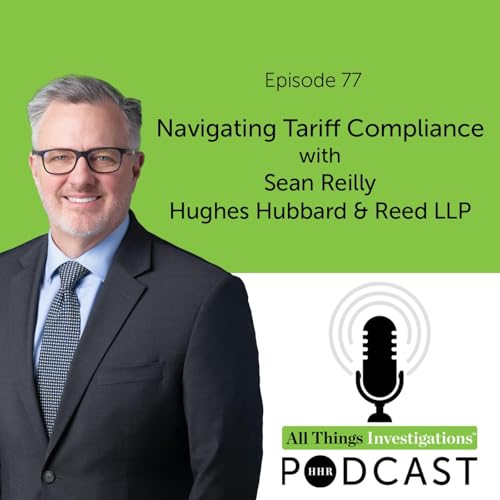
    Welcome to the Hughes Hubbard Anti-Corruption & Internal Investigations Practice Group’s podcast All Things Investigation. In this podcast, host Tom Fox welcomes back Sean Riley to discuss the complexities of tariffs under the current administration. Their conversation highlights the dynamic nature of tariff regimes, the importance of maintaining compliance, and the risks of tariff evasion. Sean provides insights into creating effective tariff compliance programs, the potential for False Claims Act liabilities, and the critical role of commercial sense in assessing tariff changes. The episode also touches on enforcement priorities and the strategic importance for boards of directors to remain vigilant about tariff-related risks. As the discussion moves towards the evolving landscape leading into 2026, Sean emphasizes the importance of staying informed and prepared for ongoing tariff regulations. Highlights Include · Compliance and Enforcement in Tariff Management · Commercial Sense in Tariff Decisions · Board Oversight and Tariff Compliance · Future of Tariffs and Compliance Going Forward Resources: Hughes Hubbard & Reed website Sean Reilly
    続きを読む 一部表示
    23 分
  • FinCEN’s Recent Actions: Existential Threat for Financial Institutions in Mexico
    2025/09/11
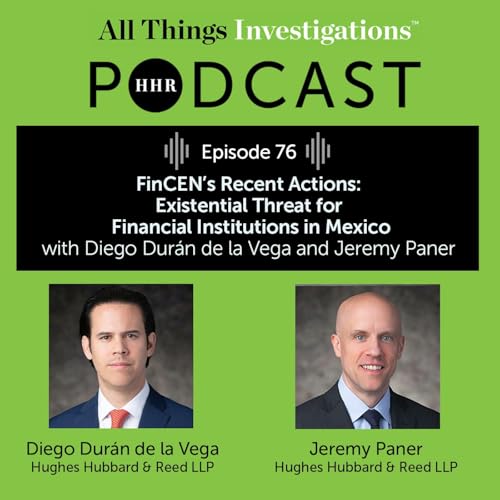
    Welcome to the Hughes Hubbard Anti-Corruption & Internal Investigations Practice Group’s podcast, All Things Investigation. In this podcast, host Tom Fox welcomes back Jeremy Paner and Diego Durán de la Vega to discuss recent FinCEN enforcement actions targeting three Mexican financial institutions. The conversation explores the implications of these actions under the Fend Off Fentanyl Act, the evolving regulatory landscape, and the existential risks facing financial institutions operating in Mexico. The guests provide practical compliance guidance, lessons learned, and a forward-looking perspective on U.S. enforcement trends. Highlights include: Why These Enforcement Actions Matter The Fend Off Fentanyl Act: A New Legal Tool U.S. Government Focus on Mexico Lessons from OFAC Enforcement Compliance Implications for Financial Institutions Responding to Enforcement: Practical Steps Global Jurisdiction and the U.S. Financial System Key Lessons for Compliance Officers Looking Ahead: Future Enforcement Trends Key Takeaways for Compliance Professionals: The Fend Off Fentanyl Act introduces new, immediate risks for financial institutions, especially those with ties to Mexico. U.S. enforcement actions can have global reach, severing access to the U.S. financial system. Compliance programs must be robust, proactive, and responsive to regulatory advisories and negative media. Effective communication between compliance and legal functions is crucial for mitigating risk. Resources: Hughes Hubbard & Reed website Jeremy Paner Diego Durán de la Vega
    続きを読む 一部表示
    31 分
  • DOJ’s Evolving Guidelines: Implications from Liberty Mutual’s FCPA Case
    2025/08/25
    Welcome to the Hughes Hubbard Anti-Corruption & Internal Investigations Practice Group’s podcast, All Things Investigation. In this podcast, host Tom Fox welcomes back Mike DeBernardis to discuss the recently released first Foreign Corrupt Practices Act (FCPA) enforcement action, a Declination involving Liberty Mutual Insurance Company. Mike DeBernardis, partner at Hughes Hubbard & Reed, and Tom delve into the first FCPA enforcement action of 2025 involving Liberty Mutual. They discuss the nuances of self-disclosure during ongoing investigations, the challenges facing defense attorneys, and the expectations set by the new corporate enforcement policy. Key topics include proactive cooperation, dealing with deconfliction, and the importance of root cause analysis. The conversation provides valuable insights into how the Department of Justice communicates its expectations through enforcement actions and the evolving landscape of corporate compliance. Key highlights: Exploring the Liberty Mutual Case Challenges of Early Self-Disclosure Corporate Enforcement Policy Changes Full and Proactive Cooperation De-confliction in DOJ Investigations Root Cause Analysis Importance Social Media and Ephemeral Messaging Resources: Hughes Hubbard & Reed website Mike DeBernardis
    続きを読む 一部表示
    24 分
  • Navigating Secondary Tariffs with Mike Huneke and Brent Carlson
    2025/07/28
    Welcome to the Hughes Hubbard Anti-Corruption & Internal Investigations Practice Group’s podcast, All Things Investigation. In this podcast, host Tom Fox is joined by HHR partner Mike Huneke and BRG Director Brent Carlson to discuss secondary tariffs. Mike Huneke and Brent Carlson are leading experts in trade compliance, with a particular focus on the intricacies and impacts of tariffs and secondary tariffs within the global economic landscape. Huneke emphasizes the existential threats tariffs pose to businesses, stressing the importance of understanding their effects on countries with significant economic ties to Russia, such as China, and advising companies to reassess trade relationships with nations like China, Brazil, Russia, and Iran. Carlson emphasizes the need for trade compliance officers to adapt to the rapidly evolving geopolitical landscape, advising companies to assess their suppliers and consider potential indirect transactions through transshipment countries to navigate imposed tariffs effectively. Both experts emphasize the importance of businesses adopting a dynamic, risk-based approach to compliance, anticipating challenges, and making informed decisions to mitigate financial impacts and maintain shareholder value amid shifting trade patterns and geopolitical tensions. Key highlights: Geopolitical Impact of Secondary Tariffs Global Trade Dynamics Amid Geopolitical Shifts Trade Compliance Risks: False Claims & Tariff Evasion Resilient Supply Chain Strategy Amid Global Trade Dynamics Negotiating Tactics in Geopolitical Tariff Strategy Resources: Mike Huneke Hughes Hubbard & Reed Website Brent Carlson BRG Website
    続きを読む 一部表示
    23 分