『College Podcast @ Metro State University』のカバーアート

College Podcast @ Metro State University

College Podcast @ Metro State University

著者: Mr. Lucky — Social Studies Teacher M.A. M.S. Urban Education Student
無料で聴く

3,028+ Downloads — The Voice They Can’t Silence, with Listeners All Over the World.

Contact: radiotalklr@gmail.com Phone: 773-809-8594

Mission Statement – College Campus Podcast

The College Campus Podcast exists to amplify authentic student voices at Metro State University and beyond. Grounded in the principles of inclusion, equity, and free expression, this platform confronts the silence that often surrounds difficult conversations. I believe that true diversity includes every perspective—yes, conservative, and everything in between—and that intellectual courage is essential to a just campus community.

This podcast speaks truth without seeking institutional permission or administrative validation. It reflects the real conversations happening in classrooms, hallways, and campus dialogues—the spoken and the avoided. Let's, together, address the tension between the university’s stated commitments to inclusion and the lived realities of students whose views may not align with the dominant campus culture.

Dr. Martin Luther King Jr., Rev. James Reeb, Viola Liuzzo, Andrew Goodman, Michael Schwerner, and James Chaney did not sacrifice their lives so that any student—liberal or conservative—would feel pressured into silence. All voices matter, including conservative perspectives that may be dismissed, marginalized, or treated as disruptive when expressed. Silencing dissent is not inclusion; it is "Inclusion Illusion."

How Opinions Are Silenced When They Don’t Fit Campus Culture

Social penalties instead of dialogue Students with dissenting views may be labeled “problematic,” “unsafe,” or “disruptive,” creating a climate where disagreement is treated as harm rather than an opportunity for learning.

Staff and Faculty Classroom gatekeeping: Certain perspectives are subtly discouraged through instructor reactions, grading expectations, or selective validation of comments that align with prevailing ideological norms.

Institutional messaging that implies one correct stance: When equity statements or campus initiatives are interpreted as endorsing a single ideological position, students with differing views (conservatives) may fear exclusion rather than engagement.

Conclusion – Keeping Inclusion Honest

Metro State University’s inclusion and equity statement commits the institution to anti‑racism, belonging, fairness, and the dismantling of systemic bias. This podcast exists to ensure those commitments remain more than words on paper. The College Campus Podcast serves as a check and balance—holding the university accountable to its own values by elevating voices that might otherwise be ignored, minimized, or silenced.

“Silence is not inclusion. Silence is not equity. Silence is not diversity. This is Inclusion Illusion.” — Mr. Lucky

Mr. Lucky

M.A., Master of Advocacy and Political Leadership (MAPL)

M.S., Graduate Student, School of Urban Education

See My Book: www.weusoursluckybooks.com

This podcast makes no claim of being an official university production. I do not need administrative validation to exercise my right to free speech.

Say it with me. Let’s challenge the “Inclusion Illusion.”

During struggles, always ask what I can do, never what I can’t do.

個人的成功 社会科学 自己啓発
エピソード
  • MinneFRAUDA+ What You Think=Afraid to Admit
    2026/06/27

    Ask For My FREE PowerPoint "MinneFrauda."

    Stop being nice and admit you’ve been thinking exactly what I stated in this episode.

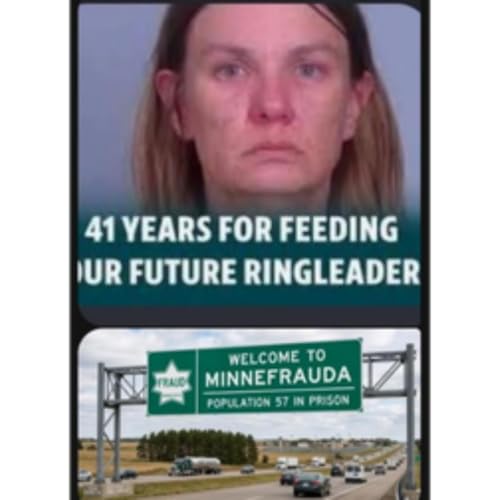
    The Feeding Our Future scandal stands as one of Minnesota’s most embarrassing and revealing failures. It was not just fraud; it was a collapse of oversight, courage, and common sense. Minnesotans watched a system built on trust get exploited in plain sight. Aimee Bock’s 41‑year sentence became the symbol of that collapse. Her mugshot and downfall captured the scale of betrayal. People across the state are discussing it openly and bluntly, with frustration cutting across every community.

    A truth now being acknowledged is that white fragility played a major role in how the scandal expanded. Agencies and political leaders hesitated to enforce boundaries because they feared being labeled racist. Oversight staff avoided challenging suspicious activity, softened their tone, and backed away from confrontation. Fear dictated policy, creating the perfect environment for fraud to grow.

    At the same time, long‑standing Black Minnesotans—those who built youth programs, fed families, and sustained neighborhoods—were overlooked. They were never trusted with millions, never given blank‑check funding, and never granted the benefit of the doubt. They watched as operations with limited track records received massive sums with almost no verification. The state’s blind trust was not extended to those who had earned it. That dynamic fueled anger not only at the fraud but at the racial patterns that enabled it.

    The arrests and convictions intensified the conversation. Dozens were charged. Many received long sentences. Minnesotans saw fake meal counts in the millions, shell companies, luxury purchases, and overseas transfers. A program meant to feed children became a pipeline for enrichment. “MinnesFrauda” emerged because the state that prides itself on competence looked naïve.

    The scandal forced Minnesota to confront uncomfortable truths about race, trust, and accountability. It exposed how fear of being called racist can paralyze institutions and how quickly fraud grows when oversight collapses. Minnesotans want verification, not fear. They want leaders who understand that protecting public resources is non‑negotiable.

    Lesson Plan Summary (5E Model) Objective: Students analyze how white fragility influenced oversight in the Feeding Our Future case. Outcome: Students explain how fear of appearing racist contributed to oversight failure and the scale of the fraud.

    Engage: Overview of the case; ask how fear affects enforcement. Explore: Students read excerpts showing ignored warnings and hesitation. Explain: Teacher defines white fragility and connects it to oversight collapse. Elaborate: Students propose stronger, fear‑free accountability structures. Evaluate: Exit ticket explaining one example of white fragility influencing oversight and contributing to arrests and sentences.

    Ask for My Free PowerPoint About This Episode.

    Email: radiotalklr@gmail.com

    Order my book at www.weusoursluckybooks.com

    続きを読む 一部表示
    19 分
  • Their Flag vs. Your Cross at Work
    2026/06/12

    Min. Lucky's Observation Plan

    Lesson Plan: Observing Inclusion and Institutional Behavior on Campus

    Learning Objectives

    1. Students will identify visible signs of inclusion and exclusion on campus by analyzing symbols, policies, and classroom behaviors. Example: noticing Pride flags in common areas compared to the absence of crosses or Bibles on desks.
    2. Students will evaluate how institutional practices shape classroom dialogue and influence which viewpoints feel safe to express. Example: observing when instructors avoid topics involving religion, race, or political disagreement.

    Learning Outcomes

    1. Students will document at least three examples of selective inclusion based on campus observations. Example: tampons in men’s restrooms vs. restrictions on religious symbols.
    2. Students will explain how institutional norms affect student learning using evidence from class discussions or campus spaces. Example: describing how instructors redirect conversations that challenge dominant narratives.

    5E Learning Model

    Engage: Students view images of campus spaces (desks, restrooms, offices) and discuss what symbols or messages appear most often.

    Explore: Students walk through designated campus areas to observe visible inclusion practices and note what is present vs. absent.

    Explain: Students share findings and connect them to concepts of inclusion, conformity, and institutional culture.

    Elaborate: Small groups analyze how selective inclusion influences classroom dialogue, student comfort, and intellectual diversity.

    Evaluate: Students reflect on whether campus inclusion practices support or limit diverse viewpoints.

    Formative Assessment

    Exit Ticket: Students write one observed example of selective inclusion and one question they still have about how institutions shape which viewpoints are welcomed or avoided.

    Comments: radiotalklr@gmail.com

    続きを読む 一部表示
    48 分
  • Breaking News: 11 Ways Black Professors Act Inferior
    2026/06/23

    11 Ways Black College Professors Act “Inferior”

    SEND THIS EPISODE TO OTHERS. Keep It Moving.

    https://rss.com/podcasts/bsu-podcast-metropolitan-state-university/2936975/

    1. Avoiding Other Black Faculty Limiting visible association to avoid being labeled a “clique” or “activists.” This is managing white perception.
    2. Staying Close to White Colleagues Proximity offers safety: fewer accusations of bias, more legitimacy, and access to information.
    3. Over‑correcting Tone and Emotion Suppressing frustration, softening feedback, over‑smiling, and speaking formally to avoid “angry” or “intimidating” stereotypes. This is emotional self‑management under white fragility.
    4. Downplaying Black Identity Avoiding AAVE, cultural hairstyles, Black references, or racial justice topics to avoid being labeled “too political.” This is code‑switching for survival.
    5. Over‑performing Rigor (“Twice as Good”) Being hyper‑prepared and hyper‑credentialed because competence is questioned more. This is a response to systemic bias.
    6. Avoiding Conflict Challenging colleagues or policy carries harsher consequences, so silence becomes protection. Chicken Shit Professors.
    7. Minimizing Cultural Expression Hiding music, food, politics, or community ties because Black culture is treated as “unacademic.”
    8. Grading Black Students More Harshly Fear of being accused of favoritism leads to stricter grading and over‑documentation. This is fear of White retaliation,
    9. Policing Other Black Faculty/Students Correcting tone, discouraging advocacy, or distancing from outspoken colleagues to avoid collective punishment.
    10. Over‑identifying With Institutional Norms Enforcing rules rigidly, appearing hyper‑neutral, or suppressing cultural empathy to avoid scrutiny.
    11. Avoiding Outspoken Black Students Distancing from students who challenge inequity to protect tenure and signal “I’m not like him.” This is the 'Chicken Shit" Am I Ok Massa - inferior mindset.

    Noticing Black Professors Acting “Inferior”

    This dynamic is rooted in assimilation as survival, shaped by racial battle fatigue and white normativity. In HWIs, whiteness defines professionalism and authority; any deviation becomes a risk. Notice Professors Lacking the Courage to Be Black.

    Classroom Behavior

    Fear of being labeled “angry” or “unprofessional” leads to self‑moderation—softened feedback, over‑validation, and reduced authority. This weakens rigor and suppresses authentic, passionate teaching.

    Impact on Evaluations

    Student evaluations mirror racialized expectations. Attempts to appear “safe” are read as weakness, reinforcing the very bias professors are trying to avoid.

    Conclusion

    Students must refuse to imitate this inferior mindset. Enter the workforce with courage—speak truth, challenge inequity, and lead with authenticity. Survival is not liberation. Reject fear‑based conformity and embody the confidence and cultural integrity that dismantle the systems demanding silence.

    “Telling the truth is not winning a popularity contest. That’s cool beans with me. Period.” — Mr. Lucky

    Student Contribution: Observe Professors and Submit Observation Reports To: radiotalklr@gmail.com

    続きを読む 一部表示
    56 分
adbl_web_anon_alc_button_suppression_t1
まだレビューはありません