エピソード

  • Why its hard for startups to use technology for good
    2026/03/30
    New technology is always introduced with the promise of the good it can do for humanity. Most of the time the promised good never come to be. This is largely a structural problem ib how startups are funded, and some founders are creating a better way. Today we talk with Yosuke Kaneko, founder of Sora Technology, who is using drones to fight malaria in Africa. The technology is a perfect fit, but it was hard to address this problem as a startup. We talk about the challenges of using technology to solve important, but only marginally profitable problems, and why the unique nature of Japan's startup ecosystem might provide the solution. It's a great conversation, and I think you'll enjoy it. Show Notes How drones can find mosquitos that humans can’t Why real done innovation continues to come from the global South Why it's getting harder to build a drone startups in Japan Moving from a good idea to getting the first contract The difficult business model of doing good How to continue growing long-term The impact of regulations on drone innovation The truth about the startup scene in Nagoya and Aichi The current state of drone startups in Japan How to get Japanese companies exporting again Links from the Founder Everything you ever wanted to know about Sora Technology Friend Yosuke on Facebook Connect with him on LinkedIn Leave a comment Transcript Welcome to Disrupting Japan, Straight Talk from Japan's most innovative founders and VCs. I'm Tim Romero, and thanks for joining me. Fortunately, most of us never have to think much about malaria, but it's one of the most deadly diseases in human history. Malaria was responsible for up to 5% of all the deaths of the 20th century, and it killed tens of billions of people before that. Even now, the disease continues to kill around 600,000 people every year. Well today, we sit down with Yosuke Kaneko, founder of Sora Technology, and we talk about a new approach to startup business models that can actually help save lives. Sora uses drones in Africa to identify water bodies with the highest chance of being mosquito breeding grounds, and then they work with government agencies to ensure that those water bodies get sprayed with insecticide. Yosuke and I talk about the challenges and the opportunities in working with global and national health organizations, when to pivot from solving the problem you want to solve onto solving a problem that actually needs to be solved, and the challenges involved in making a profitable business that is actually focused on doing good in the world. But you know, Yosuke tells that story much better than I can. So, let's get right to the interview. Interview Tim: We're sitting here with Yosuke Kaneko of Sora Technologies, who's using drones to combat malaria in Africa. So, thanks for sitting down with me. Yosuke: Thank you, Tim. Tim: Now, I explained very briefly what you guys are doing, but you can explain it much better than me. What is Sora Technology doing? Yosuke: Okay, so it's using drone, satellite, and AI, then analyzing environment data, such as the water and also the surface data. Then one of our flagship projects is, you mentioned, the malaria. Tim: So, how are you using drones to combat malaria? Yosuke: So ,do you know where is habitats of mosquitos? Tim: Well, I know when they're little, when they're larvae, they grow up in these shallow ponds and shallow pools. Yosuke: Yeah, you are right. You are right. Exactly. So we are searching the water bodies where mosquitos larvae is habitat. So, we are firstly searching from the sky, so satellite and drone. Then after that, we will find out high risk breeding site of mosquitos. So, the highest breeding site is only 30% of all water bodies. After that, we will spray insect site by drone and also by human. Tim: So, why is it important to do this by drone? Are the water bodies changing every year? Are they coming and going and evaporating? Are they hard to find? Yosuke: So, existing way is that they have to treat mosquito larvae, but they don't know where is the water bodies. So, that's why they open the maps. Then from their experience, okay, maybe this point, there are the water bodies. So, only their experience, they imagine where is the water bodies. And also they are spraying the 100% of the water bodies. So, that's why 70% of the insect site is just a waste of money. It's not good for environment. Tim: Do these water bodies form in different places every year? Yosuke: Almost decided place, but the detail is different by season and also the rainy volume, also the climate. Tim: Your drones are trying to identify the highest risk pools, what are the factors you're looking for? Yosuke: We are taking the water body sites and also depths and temperature and also the water bush information based on that we are put to our AI, then classify the highest breeding site. Tim: Now, you originally didn't start out doing anti-malarial activities, right? You started out with last mile drug ...
    続きを読む 一部表示
    29 分
  • Corporate venturing as a path to innovation in Japan
    2026/03/02
    You might think that large Japanese companies have trouble innovating. Unfortunately if you believe that, you would be correct. Recently, however, there are a few reasons for hope. The first step to recovery is admitting you have a problem, and Japan Inc. now largely understands that their traditional R&D methods are broken, and are looking to startups for help and inspiration. Corporate venturing (spinning out internal projects as startups) is one such approach. But it's not an easy one. Today we sit down with Kenji Tateiwa and discuss the rewards and challenges of spinning Agile Energy X out of TEPCO. We talk about why it's hard to bring renewable energy onto the grid, how to nurture a startup inside very conservative organizations, and the future of corporate venturing in Japan. It's a great conversation, and I think you'll enjoy it. Show Notes Why it's hard to get more renewable energy onto the grid Introduction to demand response and demand management How to nurture a startup inside a conservative enterprise and how to spin out The financial challenges in the core business model The competitive landscape in energy services Why its hard to raise funds as a corporate spin-out Staffing challenges in corporate venturing Maintaining strategic independence from the parent company Can corporate venturing drive innovation back to the parent Links from the Founder Everything you ever wanted to know about Agile Energy X Japanese homepage Connect with Kenji on LinkedIn Yuri Group's paper on using Bitcoin Mining to support renewable energy Info in Japanese Kenji's article on how Stanford creates an innovative mindset Denki Shimbun's series on bitcoin mining Leave a comment Transcript Welcome to Disrupting Japan, Straight Talk from Japan's most innovative founders and VCs. I'm Tim Romero and thanks for joining me. Who says, large enterprises can't innovate?! Well, most people actually, and overall they're right. The larger an organization becomes, the more barriers to innovation it puts in place. It's almost a form of self-defense for the enterprise. Well, today we sit down with Kenji Tateiwa of Agile Energy X, and we explore corporate venturing in Japan. Kenji was a decades long employee of TEPCO, Japan's largest energy utility. And also my old employer. Kenji had an idea that he developed into a small internal project, but one that was simply not practical to run inside of TEPCO. So, he convinced leadership to give him the seed funding to spin it out into a new startup. But there have been some bumps in the road, both the things that all founders face, like customer acquisition and also challenges unique to corporate venturing, like transitioning from a subsidiary to a true startup. Kenji and I dive into the challenges of maintaining independence from the mothership and the mixed incentives of corporate ventures, how he convinced conservative management to take a chance on his startup idea. And why, despite all the challenges, this kind of corporate venturing is going to prove absolutely essential to innovation in Japan. But, you know, Kenji tells that story much better than I can. So, let's get right to the interview. Interview Tim: So, I'm sitting here with Kenji Tateiwa of Agile Energy X, who's helping get more renewable energy onto Japan's grid via Bitcoin mining. So, thanks for joining me. Kenji: Yeah, you're welcome, Tim. My pleasure. Tim: Now I gave a really brief introduction to what you do, but I think you can explain it much better than I can. So, what is Agile Energy X doing, and what's the problem you're trying to solve? Kenji: Yes, founded Agile Energy X as an inhouse startup within TEPCO with a mission to introduce as much renewable energy in Japan as possible using a flexible demand, including Bitcoin mining. Tim: So, how does having flexible demand help get renewables onto the grid? Kenji: So, the issue with renewable energy, and I mean variable renewable energy, like solar power and wind power cannot control how much power you supply from these energy sources. Tim: When the wind's blowing, the sun's shining, you got a lot of electricity. And when it's not, you don't. Kenji: That's right. And the issue of electricity is you always have to match the demand with the supply or else the grid frequency will fluctuate, and in a severe case, it will lead to a blackout. And the issue of balancing the grid, it's very challenging for the utilities. So, if there's not much demand to soak up the power generated by these variable renewable energy you have to shut down the renewable energy resources, which leads to curtailment or a wasted energy. Tim: Unlike you and me, most of our listeners have not worked for years in the energy industry, but the process of grid balancing is just fascinating. And I think people don't appreciate what a wonder of engineering it is. Basically, every electron you push onto the grid anywhere has to be taken off somewhere else in real time. It's moving almost to the speed of ...
    続きを読む 一部表示
    35 分
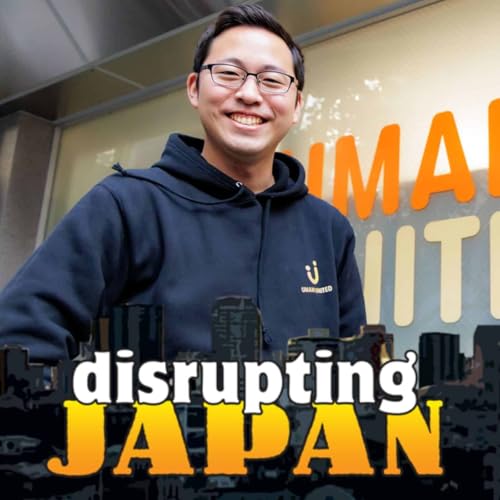
  • How to sell vegan foods to meat lovers
    2026/02/02
    It's tough to be a vegetarian in a world full of carnivores. It's even tougher to be a startup selling a vegan egg-substitute into a world full of carnivore-dominated market, but that's exactly what Umami United is doing. Umami United founder Hiro Yamazaki explains that the real diver for vegan-food adoption is not ethics or sustainability, but simple economics. The startup's market traction seems to show that he and the team are on the right track. We talk about the importance of keeping an open mind about product-market fit, Japan's unusual dietary habits and how to go global on a limited budget. It's a great conversation, and I think you'll enjoy it. Show Notes Why are there so few vegetarians in Japan Overcoming the "vegetarian" stigma Why Japan has the world's 2nd highest per-capita egg consumption (really!) The different go-to-market strategies for Japan and overseas Why industrial kitchens want to move away from natural eggs The challenges in restaurant and home use Umami’s global expansion plans Why so many alternative food startups fail, and why Umami is different Why Japan is a perfect food tech market The future of food tech in Japan Links from the Founder Everything you ever wanted to know about Umami United Japanese homepage Umami United blog Check out Hiro's blog Connect with him on LinkedIn Friend him on Facebook Follow him on Twitter @Japanveggie Leave a comment Transcript Welcome to Disrupting Japan, Straight Talk from Japan's most innovative founders and VCs. I'm Tim Romero and thanks for joining me. Eggs! We are going to talk about eggs and about things that are almost eggs. You know, in researching this episode, I learned far more about the egg industry than, well, more than I thought there was to know about the egg industry. It's complex, surprisingly global and fiercely competitive. Today we sit down with Hiro Yamazaki, the founder and CEO of Umami United, who's making a vegetarian egg substitute that is finding product market fit in overseas markets rather than in Japan. And for reasons that have surprisingly little to do with vegetarianism. Now Hiro and I talk about how to find product market fit when your initial strategy doesn't work out. Like you expect the best strategy for aggressively going global on a limited budget. And why the Japanese eat a hell of a lot more eggs than you probably think they do. I mean, seriously, this country eats so many eggs! It just blows my mind. The data's coming up in the podcast. But you know, Hiro tells that story much better than I can. So, let's get right to the interview. Interview Tim: So, we're sitting here with Hiro Yamazaki of Umami United, who has developed and is now marketing a plant-based egg substitute. So, thanks for sitting down with us. Hiro: Thank you so much for having me. Tim: What you're doing is really interesting. Hiro: Thank you. Tim: So, tell us a bit about the product. What exactly is it you're making? Hiro: Right now we're making a plant-based egg powder product. It's made out of konjaku, it's a root vegetable in Japan. Specifically, we're focusing on the bakery application right now and baked good. There's so many eggs, but yeah, we are replacing the functional ingredient from the egg. Tim: So, as an egg substitute, is it similar in nutritional value to eggs? Is it similar in sort of the cooking functionality of eggs? What exactly is it substituting for? What part of the egg? Hiro: Yeah, right now we're more focusing on the egg functionality, like the coagulation forming, those kind of characteristics. But we started actually more scramble egg, omelets, those kind of in a savory application at the very beginning. But after one or two years, we decided to more focus on baked goods. Tim: Tell me about your customers. You mentioned that you're focusing on bakeries. Is this like commercial bakeries or more of the industrial side that are feeding, like schools and hospitals? What sort of bakeries? Hiro: Yeah. Most of our customers right now are industrial, like baked goods manufacturers making French kernels or donuts, those kind of things. Tim: I noticed on your website you also have direct to consumer products ss well. Is that more for a marketing? Hiro: Right. We started actually from e-commerce channels, but like you said, it's more like the marketing perspective. Tim: Okay. And the main positioning, is it for health benefits or vegetarian vegan lifestyle compliance? What's the main selling point? Hiro: Yeah, there are two big categories. One is the vegan, vegetarian, or allergy free. We call it like dietary restrictions. And then the other one is more supply cost because of the broad flu, avian flu. We're having that in every two or three years. And that's a huge issue in the industry because the cost and the supply is not stable. So, that's why our clients are looking for an ex-substitute, not only because of the vegan allergy reason, but also this supply chain issues. Tim: Yeah, actually I want to get back...
    続きを読む 一部表示
    1分未満
  • What everyone gets wrong about branding in Japan
    2026/01/05
    Japan market entry is hard. Consumer tastes are different, business culture is different, and market needs can be radically different from those anywhere else. Entering the Japanese market is a challenge for even the strongest and best positioned brands. Today we sit down with Ernie Higa, the man behind two incredibly successful market entries, Dominoes Pizza and Wendys, both of which looked like extreme long-shots at the time. We talk about when to localize and when to stay true to the brand, the importance of repositioning, and how to find startup opportunities in Japan today. It's a great conversation, and I think you'll enjoy it. Show Notes How to determine the kind of startup you can create How to sell to Japanese enterprises even when you are not fluent The importance of focusing on difficult things How Ernie knew that pizza would sell in Japan when all evidence said otherwise How Japanese and US consumers measure quality differently When to localize in Japan and when to stay true to the brand Rethinking pricing and positioning for the Japanese market Why Wendy's could re-enter the Japanese market when others failed Japan's changing approach to shareholder value How Japanese attitudes abotu failure are changing in Japan Links from the Founder Everything you ever wanted to know about Higa Industries Leave a comment Transcript Welcome to Disrupting Japan, Straight Talk from Japan's most innovative founders and VCs. I'm Tim Romero and thanks for joining me. Perhaps the most common question my non-Japanese listeners ask me is, what kind of a startup should I start in Japan? You know, I want to be helpful, but the answer to that question depends not just on market opportunities, but the skills and the temperament of the specific would be founder in question. The right question to ask is really what is the best startup for me personally to start right now? And no one can really know that except for you. But there are some things that remain true and some strategies that remain effective for all people and across decades. Well, today we sit down with Ernie Higa, a man who's kind of a legend among those of us who really study Japan market entry. Ernie brought both Domino's Pizza and Wendy's to Japan. And although both of those ventures seem like extreme long shots at the time, Ernie made them both work and prosper. Ernie and I talk about how to identify entrepreneurial opportunities, how to know what needs to be localized for the Japanese market and what needs to remain true to the brand and what so many people misunderstand about brands and branding in Japan. But, you know, Ernie tells that story much better than I can. So let's get right to the interview. Interview Tim: So, we're sitting here with Ernie Higa, the representative director of First Kitchen and Wendy's Japan, but best known as the man who first brought Domino's Pizza to Japan. So thanks for sitting down with us. Ernie: Well, thank you, Tim, for having me. Tim: I really appreciate this. I wanted to get you on the show for a very long time. So, you founded Domino's back in 1985, but let's step back a bit before then. Many young founders today are looking to Japan, trying to figure out where they fit in, what value they can add. So in your case, why Japan? Ernie: Well, back in those days, Japan was becoming the second largest economy in the world and was really growing fast. So, there was opportunity here. Having said that, as an entrepreneur, the last thing you want to do is do something that large companies were already doing. So, the idea was to pick a niche business where I felt that I had a more of a competitive edge and leverage my understanding of both Japan and the US. And learning about Japan dedicated myself to learn the business here, learn the language, learn the culture, but to find an area where the large companies, say for example, the Mitsubishis of the world, Mitsubishis of the world were not doing, or they were not so adept. Just to give an example the first business I got involved in was in the lumber business in the 1970s, a little bit different than today. There was the US Japan trade wars. The US companies were trying to figure out how to break into the Japanese marketplace. And there's also some geopolitical pressure as well too. And one of the things was in the lumber business the normally large trading firms would import logs from the United States and have it cut in Japanese sawmills for the Japanese housing size and specifications. But the US said, well, we want the value done in US sawmills. So, you might ban the export of logs to Japan. And of course that was great, except that in the US houses are built on what they call two by four construction. And so there are different sizes, different quality requirements, and the Japanese housings sizes were built upon what they call post and beam. And even further, there was a huge prefabricate home building market that was using lumber, and they had even more difficult...
    続きを読む 一部表示
    48 分
  • What role can startups really play in human longevity?
    2025/12/08
    Japan has one of the longest lived and healthiest populations in the world, and let Japanese startups are playing a relatively small role in the recent longevity-tech boom. The longevity market includes everything from health-tech wearables, to foods and supplements, to lifestyle coaching, to invasive medical procedures. The offerings themselves range from the incredibly useful and helpful to the wasteful and the outright dangerous. To make sense of all this, today we talk with Bilal Kharouni the CEO of Ekei Labs, who explains his startup's pivots through multiple sectors of the budding longevity market. It's a great conversation, and I think you'll enjoy it. Show Notes What exactly is “biological age” Where health tracking apps are useful and where they are dangerous How to market supplements in Japan's tightly regulated market The business and medical challenges in direct-to-consumer health tech Pivoting from supplements to consumer test kits to research The path for commercializing today's university medical research Business models that work for startups in medical research Advice to founders coming to Japan to start a startup How to sell in Japan with limited Japanese abilities How foreign founders can recruit Japanese advisors for their startup How Japan’s new via restrictions will affect foreign entrepreneurs in Japan Links from the Founder Everything you ever wanted to know about Ekei Labs Connect with Bilal The Aging Consortium is work on the clinical translation of the biomarkers of aging Life Biosciences is developing epigenetic reprogramming (gene therapy) protocols Leave a comment Transcript Welcome to Disrupting Japan, Straight Talk from Japan's most innovative founders and VCs. I'm Tim Romero and thanks for joining me. Japan is one of the longest lived populations in the world, and as you get older, well, you start thinking more and more about getting older. Of course, getting older is much better than the alternative, but we all want to slow it down a bit and do it in a healthy way. Now those of you who know me won't be surprised to learn that once I got interested in this topic, I got a little obsessive. I have a smart scale and a smart watch and a smart ring all confidently telling me slightly conflicting things about the state of my health. And anti-aging startups are a mixed bag at best, ranging from difficult, boring, but very effective medical advice about diet and exercise to fund cutting edge wearables and trendy supplements and treatments that are a complete waste of money and everything in between. Well, today we sit down with Bilal Kharouni, the CEO of Ekei Labs, who's going to help us make sense of all this. Now, the Ekei Lab's journey and their pivots while trying to find product market fit in the anti-aging market is really a microcosm of the whole wellness industry from supplements to consumer facing tech to medical research to well, I’ll let Bilal explain where it all ends. Now, interestingly, Bilal and I had this conversation in Okinawa, home of Japan's longest lived population. And we talk about finding product market fit in health tech, how to sell to Japanese enterprises when your Japanese ability is limited, and how Japan's new visa restrictions are going to impact startups here. But, you know, Bilal tells that story much better than I can. So, let's get right to the interview. Interview Tim: I'm sitting here with Bilal Kharouni, the founder and CEO of Ekei Labs, who's selling direct to consumer longevity testing and support services. So thanks for sitting down with us. Bilal: Yeah, thanks for having me. Tim: Now you're based in Tokyo, but we're sitting here in Okinawa today. You've recently joined the OIST incubator, so tell me about that. Bilal: Yes, we work on aging and longevity. So for us, there's not a better place than the blue zone of Okinawa to really sit our lab and working on aging. Actually, we pivoted quite a lot from direct to consumer longevity tests. So we really have a platform that is more intended for joint research. We went much further in terms of research, so having both the lab and the talent and also the perfect location too. Tim: Well, I mean Okinawa famously as one of the longest lived populations in the world. Is that coincidence or does that inform your research in some ways? Bilal: So, it's pretty consciously I will say, the reason why Okinawa and people live the longest are part due to diet or social activities being surrounded by their loved ones, which is great. But what we're investigating is mostly therapeutics to increase healthy lifespan. So, it's a deep tech zone I would say. However, for people who have an interest in longevity and living longer and who wants to work on these topics, it's a very attractive location and it's an attractive location for hiring some of the best people. We had the chance having members quitting the job for Tokyo to join us in Okinawa to work with us. Tim: Well, I can certainly see the ...
    続きを読む 一部表示
    39 分
  • Will Japan ever regain its lead in robotics?
    2025/11/10
    In the popular imagination, Japan is almost synonymous with robots. While Japan once dominated cutting-edge robotics, over the past decade she has fallen further and further behind the US and China. Today we sit down with Chiamin Lai of Firstlight Capital, who believes that Japan might just regain that leadership. We talk about the unique opportunity and advantage Japan has in the deployment of practical physical AI, the enterprise culture that is holding it back, and what a handful of innovators are doing about it today. It's a great conversation, and I think you'll enjoy it. Show Notes How starting startups in Japan has changed over the past 20 years -- especially for foreigners How Japan's labor shortage is driving the adoption of physical AI The biggest problem in integrating GenAI and robotics The best use cases for physical AI today and why healthcare is not one of them How secrecy is holding back AI innovation What keeps Japanese enterprise from embracing open innovation Can Japan's VC ecosystem afford to fund AI in the era of massive funding rounds Why physical AI companies should not create their own hardware Why Japanese startups should not look to hardware for competitive advantage The importance of industry cooperation and why it's critical for Japan's AI success What physical AI will look like in Japan in five years Links from the Founder Everything you ever wanted to know about Firstlight Capital Firstlight's thesis on Physical AI Connect with Chiamin on LinkedIn Follow her on Twitter @chiamin_lai Chiamin's excellent series on Physical AI in Japan Leave a comment Transcript Welcome to Disrupting Japan, Straight Talk from Japan's most innovative founders and VCs. I'm Tim Romero and thanks for joining me. Japan has always had a special and very positive relationship with robots from Astro Boy and Doraemon in the fifties and sixties, to Sony's Asimo in the 2000s to SoftBanks Pepper in the 2010s. It has always felt like Japan was set to create and then to lead a humanoid robot revolution. But that didn't happen. In fact, today, Japan seems to be far behind both China and the US in the development of not just humanoid robots, but intelligent robots in general. Well, today we sit down with Chiamin Lai partner at Firstlight Capital, to discuss how that came to be and what we can do about it. Now, Chiamin's investment interests are deeply focused on physical AI and specifically physical AI startups in Japan. And she remains optimistic about the future of AI and robotics in Japan. We talk about the market and the financial structures pushing Japan to adopt meaningful physical AI before the rest of the world. The technology and social challenges of trying to use AI and robotics and healthcare, and some really great advice for physical AI startups that are planning to raise money. But, you know, Chiamin tells that story much better than I can. So, let's get right to the interview. Interview Tim: So, we're sitting here with Chiamin Lai, the general partner at Firstlight Capital, and a director at Japan Venture Capital Association. So, thanks for sitting down with me. Chiamin: Thank you, Tim. Tim: Before joining Firstlight, you worked in startups and investing in Japan and in China and in the US but you've had ties to Japan for quite a while, haven't you? Chiamin: Yeah, I was born Taiwan, but then I came here when I was teenager, and after that I received education here. I also work in Japan, but then later to Europe and then came back. So I can say this is like my hometown in the way. I have more friends, more connection, and my family here. So yeah, some of my friends said, you are more Japanese than we are. Sometimes I agree. Tim: Yeah, I know the feeling. I've been here over 30 years myself. Yeah, it kind of sneaks up on you. And Japan is a very comfortable place to live once you kind of get used to it all. Chiamin: Yeah. But I would say it actually changed a lot for the past 20 years or 30 years. When I came, Japan is not that open up. Like people sometimes complain about they have a hard time finding apartment and so on. I'm like, okay when I came it was worse. Tim: Yeah, that's for sure. Chiamin: Yeah. Finding a part-time job, finding a job was not that easy at that time because we still have a lot of population. They don't really need a foreigner to work for their company. Tim: Well, I think that's one of the biggest changes is so when I started my first startups back in the dotcom era, a big part of it was that there weren't a lot of options open to foreigners in Japan. Having a regular career track job was exceptionally rare, and now it's almost kind of flipped. Chiamin: Yeah. Yeah. I agree. I think it's good for the country. I think both you and I, we stay here for a long time, so we have a deep understanding about this country and a lot of foreigner like us I think we all wish that we can contribute somehow to this society because it's a good country to live. That's also one of the reason ...
    続きを読む 一部表示
    47 分
  • Why so many Japanese VCs won’t invest in Japan
    2025/10/13
    Japanese startups is hot right now, and more and more foreign money is flowing in. But many Japanese VCs remain stubbornly outward-looking. Today we sit down with Shri Dodani, who after a series of highly successful American startups, decided that Japan is the best place to invest right now, and co-founded of Global Hands-On VC, to make those investments. We talk about the unique advantages startups have in Japan and why Japanese founders often have trouble leveraging those advantages. It's a great conversation, and I think you'll enjoy it. Show Notes The unique potential Shri first saw in the Japanese market How Japanese buying patterns help Japanese startups Japan's transition from VC 1.0 to VC 2.0 Are Japanese startups really becoming more globally minded? Why the large global VCs seem to have so little interest in Japan How Japanese VCs and corporates are more supportive of startups than in other markets Why it's important to invest in Japanese founders "with a bit of an attitude” What's holding Japanese founders back today What actually stops Japanese founders from going global? The importance of role models and for Japanese founders to mentor The most promising startup sectors in Japan How recent immigration tightening will affect innovation in both the US and Japan Links from the Founder Everything you ever wanted to know about GHOVC Follow them on Note Connect with Shri on LinkedIn Check out an interview with him on YouTube Follow (GHOVC co-founder) Ken Yasunaga on Twitter @ken_yasunaga Leave a comment Transcript Welcome to Disrupting Japan, Straight Talk from Japan's most innovative founders and VCs. I'm Tim Romero and thanks for joining me. Longtime listeners of Disrupting Japan know that I'm extremely bullish about Japanese startups. In fact, most of us on the ground here are pretty optimistic about the whole situation. And yet a surprising number of Japanese LPs and VCs seem to have little interest in investing in Japan preferring to focus on high profile San Francisco. Today we sit down with Shri Dodani and we look into exactly why that is. Now Shri is a successful American founder with multiple exits, totaling well over $1.5 billion. And when he transitioned from startup to VC and put his first fund together, he decided to focus exclusively on Japan in order to take advantage of what he thought Japanese and foreign VCs alike were overlooking. Shri and I talk about Japan's transition from VC 1.0 to VC 2.0, the aspects of the Japanese market that give it a unique advantage over Silicon Valley in some areas, the one thing that's holding Japanese founders back the most and why it's important to invest in founders who have a bit of an attitude. But, you know, Shri tells that story much better than I can. So, let's get right to the interview. Interview Tim: So, I'm sitting here with Shri Ddani of Global Hands-on VC, a serial entrepreneur and founder and managing partner at Global Hands-on VC. So, thanks for sitting down with me. Shri: Thank you, Tim. It’s an honor. Tim: I'm glad we've got a chance to talk because I think you really do have a different perspective on what's going on in the Japanese market today. And just to give our listeners a bit of a background, so before moving into VC, you had a remarkable string of successes. As a founder, as an operator, you had six startups and six exits, including one that was a $550 million acquisition and IPO that was worth over a billion. I don't want to dig too much into that because we could be here all day talking about it and it'd be a worthwhile conversation. But after being such a successful operator for so many different types of startups, why the move to VC? Shri: A good question. So sometime I do one day even after became a VC, that should I continue doing my own companies because I'm good at that. Having done company in different field, you kind of get the nose for the technology. Obviously you have to be technical person, but beyond that, you get nose of different technology, how they relate to the actual product. And how do consumer or the industries benefit out of that? Most of the VCs come from financial world and what we can bring them uniquely is that we give them perspective from development perspective, but we can help the companies from a product development perspective as well. Tim: I can completely understand the value add both to the other partners, to the investors, to the startups you're investing in. But like on a personal level, it's a really different job. So, why did you want to make that jump? Shri: Service time, I've done several companies, as you noted, they've done in different industry. So as you want to get new challenge always right, because that's what keeps you young. Secondly, I've invested in over 25 now 28 companies of my own money and equal number of companies as an advisor as well. So, I've made money as an individual investor, a good rate of return and it was an opportunity for me to work with Ken to ...
    続きを読む 一部表示
    37 分
  • Can startups save Japan’s logistics industry?
    2025/09/15
    According to Taro, Japan's logistics industry is on the brink of collapse, and it's hard to argue that he's wrong. Taro Sasaki founded Hacobu with the goal of modernizing Japan's logistics industry. He found few takers for the first few years, and then a new law changed everything. We talk about how Japan's demographic and economic challenges, why some industries simply refuse to invest in themselves, and how to sell to them anyway. It's a great conversation, and I think you'll enjoy it. Show Notes Why Japanese logistics is on the brink of collapse The factors pushing demand for trucking higher in Japan What's preventing Japan's logistics industry from modernizing How to sell digital products to skeptical analog industries A new Japanese law mandating business efficiency How to bootstrap a complex application ecosystem from scratch The huge value hiding inside Japanese logistics data Hacobu's global expansion plans Taro’s best advice to founders wanting to sell into traditional, blue collar industries The importance of dreaming big -- even in Japan Links from the Founder Everything you ever wanted to know about Hacobu Keep up with the latest on Hacobu [Japanese] Hacobu's survey of 1271 Japanese truck drivers [Japanese] Friend Taro on Facebook Connect with him on LinkedIn Follow him on Twitter @tarosasaki Leave a comment Transcript Welcome to Disrupting Japan, Straight Talk from Japan's most innovative founders and VCs. I'm Tim Romero and thanks for joining me. Today we are going to talk about how to drive innovation into traditional, conservative, low margin blue collar industries. Now, that might sound hard to do, but it's actually even harder than it sounds. And, you know, that's why so few startups seriously attempt it and why it's extremely profitable for the few founders who manage to get it right. Today we sit down with Taro Sasaki, the founder of Hacobu, a startup that is finally, finally bringing digital transformation and automation to Japan's logistics industry. Taro’s constant refinement and testing of his ideal customer profile and go to market is a story that all founders can learn a lot from. Taro and I talk about the best path for founders to take when trying to sell to industries that are resisting digitization, how a lack of regulation can sometimes actually lead to less innovation. Why the logistics market is so hard to crack globally, and the two big factors that led to Hacobu’s sudden change of fortune. But, you know, Taro tells that story much better than I can. So, let's get right to the interview. Interview Tim: So, I am sitting here with Taro Sasaki, the founder of Hacobu, who is reinventing Trucking Logistics in Japan. So thanks for sitting down with us Taro: Thank you too. Tim: So, MOVO is a suite of SaaS tools that handle fleet tracking vehicle dispatch loading, unloading. I gave a brief explanation in the intro, but I think you can explain it much better than I can. So, what is MOVO? Taro: So, Japanese logistics infrastructure is collapsing. Tim: What do you mean collapsing? Taro: So, the number of truck drivers is decreasing. The government estimates that in 2030, 25% of truck driver will short to the demand. Tim: So, what's causing it? It's a lower paying job that younger people just don't want to get into? Taro: Yeah, yeah. That's one of the reasons. And also the business process in the infra is very outdated and very analog, there are many inefficient things going on. So, the demand for the truck driver is increasing, but actually the supply of the truck driver is decreasing. So, the gap is going to increase. Tim: That's interesting. So, the demand for trucking is actually increasing recently? Taro: Yes. Because of the development EC, we want to get things, for example, at the supermarket, we want the commercial goods on demand so that the suppliers have to deliver the products on time that we want to buy it. So, the amount of goods in one truck is decreasing. Tim: So, is this increase in demand, is it mostly that sort of last mile delivery? Is it long haul freight or is it both are increasing? Taro: Both of them. Tim: Wow. Did not expect that. Taro: Yeah, because B2C logistics is easy to understand because, you know… Tim: The whole e-commerce boom is Yeah, Taro: Yeah. But there is a big infra in the back of the EC, which is called B2B logistics. For example, there's a factory, and the factory have to be supplied. So the suppliers have to deliver to the factory by a track. And then after the factory manufacturer, they have to deliver to warehouse. And then the warehouse deliver to the supermarket, the EC in a warehouse. This B2B logistics infra much bigger than the EC infra. The number of the size of the infra is about like 50 cho-yen comparing to EC, which is about three cho-yen. Tim: And so Hacobu's goal, MOVO's goal is to address that 25% shortfall through increases of efficiency. I want to dig into that and the challenges of trying to bring digital ...
    続きを読む 一部表示
    35 分