エピソード

  • The Reflection Pool of Life
    2026/06/25

    In this “Faith and Friction” episode, Mac and The Rev use the algae-filled Memorial Reflecting Pool in Washington,

    DC, as a metaphor for personal and civic responsibility, urging “good friction” to disrupt complacency and prompt

    growth. They discuss reflection as a way to see patterns—good, bad, and ugly—in oneself, drawing on symbolic

    examples from scripture and stories like The Lord of the Rings, The Lion King, and cultural “mirror” imagery.

    Walking through the pool renovation, they cite a no-bid contract, a $1–2 million scope that ballooned to roughly

    $13–14 million, and funding reallocated from a Department of the Interior already facing workforce cuts, arguing

    this shows poor planning, lack of checks and balances, and blame-shifting. The takeaway is to practice humility,

    ownership, consultation, and constructive critique to “do life better.”

    続きを読む 一部表示
    36 分
  • The Misguided Church: Ghosting the Feminine Voice
    2026/06/18

    In this episode of “Faith and Friction,” Mac and The Rev discuss conflict within Christian denominations that restrict

    women from leadership roles (pastor, priest, teacher), arguing this marginalizes women and reflects fear-based

    control justified by biblical “infallibility,” especially citations like 1 Timothy. They contrast “God said it” conformity

    with thoughtful questioning, emphasizing Jesus’ example of love and inclusion and noting women’s roles in

    spreading and funding Jesus’ ministry (e.g., the woman at the well) despite being minimized in scripture’s male-

    authored tradition. Prompted by Southern Baptist Convention actions and examples such as Saddleback Church’s

    expulsion, they advocate a balance between “divine masculine” and “divine feminine” within individuals and

    institutions, warn that church stances shape culture, and encourage listeners to examine motivations, seek

    alternative faith communities, and include women’s perspectives in discussions.

    続きを読む 一部表示
    36 分
  • Courage, Humanity, and the Streets of the Mind
    2026/06/11

    In a podcast episode, Mac interviews The Rev about “nuggets” from a recent Unity North sermon titled “Empty Out

    the Inside of Your Head,” encouraging listeners to hear it at unitynorth.org. They discuss spiritual themes using

    neighborhood metaphors: life is an illusion that can be changed with courage; the mind has unsafe streets with

    graffiti of fear and doubt that require honest self-inventory, “street sweeping,” and communal healing through

    service. The Rev emphasizes churches as a safe place to bring one’s humanity, calling vulnerability (“putting your

    guts on the table”) holy work, and warns against covering “toxic mold” with pretense. Key takeaways include

    choosing responsibility over pretending, renewing the mind by evicting unwanted thoughts and rent-free beliefs,

    releasing to experience resurrection, letting go of victim stories that become cages, not giving yesterday authority

    over today, and “suiting up and showing up” with faith and accountability.

    続きを読む 一部表示
    37 分
  • Sowing and Reaping: The Cosmic Law of Dominoes
    2026/06/04

    To start, Mac and The Rev preview future “Faith and Friction” topics (faith and cosmic energy, Christian nationalism,

    the “fog” of faith/mystery, faith and mysticism, and the prosperity gospel) and then focus on karma as the “rubber

    meets the road” spirituality of cause and effect. They encourage listeners not to fear the word, to run ideas through

    personal discernment, and to see karma as a matter of taking responsibility rather than attributing outcomes to

    God, the devil, or other scapegoats, emphasizing “we’re punished by our sins,” not by an entity. They discuss

    immediate and eternal consequences, lag time, and parallels across religions: Hindu and Buddhist cycles of rebirth;

    Christian sowing and reaping; heaven and hell as states; biblical references that echo themes of reincarnation; and

    Judaism’s ethics and required recompense. They highlight collective karma, interconnectivity, changing thoughts

    before actions and aiming at perfection (“Be perfect”) to create better outcomes.

    続きを読む 一部表示
    38 分
  • A Mosaic of Beliefs: Embracing the Pluralistic Path
    2026/05/28

    Mac and the Rev introduce an episode of “Faith and Friction” focused on religious pluralism as an integrated,

    action-based approach to commitment to the common good rather than siloed “me vs. we” thinking. Using

    metaphors of one body, blood flow, ibuprofen, puzzles, water in different containers, and mountain/valley love,

    they argue that Spirit is everywhere and that differences can fit into a larger oneness when judgment and fear are

    suspended. They connect fear-based dualism to conflict, discuss coexistence in the Middle East as starting in one’s

    own “field,” and emphasize building on shared values such as the Golden Rule and prayer. They critique the

    missionary approaches that impose a “container” (including exporting pews) instead of recognizing existing truth,

    and they frame pluralism as beyond tolerance toward acceptance, co-creation, and societal strength, citing diverse

    perspectives producing better outcomes in a tense meeting.

    続きを読む 一部表示
    35 分
  • Cultural Collisions: The Dance of Faith and Secularism
    2026/05/21

    Mac and The Rev discuss their “Faith and Friction” podcast and focus on how faith and culture mutually influence

    each other, warning against dualism, self-righteousness, and “us vs. them” thinking. They note that Christianity and

    other beliefs are always shaped by culture, citing Europe’s churches shifting from community centers to tourist

    sites, and argue this may restore balance. They describe U.S. politics as a dominant “religion” and hope for a

    spiritual renaissance centered on shared divinity and internal awakening. The conversation connects faith to social

    justice, unity, compassion, and the golden rule, using examples from indigenous spirituality and an interfaith

    relationship between a church and mosque after 9/11. They emphasize discernment amid technology and

    secularism, daily practice, and being “salt and light” to heal and transform culture through love.

    続きを読む 一部表示
    36 分
  • A Quest for Truth: Hell, Humanity, and Higher Consciousness
    2026/05/14

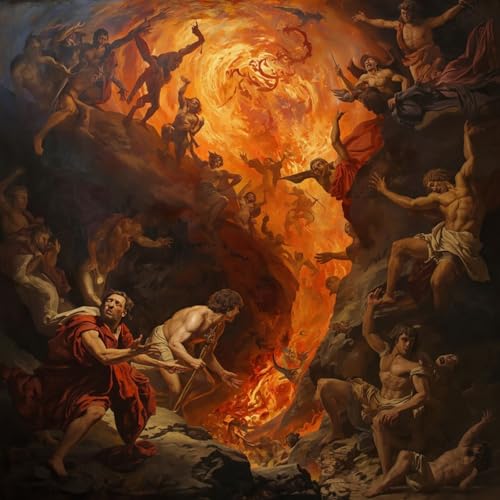
    In this Faith & Friction episode, Mac and The Rev discuss the concept of eternal damnation and a physical hell,

    arguing it is often misunderstood and used as a tool for fear, control, and moral meddling. They claim portrayals of a

    violent, vengeful God produce violent, judgmental, dualistic communities, while a loving God fosters love and

    inclusion, citing the prodigal son as a model of unconditional welcome rather than punishment. They contrast

    punishment with natural consequences, suggesting people are “punished by” their sins and that “hell” can describe

    inner suffering, repeated harmful patterns, or spiritual “heartburn” when actions are out of congruence. They note

    historical and cultural influences, including church history and Dante’s Inferno, and reference near-death

    experiences described as overwhelming love across religions, urging a shift toward a love-based worldview.

    続きを読む 一部表示
    35 分
  • The Art of Deception: Mistakes, Manipulation, and Maturity
    2026/05/07

    In this Faith and Friction episode, the Rev comes back from vacation, and he and Mac, and discuss simple, common-

    sense wisdom that helps navigate a chaotic world, emphasizing that friction spurs growth and calls for greater

    consciousness. They explore sayings such as “Once is a mistake, twice is a decision,” expanding it into a progression

    toward manipulation and habit, and stress personal responsibility rather than blaming others or God. They

    highlight that people remember how you make them feel, with presence and energy leaving lasting “residue,” and

    note how healthy environments enable better outcomes. They argue that if your friend circle isn’t evolving, you

    may not be either, advocating discernment without shame while acknowledging grief. They discuss sincere

    apologies, the value of absence as a test of relational impact, the need to hear both sides before judging, and that

    healing requires feeling rather than intellectualizing.

    続きを読む 一部表示
    36 分