エピソード

  • Making Microbes Explicit
    2026/07/03
    This episode takes listeners into the latest issues of Gastronomica, with a special feature on microbes. Sarah Elton and Maya Hey talk with Dan Bender of the Gastronomica Editorial Collective about their special section on microbes and food. In a conversation that spans food systems, environment, health, dietetics, and culture, they explore human microbial relationships from the soil to the processing plant, at the grocery store, in home kitchens, and beyond. Sarah and Maya share how they each came to the study of microbes, discuss what microbes are and what it means to center microbes in food studies research, and reflect on some of the policy implications. Their two-part special section in the Spring and Summer 2026 issues of Gastronomica brings together 11 articles on microbes in food and food systems from researchers around the world. Listeners can find "Making Microbes Explicit: Introduction to Microbes, Food, and Food Systems" by Maya Hey and Sarah Elton, and their co-written follow-up piece, "Finding the Microbes in Food Studies” in Gastronomica (issues 26.1 and 26.2). Sarah Elton is an assistant professor and Eakin Chair in Critical Qualitative Health Research Methodology at the Dalla Lana School of Public Health, University of Toronto. She has published widely, with her research appearing most recently in journals such as Nature Cities, Social & Cultural Geography, Qualitative Inquiry and Gastronomica. She is also the author of Locavore (HarperCollins Canada 2010) and Consumed: Food for a Finite Planet (University of Chicago Press, 2013). Maya Hey is based in Stockholm at KTH Royal Institute of Technology, where she is a postdoctoral researcher with the Environmental Humanities Laboratory. Her interdisciplinary work on microbes draws on her background in food studies, dietetics, and communication. Her new book, Singing with Invisible Worlds: Fermenting Sake on Microbial Time will be published later this year by the University of Minnesota Press. Daniel E. Bender is a professor of food studies, environmental studies, and history at the University of Toronto, the President of the Association for the Study of Food and Society (ASFS), and Co-Chair of the Editorial Collective at Gastronomica. Listeners can now find the Gastronomica podcast on the New Books Network here. Subscribe to Gastronomica’s podcast feed to stay updated on the newest episodes.
    続きを読む 一部表示
    41 分
  • Mapping Out Food and Philosophy
    2026/05/01
    This episode introduces a special issue on food and philosophy. Robert T. Valgenti, of Gastronomica’s Editorial Collective, talks with Andrea Borghini about the increasing attention to food within philosophy over the last three decades and shares the inspiration behind their special issue. They discuss how this issue of Gastronomica engages with different disciplines and formats by bringing together short essays and reflections on the field of philosophy from scholars around the world. By attending to ethics, value, and aesthetics through a range of topics that include art, taste, hunger, sustainability, food waste, and bioethics and GLP-1s, the special issue highlights different perspectives on how food can enter philosophical practice. Gastronomica’s special issue on food and philosophy was published in Fall 2025 (25.3) and is available online here. Andrea Borghini is an associate professor of philosophy and the director of Culinary Mind, a research center for the philosophy of food, at the University of Milan. Learn more about his work here and about Culinary Mind here. Robert T. Valgenti is a professor of liberal arts and food studies at The Culinary Institute of America. A philosopher and translator, he works on the philosophy of food, Italian philosophy, and hermeneutics and is a member of the Editorial Collective at Gastronomica. Listeners can now find the Gastronomica podcast on the New Books Network here. Subscribe to Gastronomica’s podcast feed to stay updated on the newest episodes.
    続きを読む 一部表示
    40 分
  • Chiang Mai 2015
    2026/04/03
    The Gastronomica podcast returns to the air, bringing listeners new interviews with authors from the latest issues of Gastronomica: The Journal for Food Studies. In this episode, Alyssa James of Gastronomica’s Editorial Collective hosts award-winning writer and historian Camille Bégin for a discussion of “Chiang Mai 2015,” a creative nonfiction account of a family trip and a search for sustenance that becomes entangled with questions of illness, climate, and care. In her memoir of failed culinary tourism, a story set against the smoky skies of northern Thailand, Camille asks what it means to travel, to look for meaning, and to eat ethically. In conversation with Alyssa, Camille talks about how the haze shapes her story, reflects on the politics of culinary tourism, and shows how food can become a small anchor in times of crisis. “Chiang Mai 2015” was published in the Spring 2025 issue of Gastronomica (25.1) and is available online here. Camille Bégin is the author of Taste of the Nation: The New Deal Search for America’s Food (University of Illinois Press, 2016). Her personal essays have appeared in Gastronomica, Adelaide Magazine, and the scientific journal, Brain. She is currently writing a food memoir called Crumbs: A Trail of Taste and Illness. Website here Alyssa A. L. James is an anthropologist and postdoctoral scholar at the USC Society of Fellows. Her current book project, Revival Grounds, examines coffee, heritage, and temporality in Martinique. Learn more here Listeners can now find the Gastronomica podcast on the New Books Network here. Subscribe to Gastronomica’s podcast feed to stay updated on the newest episodes.
    続きを読む 一部表示
    41 分
  • Ozoz Sokoh on Movement and Storytelling
    2024/11/24
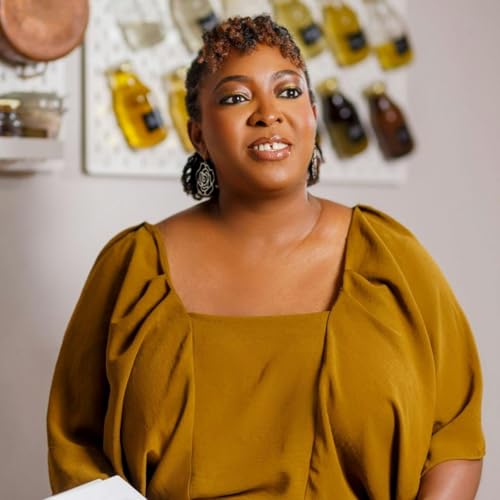
    In this episode, Gastronomica’s Irina D. Mihalache talks with Ozoz Sokoh, creator of Kitchen Butterfly and author of the forthcoming book, Chop Chop: Cooking the Food of Nigeria (2025). Ozoz reflects on how movement and mobility have shaped her work, recounting her journey from Nigeria to Canada and from the field of geology to food, and the life stations she’s encountered along the way. The conversation centers the process of creative and curatorial work in food history and storytelling, with a focus on how food connects us. This episode concludes with a preview of Ozoz’s debut cookbook. She shares the joys of living in a diverse city while developing recipes, being able to source ingredients not only from Nigerian grocers but from a wide range of multicultural stores, with similar items, and one of the dishes she's most excited about in the book. Photo by Oluwapelumi Bamidele of Ovia Reflex Photography.
    続きを読む 一部表示
    45 分
  • A Celebrated Condiment and a Forgotten Past
    2024/06/30
    In this episode, Gastronomica’s Dan Bender talks with anthropologist Alyssa Paredes about the role that stories of celebration can play in remembering food history — and in eclipsing alternative narratives about the past. Spotlighting the case of banana ketchup, Alyssa shares competing stories about the production of this popular condiment and explains how it came to be a celebrated symbol of Filipino cultural identity, yet one that overshadows unpalatable realities. Connecting narratives of past and present, Dan and Alyssa discuss the work that stories do and the process of interpreting them in food studies scholarship. Alyssa’s new article, “Banana Ketchup: Food Memory and Forgotten Labor across the Filipino Homeland/Diaspora Divide,” will be published in the next issue of Gastronomica (24.2), coming Summer 2024.
    続きを読む 一部表示
    43 分
  • How American Food Writing Changed After 2020
    2024/06/23
    What do the stories we tell about food reveal about the moment in which they are written? Gastronomica’s Melissa Fuster is joined by literary scholar turned food studies scholar Julieta Flores Jurado in a conversation about American food writing and how it has changed in recent years. They discuss key shifts in food journalism and the role of the critic, where a focus on pleasure and tastemaking has given way to new emphases on systemic and structural issues, a phenomenon accelerated in 2020 by the Covid-19 pandemic. Julieta sheds light on how contemporary American food writing differs from prior eras that showcased food as a platform for activism and change and explains what she takes to be distinctive about such writing in the current moment – its revisionary sentiment and the impulse to transform a field. Julieta’s research will be published in the next issue of Gastronomica (24.2), coming Summer 2024.
    続きを読む 一部表示
    46 分
  • What to Read Now: "The Climate Reality for Independent Restaurants”
    2024/06/09
    In this episode, Gastronomica’s Jaclyn Rohel talks with Dr. Anne E. McBride and Dr. Tara Scully about how climate change is impacting restaurants, the focus of their collaboration on a new report from the James Beard Foundation and the Global Food Institute, The Climate Reality for Independent Restaurants: A Deep Dive into the Supply Chain and New Economic Realities. Anne and Tara share some of the key research insights and discuss how the James Beard Foundation is mobilizing this knowledge to support chefs, engage lawmakers, and advocate for sustainable food policies and conservation programs. Bringing together food systems research and advocacy, they shed light on the role of chefs in helping to advance climate solutions and highlight how to take action. Dr. Anne E. McBride is Vice President of Programs at the James Beard Foundation. Dr. Tara Scully is Director of Curriculum Development at the Global Food Institute at The George Washington University.
    続きを読む 一部表示
    37 分
  • Negotiating Dietary Change in a Time of Planetary Eating
    2024/05/12
    This episode offers listeners a peek into Gastronomica’s next issue. “Coproducing ‘Planetary’ Eating Futures from Dakar: Dietary Diffusionism and the (Geo)Politics of Nutrition Transition” is co-authored by Branwyn Poleykett, Ndiaga Sall, Fatou Ndow, and Paul Young. Branwyn joins the show and talks with Gastronomica’s Jaclyn Rohel about the concept of the planetary diet and the problems with dietary diffusionism, highlighting the process of localized engagement and what it means of negotiating global food system change. Listeners can learn more and find the article in Gastronomica’s Summer 2024 issue, coming soon.
    続きを読む 一部表示
    32 分