エピソード

  • Christian Talks Game Books as RPGs and Recent Half-Price-Books Finds
    2026/03/12
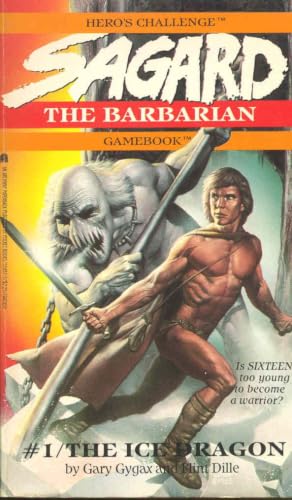
    Another week and another live chat. I wasn’t able to run the live chat on Sunday, so I rambled on about recent finds at Half-Price-Books as well as my hopes of running a series of articles that transform the loose rules contained in gamebooks into complete role playing games. While many of the classic gamebook series have stood the test of time and remain in publication (I’m looking at you Fighting Fantasy and Lone Wolf), there are a number of interesting and innovative gamebooks that have faded from the market and memory. As I’ve mentioned before, I didn’t have a regular gaming group when I was in middle school and early high school, so a lot of my “role playing” was done on computer or using gamebooks. To this day, I own a lot of the gamebooks I played as a child and I am constantly surprised by the unique mechanics or ideas that many of these books contain. Back in 2024 (ironically on March 11 of 2024 and thus exactly 2 years before last night’s live video), I wrote an article examining whether the rules in the Gary Gygax and Flint Dille book Sagard The Barbarian: #1 The Ice Dragon were complete enough to form the foundation of a role playing game. I had hoped to do a full series on game book mechanics that attempts to make complete role playing games based on their rules, and I think it’s time that I followed up on that idea. I’ll be including the full text of that older article below, so that we’ll have a frame of reference for when I design a full role playing game based on the rules in this book next week.Before I get to that though, I do want to say that what I am writing here is not a description of the video above. That live video has some interesting moments…I think…and it was great to see Mark Finn stop by. It made it less lonely and his questions helped inspire me for some future articles, articles that will require a bit more reading. So please check out the video and please forgive the awkwardness. I am also in the process of scheduling some interviews/formal discussions that I hope to share with all of you in the future.And now…on to Sagard.Barbarians at the GatesBack in May of 2023 J.Q. Graziano wrote a post about Flint Dille and Gary Gygax’s Sagard the Barbarian series of fantasy gamebooks. I came across the article today when J.Q. shared the item on his Facebook page and since I’d missed the article the first time around, I hopped right on over and read it. It’s a fairly good review of the book and series and highlights an often overlooked Gamebook series. It’s a shame that the series is overlooked because not only do they feature excellent Richard Corben covers, they were written by Gary Gygax and Flint Dille.I interviewed Dille and David Marconi regarding their Agent 13 character back in 2013 and during that conversation there were a couple of asides that mentioned Dille’s relationship with Gygax, including a mention of the Sagard books series.It seems natural that Gary Gygax, the co-creator of the Dungeons & Dragons role playing game, would dive into the adventure gamebook craze and he did so in 1985 with the Sagard the Barbarian series of gamebooks. Players of Dungeons & Dragons might notice where the books are set because this series of four interactive novels took place in Gary Gygax’s signature World of Greyhawk campaign setting.Sagard’s adventures in The Ice Dragon begin in a mountain range called The Rakers which make up the border of Ratik and the Theocracy of the Pale. Because Sagard’s adventures are set in the World of Greyhawk, there’s a ton of published setting material a GM can use, even if they chose to use the gamebook mechanics instead of D&D.Gygax co-wrote the Sagard series with Flint Dille. Dille’s other works have included the Transformers and GI Joe TV series, as well The Chronicles of Riddick: Escape from Butcher Bay video game. Gygax met Dille while he was in Hollywood working on the Dungeons & Dragons animated series, and his relationship with Dille led to Gygax asking Dille’s sister Lorraine Williams to help save a floundering TSR in 1984. The Williams saga is its own story, one which has left Lorraine’s name an epithet in some gaming circles. That story is ably covered by Ben Riggs in his book Slaying the Dragon.Needless to say, by the end of 1985, the same year that The Ice Dragon was published, Gygax sold his stock in TSR to Williams and ended his relationship with the company.All of this leaves one to wonder what Gygax thought of Dille and whether the Williams affair is one of the reasons why the Sagard saga is limited to the four existing volumes. Based on the interview I had with Dille, I think their relationship remained strong as Dille describes the years he got to hang out with Gygax as some of the best years of his life.The Ice Dragon is an engaging gamebook, but is its game system sufficient to support game play outside of the game book environment?Let’s have a look at the rules.Game ...
    続きを読む 一部表示
    45 分
  • Weekly Geeklist and Live Chat on Some Books I Love
    2026/03/08
    Before I get into this week’s Weekly Geeklist I thought I’d point out that I’m trying something a little different with this particular feature of the newsletter. For the past two weeks, I’ve launched unscheduled live chats on Substack. The first one, last week, was just me futzing around to see how uncomfortable it was to talk to a camera without any (or at least minimal) interaction from an interlocutor. The live videos are completely unscripted, though I did think up a topic that I wanted to focus on before I hit the button to go live.It was an interesting experience and both launches saw a couple of people join in to watch me ramble. I’m not sure how many stayed, because there wasn’t a lot of action in the chat, but I think it was worth doing. In part because it’s a great way for me to share some random thoughts and touch base on what I’ve got lined up in the future. Which, in this case, includes reviews of the movie Megaforce as well as the new documentary (still making the film festival circuit rounds) Making Megaforce. I do want to take a moment to thank everyone who tuned into my live video! Yes, I’m looking at you Kevin Vasquez. Since I’ll be doing these from time to time, if you’re interested in participating in a chat make sure you join me for my next live video in the app. You can join in while I’m live or we can schedule a live chat. I’m happy either way.It was tough to decide what to highlight as this week’s Geeklist Oddity. I’ve been wanting to share my thoughts on the Idaho Horseshoeing School and/or The Hoof GP for some time. I don’t know how they first showed up in my YouTube feed, but they did and they’ve become a little bit of an obsession with our household. I really like how they show how important regular care of animals is for rural communities. The Horseshoeing School videos, in particular, highlight how even minor neglect can lead to some pretty significant issues. Before living in Idaho, I never thought that people might have the same semi-neglectful attitude that we commonly see with Easter “Bunny” gifts or Dalmatian Christmas pets, but with horses. I thought everyone knew that horses were a significant investment of time and money. Similarly, the Hoof GP shows how there are fake videos with “crises” that are far more dramatic than what hoof-trimmers typically encounter.I think my favorite Idaho Horseshoeing School videos are the ones where the instructor makes his own horseshoes. Since finding the school (which is in Eastern Idaho on the far side of Craters of the Moon from me), I’ve watched some other farriers and they usually start with manufactured shoes and then fit them to the horse. This is good as far as it goes, but when Riley Mickelsen goes to make his shoes he starts with a piece of iron and gets to work. It’s amazingly soothing to watch. He’s skilled at the blacksmithing involved and makes some customized shoes, often to treat some orthopedic benefit to the horse. The combination of sound and visuals is one of my favorite ways to relax. On another note, that shows how amazingly connected our world is today, Riley is working on his Master’s Degree in Equine Science from the University of Edinburgh.Speaking of Edinburgh, okay of Scotland anyway, Graeme Parker is the “Hoof GP” and is probably the worlds most famous cattle hoof trimmer. His videos about hoof trimming are, like the farrier videos, soothing and meditative, but Graeme’s shows are about more than cow health. He also talks about his own struggles with bipolar disorder. The show is the bovine equivalent of Dr. Pimple Popper, but with added discussion about mental health and animal health and it’s got some beautiful shots of Scotland to boot.The Lamentations of Luke Y. ThompsonBack when I started the Weekly Geeklist (then Weekly Geekly), I made sure to include articles and reviews by Luke Y. Thompson. There were three main reasons for his inclusion and I’ll list them in order of importance. The first was that he’s a damn good film reviewer who knows his Bresson and his Corman and finds things to appreciate in both; he’s a true geek reviewer with a real love of pop culture and cinema. Second, he’s a friend and I care about him and his success. The film review circuit is a rough gig and he’s navigated those stormy seas for quite some time. Sometimes with pretty darn good success, but he’s been pushed aside at other times. Lastly, he was my editor when he worked for Village Media and ran their The Robot’s Voice website for a good amount of time. As society became less edgy, and more sensitive, he changed the title to The Robot’s Voice from its original title Topless Robot. He did so in part because the WWE, and other properties, didn’t want to promote their products on a publication with that name. I’ll admit that I winced a little at the website’s original title as a freelancer because I was working for a non-profit at the time ...
    続きを読む 一部表示
    35 分
  • Greg Gorden: Designing Games Beyond the d20
    2026/02/18
    Greg Gorden: Designer ExtraordinaireWay back in September of 2019, I had the honor of interviewing award winning game designer Greg Gorden in Episode 164 of Geekerati Radio. Greg was on the design teams for DC Heroes, James Bond 007, Torg, and many other games. Given the amount of time I’ve spent playing games he designed, or worked on, I don’t think it’s an understatement to say that he is my favorite game designer. In the episode, we discussed a number of the game systems he's worked on in the past and some of the mechanical innovations he's come up with. Two of his major contributions discussed in the episode were "Exploding Die Rolls" and the development of Fate Chip mechanics in Deadlands, a mechanic that has evolved into the Bennies system in Savage Worlds. He was also on the design team that pushed for the incorporation of Die-Step game mechanics into role playing games.The mechanics that Gorden developed have had a wide reaching impact in game design across the table top role playing game hobby and are worth discussing in some detail. As interesting and wide reaching as the influence of the exploding dice mechanic of DC Heroes has been, that is an innovation that's been around since the first edition of Ken St. Andre's masterpiece Tunnels & Trolls and I’ll touch on that particular mechanic in a future post honoring the very underappreciated design work of Ken St. Andre. His design influences are huge (and include the Fallout series of games), but he is not as well known as he should be in part because people didn’t often cite his influence on their designs. This newsletter post will focus on the second innovation, die-step game mechanics, and why they are one of the best mechanical foundations for any role playing game.The Most Common Role Playing Game MechanicsThere are several common base mechanics for arbitrating the success or failures of character actions in modern role playing games. Some of the most frequently used are Difficulty Number/Target Number (or what Classic Traveller called a "Basic Throw"), Percentage Chance (as exemplified in Runequest), Success Threshold (which can use narrative dice like Genesys or die pools like Vampire) or a "you, me, or we" Shared Decision Mechanic like Apocalypse World, Inspectres, and many other indie role playing games.Many of these systems use a "Fixed Die" mechanic as a part of their resolution. For example, all rolls in D&D's Difficulty Number system are resolved using a twenty-sided die, Traveller and Apocalypse World use a roll of two six-sided dice, Vampire uses a pool of ten-sided dice, and Runequest uses percentile dice. The die type doesn't change to reflect the skill of the character or the challenges faced by the character in a fixed die system, only the modifier applied to the roll or the number of dice rolled changes.Die-Step games take a different approach. Instead of using a single die type for the determination of success or failure of an action, they use various die types that move up or down to reflect the skill/natural talent of the character. For example, a character's Strength might be reflected as a die value ranging from d4 to d12 with a character of d4 Strength being weak and a character with a d12 Strength being very strong.According to Rick Priestley (a major figure in the history of the wargaming hobby), in his book Tabletop Wargames, one of the first wargames to use a Die-Step system was StarGrunt by Jon M. Tuffley. StarGrunt was first published in 1990 by Ground Zero Games and it’s second edition is available in pdf for free at the link above. StarGrunt is a science fiction miniatures skirmish game that is inspired by fiction like Gordon Dickson’s Dorsai, David Drake’s Hammer’s Slammers, the Alien films, and role playing games like 2300 AD. The rules are relatively easy to learn and one of the reasons this is the case is the fact that Tuffley decided to represent the effectiveness of individual troopers with something he called a “Basic Die.” In StarGrunt, each given trooper is rated as either Green, Regular, or Veteran. The rating of each individual trooper is determined at the beginning of play with Green troopers using a d6, Regulars using a d8, and Veterans using a d10 to determine how successful they are at a given task. StarGrunt uses a Target Number system, but does use a Step-Die modifier mechanic called “Basic Die Plus and Basic Die Minus” where the dice used by the troop levels is moved up or down one die type (from d6 to d4 or from d10 to d12) under some circumstances and modified by a additive/subtractive number in other cases (+1 or -1 to the roll).The first role playing game I can think of that used a Die-Step system is FASA’s Earthdawn First Edition published in 1993, with game mechanics designed by Greg Gorden and others. As stated in the Geekerati interview, Gorden was inspired to use a Die-Step system when his boss asked him to design a Fantasy role playing game that had its ...
    続きを読む 一部表示
    1 時間 35 分
  • A Curious Conversation with Dr. Rebekah King
    2026/01/25

    I’ve been a fan of Rebekah King’s writing on Substack since I first joined the platform. I don’t know what the first of her articles I read was, but I do remember how discovering Dr King's Curiosities reminded me that the internet was still a place filled with wonderful conversations about the things I love. While I have been blogging, podcasting, and posting on Twitter for quite some time, prior to starting my Substack I had begun to wonder if the rage and anger that commonly dominates the popular culture space was all that remained of fandom. Rebekah’s writing, and that of so many other Substack newsletters, let me see that the spirit of the heyday of blogcircles still remained. There were still people writing and saying interesting things about interesting subjects.

    I study political polarization and am in the final stages of my dissertation writing, one of the reasons I’ve been posting less of late is that I’ve sequestered myself in my office late at night to write about how parents transmit negative political affect to their children. It’s not a happy subject, but it’s one I am passionate about. I study polarization not because I like it, but because I hate it. I am, at the core, an Enlightenment Liberal who loves humanity, but laments when I see the worst of it.

    Thankfully, there are spaces like Critical Hit Parader, Dr King's Curiosities, The Soloist - an indie RPG newsletter, Rogue Games, Mortal Cinema, Joel J Miller’s Miller’s Book Review, Rediscovered Realms, The North Texas Apocalypse Bunker Weekly Report, and so many more (all of whom I hope to chat with on Geekerati at some point). I don’t always agree with the authors assessments, but all of these people write out of love for the things they admire rather than as a means to vent and spread anger.

    I never imagined I would be able to live in a world where I could chat with people I admire and find interesting who live thousands of miles away as if they were neighbors, but that is what Geek Chats are about and it was a privilege to talk with Rebekah.


    Get full access to Christian Lindke's Geekerati Newsletter at www.geekeratimedia.com/subscribe
    続きを読む 一部表示
    1 時間 16 分
  • You Got Horror in My American Revolution Role Playing Game!
    2025/12/19
    What’s the Frequency Rogue Games?First, let me apologize. This one has a number of technical issues. From my key light going out and my video camera overcompensating to the point I look blown out to the pre-echo on Richard’s end of the conversation as well as his soft audio, this is far from the best episode I’ve ever filmed. But that’s what happens with small outfits with zero production budget or staff. Okay, that’s not entirely true, but Snowball (my dog and head of post-production) doesn’t have hands, so I’ll forgive her. I just hope you can forgive me for how rough this is around the edges.This is a chat I’ve wanted to have for quite some time. I’ve been a fan of Richard Iorio’s Rogue Games since the company was founded in 2007. The company was a part of the independent reaction to the explosion of “d20 License” and Open Game License compatible games that were released in the wake of the publication of D&D 3rd Edition in 2000 and the accompanying Open Game License.My Long Aside to Discuss Where Rogue Game Fits in Game Design HistoryIn general, I am a fan of the Open Game License and many excellent games have been published as a result of Ryan Dancey’s efforts to have Wizards of the Coast go this route. One of the effects was the release of many wonderful products, but those products that tended to be in one of five categories.* Products that are expansions or continuations of the 3rd Edition D&D game like Pathfinder, which sought to continue 3rd Edition feel after Wizards of the Coast shifted to 4th Edition. These products were designed to appeal to an audience that felt abandoned. * Games that used the base mechanics of 3rd Edition while applying them to a new genres like Fantasy Flight’s (now Edge Studio) DragonStar and their Horizon Line that included Grimm, Redline, Spellslinger, or Pinnacle Entertainment Group’s Deadlands d20 and Weird War Two d20: Blood on the Rhine. All of these had the intent of recruiting d20 and D&D players into trying new systems. They give you a taste of a genre outside of traditional Fantasy, using a familiar rules set, in the hopes that you’ll try their other games.* Games that morphed the d20 Mechanic into something recognizable, but in actuality completely different from D&D. One of the best examples of this is Green Ronin’s Mutants & Masterminds game system. It merged familiar D&D mechanics with elements of the very non-d20 DC Heroes Role Playing Game to create a masterpiece of design. A modern game that would fit into this category of 5e OGL games is Nimble 5e. Nimble is fantastic, and recognizable in concepts to 5e players, but it’s really an entirely new game.* Retro-Clones of earlier editions of Dungeons & Dragons like OSRIC, Swords & Wizardry, Labyrinth Lord that gave new players an entry point to play older versions of the rules without paying an arm and a leg for physical books that could cost $100 or more. Wizards had briefly issued some old rules as pdfs, then took them down, before putting them back up again making OSR “unneeded” for that purpose, but still relevant if you don’t want to support Wizards of the Coast. There was also a Call of Cthulhu retroclone called GORETM.* Finally, there are the new games that had no mechanical similarities to D&D at all, but wanted to take advantage of the (or an) Open Gaming License which would allow a community of fans to create support materials that benefited the games. This category includes FUDGE, which predates the OGL, FATE, Gumshoe, and Dungeon World. Modern that would fit into this category tend to either use Creative Commons or a unique license like Free League’s licenses.On the other end of the spectrum were a mountain of awful, redundant, and repetitive products that were quickly put together and unplaytested. The shear amount of waste produced in this period led to a mini-retraction of the growth in the hobby, but it also inspired a generation of designers to make new games using new systems. Some of those, mentioned above, did so while leveraging the OGL, but others rejected any licenses at all…even as they borrowed and “stole” mechanics from one another left and right. The moral rule I most often saw in stolen mechanics in this group was, “cite your damn references” and cite they did.Games like Ron Edwards’ Sorcerer, Vincent Baker’s Dogs in the Vineyard and Apocalypse World (which Dungeon World is based on), Into the Odd, Burning Wheel, Inspectres!, Lacuna: Part I, My Life With Master, Blades in the Dark, Savage Worlds, and Colonial Gothic.Some of these games stemmed from the Ron Edwards’ centered community on the indie-rpgs website and are focused on story gaming and role playing game design theory. Others, like Savage Worlds and Colonial Gothic were created to provide fun gaming experiences that weren’t buried in Huizinga, Sutton-Smith, and Caillois references. Savage Worlds came at gaming from a “Fast, Furious, and Fun” approach and ...
    続きを読む 一部表示
    1 時間 30 分
  • I'm Thankful for Geek Chats.
    2025/11/25
    What are Geek Chats?Hello everyone. It’s that time again; time for a Geek Chat. Before I give an overview of the latest entry, which you can watch by clicking play above, I’d like to take a moment to walk you through the series so far.The first entry in the Geekside Chats was my discussion of books and games I hope to be discussing in the coming months and I followed this up with a rebuttal of a video that claimed that Lester del Rey was the reason America had no real “Tolkien” equivalent. The original video argued that Lester, and his wife’s, focus on formula based “Tolkien Clone” fantasy series like the Shannara series ruined Fantasy as a genre at the moment of its creation as a marketing tool. The argument, which is actually based on an old Wired piece, was filled with inaccuracies in timeline and featured a highly reductive look at the fantasy of the 1970s, 80s, and 90s, so I took the time to share some of my thoughts on that conversation. Needless to say, I think that America does have its own Tolkien equivalent in Gene Wolfe. Not only was he a poetic author who wrote rich fiction rooted in Catholic theology (without being a Catholic parable), his fiction is very much rooted in the American fantasy school. My argument is that there’s nothing wrong with lighter fare like Terry Brooks’ post-apocalyptic Shannara series, and even less wrong with Fantasy as a genre during that time period. This isn’t to say that modern Fantasy isn’t at a pivotal point that might lead to a temporary downfall of the genre, but it is to say that this is not Lester del Rey’s fault.After these first two videos, I shifted into recording conversations with fellow Substackers in the Geekerati community. These are either people on Substack I subscribe to or people who subscribe to this newsletter. The first of these recorded conversations was with LYT and we discussed modern horror films and how some younger critics were saying that they missed the days of meaningful and symbolic horror films like Hostel instead of meaningless gorefests like The Terrifier series. Given that Luke and I had chatted about this same subject when Hostel came out and David Edelstein railed against it and films like it as “Torture Porn,” it made for great fodder for a chat.This conversation was followed with a visit to the Geekspace by Matt Thompson of Critical Hit Parader during which we discussed the connection between Fantasy Fiction, Role Playing Games, and Rock and/or Roll. Matt has a deep knowledge of music and we had a very fun conversation.All of which brings us to the most recent Geekside Chat, or Geek Chat because I’m still not sure what to call these. This Sunday, I had the pleasure of chatting with Kailani B. of Damsel in the Library about fiction and films that she was “Thankful/Grateful” for. After all, this is Thanksgiving week and it’s the perfect time to talk about thankfulness. Kailani is one of the growing number of amateur authors and reviewers in the Substack community and she’s one who has some very interesting views about literature and popular culture.Some of Kailani’s critiques parallel those made by social media rage bait reviewers, for example that modern fiction needs more heroes and less deconstruction in general, but her critiques come from a place of love and sincerity. Her writing and opinions are sincere and I find that even when I don’t agree with them, I can understand them. There’s a moment in our conversation where she discusses how much she loves the 2005 film version of Pride and Prejudice (because it is … well … almost perfect, let’s be honest) and that she thinks it is better than the book. If you are wondering, this scandalous claim occurs 1 hour and 12 minutes into our conversation. As I’ve said many times, Jane Austen is my favorite novelist and I made sure to recommend Michael Chwe’s excellent Jane Austen Game Theorist as a guide to understanding how amazing the relational webs are in Austen’s work.There are more moments of agreement than disagreement in the conversation, including our shared appreciation for Garth Nix as an author. I made sure to recommend his Sir Hereward and Mr. Fitz stories, which are among my favorite recent Sword & Sorcery stories. They tell the tales of a Godkilling Knight and his Sorcerous companion, a sorcerer who happens to be a papier-mâché puppet. A puppet who is the most powerful magical being in the world. How powerful? Well…here’s a quote from the first of their adventures.“…Fitz …” “Yes, Hereward.” “Don’t … don’t kill them all.” If Fitz answered, Hereward didn’t hear, as he faded out of the world for a few seconds. When the world nauseatingly shivered back into sight and hearing, the puppet was nowhere in sight and the two battlemounts were already loping toward the gate, though the leading steed had no rider. Sir Hereward, especially as presented in the first story “Sir Hereward and ...
    続きを読む 一部表示
    1 時間 27 分
  • Critical Hit Parader Stops by for a Geekside Chat
    2025/11/05

    I’ve had the Critical Hit Parader Substack by Matt Thompson on my regular reading list for quite some time. His website combines two of my favorite subjects (Rock Music and Table Top Role Playing Games) in a way that combines rich knowledge and insight with a refreshing lack of pretense. He knows the deep lore, but shares it cheerfully. His most recent article is a discussion of a project currently funding on Kickstarter that uses the 5e, Dungeon Crawl Classics, and Shadowdark systems as a foundation for a Clark Ashton Smith Zothique Role Playing Game. I 100% in favor of anything that gets more people to read Smith’s Zothique cycle.

    A couple of weeks ago, I invited Matt to join me for a chat about the connection of music and role playing games, and really anything else that hit our fancy as we chatted. It was a wide ranging discussion that started with my Halloween music recommendations, during which I learned that the guitarist for Electric Frankenstein was a martial arts enthusiast, and included discussions of Michael Moorcock, Blue Öyster Cult, Fritz Leiber, DMR Books’ short story collections of Sword & Sorcery tales written by Metal Band Members, some of DMR’s other books that highlight classic Sword & Sorcery fiction, how D&D has changed over the years, and a lot more. I’ve included some links to a couple of the books and songs we specifically mentioned below (the books include affiliate links).

    Watch the video. Download the podcast. Watch it on my YouTube channel. Join in the conversation.

    Books

    Dungeon Crawl Classics Role Playing Game

    Dungeon Crawl Classics Lankhmar Boxed Set

    Corum: Prince in the Scarlet Robe by Michael Moorcock

    Behold the Man by Michael Moorcock

    Music

    Led Zeppelin’s Fantasy Influences

    Veteran of the Psychic Wars by Blue Öyster Cult

    Astronomy by Blue Öyster Cult

    EF Theme by Electric Frankenstein

    Black Sabbath by Black Sabbath


    Get full access to Christian Lindke's Geekerati Newsletter at www.geekeratimedia.com/subscribe
    続きを読む 一部表示
    1 時間 15 分
  • Geekside Film Chat: Horror Movies and Kids Today
    2025/10/20

    Luke and I were supposed to talk for 30 minutes or so about an article he recently read by a younger film critic. The critic was complaining about how modern horror films like The Terrifier were about gore and gore alone where classic horror films like Saw focused primarily on the social criticism first and gore second. Luke and I had a similar conversation in 2008 where we discussed David Edelstein’s New York Magazine discussing “torture porn” and it was interesting to see a younger critic praising the films Edelstein critiqued while using Edelsteinian criticisms of the newer films.

    We did talk about that them a little bit, but we wandered away from it quickly to discuss the the meaning of horror films in general and how they connect with us, the Netflix Romantic Comedy Cinematic Universe and The Wrong Paris which is the most recent entry in that series, the need for Substack to promote “Magazines” rather than just individual columnists, and a host of other topics. It’s a great chat and I hope you’ll listen and join in with your own thoughts.

    I’m including a couple of links and embedded videos below that cover some of what we talked about.

    * Luke recently received his Art the Clown “Ben Cooper Costume” action figure from NECA.

    * I talked about the 1979 film Prophecy which is one of my favorite horror films, even if the location scouting was terrible. I saw it as a kid on HBO and I think it’s available there right now for your viewing pleasure.

    * After seeing the hand come from behind the curtain in The Legacy, another 70s horror movie, when I was a kid in the 80s, I was unable to walk by shower curtains without getting a jolt of fear.

    * We discussed the excellent found footage horror film Troll Hunter and whether it was appropriate for me to have it on while my 4-5 year old daughters were playing with Legos in front of the TV.

    * I opened up my copy of H.P. Lovecraft’s Book of Horror to quote from his essay “Supernatural Horror and Literature.”


    Get full access to Christian Lindke's Geekerati Newsletter at www.geekeratimedia.com/subscribe
    続きを読む 一部表示
    1 時間 22 分