『How does the brain repair after 35 years of smoking? (Daily Dispatch Day 156)』のカバーアート

How does the brain repair after 35 years of smoking? (Daily Dispatch Day 156)

How does the brain repair after 35 years of smoking? (Daily Dispatch Day 156)

無料で聴く

ポッドキャストの詳細を見る
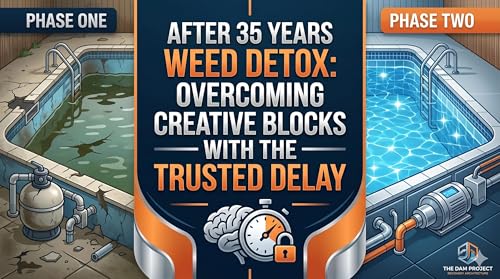
At Day 155 of my 35-year weed detox, I stopped viewing recovery as just “repair” and started treating it like construction. Here is how learning to use “trusted delays” to overcome creative blocks finally gave me the cognitive stability I’ve been chasing.Holy DiverFor the first five months of this mission, the mindset was focused on fixing what was broken. But as we edge closer to the end of Phase One, the true nature of this process is staring me in the face.Think of your brain like a swimming pool.Before this project started, the pool was already open - but the water was filthy, stagnant, and incredibly difficult to swim in.Phase One was the brutal, heavy engineering required to fix that. It was about diving into the muck, repairing the broken filtration systems, and clearing out 35 years of chemical debris. It wasn’t about building a new pool; it was about restoring the water to crystal clarity so you can actually move through it without resistance.But there is a catch to this kind of intense site renovation. While the deep clean and reconstruction are actively happening, you can’t swim in the pool. The only place left for you to go is to sit inside the site’s welfare hut.The welfare hut stays open - it keeps the rain off your head - but you don’t have access to any of the actual amenities. This is the exact architectural mapping of anhedonia and brain fog. It is a flat, grey, low-stimulation waiting room. You aren’t suffering an emergency; you are simply sitting in the only dry shelter available while the core system undergoes high-level maintenance.Phase Two is what happens now that the water is pristine. The core infrastructure is solid, and the water is clear - but now you have to maintain that delicate chemical balance, optimise the system, and deal with the inevitable new-build snags of a high-functioning asset.We aren’t just cleaning up old tissue. We are fine-tuning an entirely new ecosystem.The Anatomy of the “Trusted Delay”The ultimate proof of this structural stability happened while trying to write yesterdays Dispatch. I hit a massive creative wall while trying to write a critical section regarding the nicotine anxieties of Phase Two. The words simply refused to land.In the old ecosystem, that specific type of friction would be an immediate siren song to reach for a joint. The default setting was to artificially force dopamine and use a chemical to artificially lower the stakes.Instead, I executed a Trusted Delay.When the words don’t come, you step away. You intentionally choose a low-demand activity - in this case, simply watching TV. You don’t panic, and you don’t treat the block as a permanent wall. You treat it as a tactical pause, fully trusting that your subconscious processing network is still working on the puzzle in the background.The result? The block dissolved without a shred of internal stress. The idea arrived naturally, the dispatch was locked down.Recognition is the RegulationThe real test of Day 155 arrived in the evening. With the slate cleared early, my brain entered a state of intense, high-velocity processing - what I call the “head whirring.”Instead of letting that energy spin out into anxious over-thinking, I immediately put it to work creatively, burning the fuel until the mind was naturally tired, then stepping away before entering dangerous mental overdrive.When a minor wave of irritation crept in at the very end of the night - triggered because my head refused to stop optimising project data - I didn’t react. I didn’t reach for a substance to dull the friction. I simply observed it.Recognition is the regulation. The moment you can notice your own brain spinning out without acting on the spin, the filing system is no longer corrupted. It is working exactly as designed.Key Takeaways from Day 155:* Managing weed withdrawal symptoms and cognitive fatigue: Shifting focus from basic tissue repair to active system optimisation as you transition between phases.* Overcoming creative blocks without substance use: Using the “Trusted Delay” - stepping away to low-demand environments - to let the subconscious resolve mental friction naturally.* How to rebuild brain health after quitting weed: Transitioning from clearing out 35 years of dirty chemical water to maintaining a pristine, high-functioning cognitive ecosystem.* Using cognitive engineering for long-term sobriety and mental clarity: Recognising late-day irritation and evening “head whirring” without acting on them, proving that observation itself is a powerful form of neural regulation.#cannabiswithdrawaltimeline #PAWS #neuroplasticity #cognitiverepair #quittingweed #recoveryjourney #neurobiology #AIcollaboration #AIscaffold Get full access to DeepSeek and Me: Brain Healing Journey at deepseekandme.substack.com/subscribe
adbl_web_anon_alc_button_suppression_t1
まだレビューはありません