• When Life Gets in the Way: Sick, Sleepless & Behind on Training
    2026/06/26

    Can one bad week of missed runs ruin your marathon training? I got sick partway through a training block — a chest cold, three nights of awful sleep, and a week where everything that could go wrong did — and in this solo episode I think out loud about what it actually costs.

    I'm building toward an October marathon with a goal of breaking 4:30, and right when my training was finally clicking, it all came apart. So I get honest about training through sickness, the fear of losing fitness, and the all-or-nothing mindset that makes me skip a run completely instead of just doing a shorter one. No tidy answers here — just a runner working through a rough stretch in real time. If you've ever felt behind or gotten sick at the worst possible moment, you'll relate to this one.

    In this episode:

    • Why I traded base-building for a strength block

    • Whether to run with a cold — and when to rest

    • Do you really lose fitness after a week off?

    • The all-or-nothing trap and the small fix I'm trying

    New episodes every other Friday. If this one resonated, follow or subscribe so you don't miss the next.

    Find everything here: https://linktr.ee/evanblakeney

    Until Next Time: Just Keep Running

    続きを読む 一部表示
    20 分
  • Am I Doing Zone 2 Wrong
    2026/06/12

    Zone 2 training is low-intensity, aerobic-base running — but the hardest part isn't the science, it's one simple question: how do you actually know when you're in Zone 2?

    Most runners rely on the heart rate zones their watch hands them. The problem is those zones are built on an estimate of your max heart rate that can be off by 40 beats per minute, which throws the whole calculation off.

    In this solo episode, Evan breaks down what Zone 2 actually does for your body, why your watch is probably getting your zones wrong, and the no-gadget “talk test” that's more reliable than the numbers on your wrist. He also shares what nine weeks of real Zone 2 training did to his pace — and the injury that taught him to build smarter, not just faster.

    What you'll learn:

    • What Zone 2 is doing inside your body (mitochondria, capillaries, and the aerobic base)

    • Why “220 minus your age” makes your watch's zones unreliable

    • The talk test: how to find Zone 2 with no watch at all

    • How much Zone 2 you actually need at your weekly volume (and why 80/20 isn't a universal rule)

    • Why your heart rate spikes on hills — and why that's fine

    • How long Zone 2 takes to work, with real before-and-after pace numbers

    • The cardiovascular-vs-structural trap that led to an Achilles injury — and how to avoid it

    Evan isn't a doctor or a coach — just a runner who reads the research and shares what he finds. Nothing here is medical or training advice.

    Studies referenced:

    Storoschuk et al., “Much Ado About Zone 2,” Sports Medicine (2025): https://link.springer.com/article/10.1007/s40279-025-02261-y

    Persinger & Foster et al., the talk test and ventilatory threshold, Medicine & Science in Sports & Exercise (2004): https://pubmed.ncbi.nlm.nih.gov/15354048/

    Nes et al., max heart rate accuracy, The HUNT Fitness Study, Scandinavian Journal of Medicine & Science in Sports (2013): https://onlinelibrary.wiley.com/doi/10.1111/j.1600-0838.2012.01445.x

    Mølmen et al., mitochondria and capillary growth, Sports Medicine (2025): https://pubmed.ncbi.nlm.nih.gov/39390310/

    Follow Just Keep Running: https://linktr.ee/evanblakeney

    Until Next Time: Just Keep Running

    続きを読む 一部表示
    25 分
  • Ice Baths for Runners: What I Got Wrong (and What the Science Actually Says)
    2026/05/29

    Ice bath for runners — does cold water immersion actually help recovery, or is it just marketing hype? In this episode, I dig into the peer-reviewed research to find out and answer the questions every runner has but nobody seems to address.

    For about 15 years, I thought I had ice baths figured out. Then in the span of a few months, I heard I might be doing them at the wrong time, for the wrong reasons — and that they might even be working against my own training. So I went looking for answers, and they were a lot harder to find than I expected.

    This episode is one of the questions that made me start this podcast in the first place. Everybody talks about cold plunging and ice baths — but nobody seems to stop and answer the basic questions a runner actually has.

    In this episode I cover:

    • Is there even a difference between an ice bath and a cold plunge?

    • Does cold water immersion really help with recovery?

    • Will it kill your gains? (Spoiler: not for runners — and I explain why)

    • When should you do it — in the morning, or after your run?

    • How cold should the water be, and how long should you stay in?

    • Do you need your whole body in, or are legs enough?

    • How does cold compare to heat, contrast therapy, and active recovery?

    I'm not a scientist or a doctor — I'm just a curious runner who can read and use the internet. I leaned on peer-reviewed studies for the facts and tried to translate what I found into something useful for runners of all levels, from beginner to marathoner.

    If this episode gave you some value, the biggest thing you can do to help the show is hit follow or subscribe so you don't miss the next one. New episodes drop every other Friday.

    Until next time — Just Keep Running.

    Follow on Instagram: https://www.instagram.com/evan_blakeney

    Watch on YouTube: https://youtube.com/@justkeeprunningwithevan

    Listen on Apple Podcasts: https://podcasts.apple.com/us/podcast/just-keep-running-with-evan-blakeney/id1884475740

    Listen on Spotify: https://open.spotify.com/show/033hhjDEhHCUN076XH63Rc

    Until Next Time: Just Keep Running

    続きを読む 一部表示
    28 分
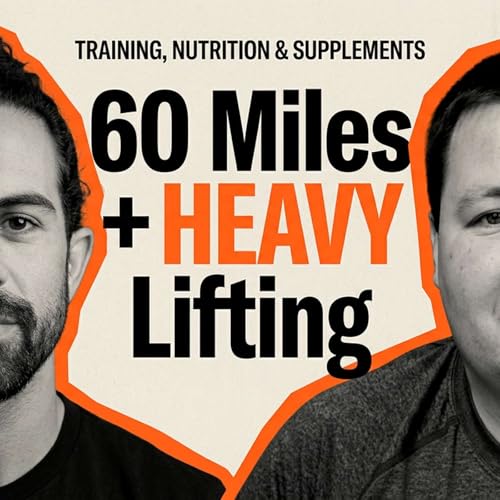
  • All or Nothing: Training, Fueling, and HYROX with Joe Mello
    2026/05/15

    What does it actually take to run 60 miles a week, lift heavy multiple times a week, and still show up for HYROX competitions — without falling apart?

    Joe Mello figured it out the hard way. He grew up playing baseball in the Bay Area, hated running his whole life (it was literally used as punishment at practice), and then one November day in Austin decided to sign up for a marathon happening in February — with zero race experience. That's just who he is: all or nothing.

    Now Joe runs high mileage, lifts heavy, competes in HYROX, and works at Heart and Soil Supplements — where nutrition isn't just a hobby, it's his job. In this conversation we get into all of it: how he structures his week, how he fuels that kind of training load, what his supplement stack actually looks like, and the mindset behind doing more than most people think is possible.

    We also get into:

    • What HYROX actually is and why it appeals to people who love both running and lifting

    • The running vs. lifting tension — and why Joe thinks most runners have it wrong

    • How to fuel early morning long runs when eating at 4am sounds impossible

    • The animal-based diet explained simply — and how it applies to endurance training

    • Organ meats: do you actually have to eat them, or do supplements cover it?

    • Why Joe thinks starting with shorter races is the advice he'd give his past self

    • The 50K he ran with nothing but a jar of honey — and what happened around mile 25

    Joe is the kind of person who jumps in before he's ready and figures it out on the way. If that sounds familiar, this one's for you.

    Follow Joe on Instagram: @joe_mello

    Follow Evan on Instagram: @evan_blakeney

    Heart and Soil Supplements: heartandsoil.co

    If you enjoyed this episode, please leave a review on Apple Podcasts — it helps more runners find the show. And subscribe so you never miss an episode.

    Until Next Time: Just Keep Running

    続きを読む 一部表示
    1 時間 44 分
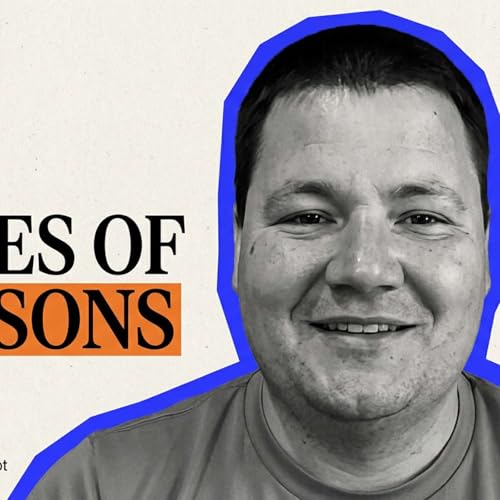
  • 13.1 Miles of Lessons: What I Got Wrong Training for My First Half Marathon
    2026/05/15

    13.1 miles. It’s not superhuman — millions of people do it every year. But for me, finishing my first half marathon was a genuinely big deal. And not because I crushed it. I didn’t. I finished well below the average time, my knee was a question mark the whole way, the weather was absolutely miserable, and I almost needed an emergency bathroom stop at mile nine.

    In this episode, I’m breaking down everything — the good, the bad, and the embarrassing. We talk training mistakes (I definitely violated the 10% rule), fueling experiments that almost went sideways, the mental war of the final three miles, and what I’d do differently if I could start over.

    This isn’t a story about being elite. It’s a story about being a regular person who signed up for something hard and showed up anyway. If you’re thinking about doing your first half — or any race — this one’s for you.

    In this episode:

    • Why I crammed my training into 8 weeks (and paid for it)

    • The honey and banana pre-run fueling strategy that actually worked

    • What happened when I almost didn’t make it to a bathroom at mile 6

    • How race energy is completely different from solo training runs

    • The mental trick that got me through the final 5K

    • My official finish time and what I’m taking into the next race

    Key Takeaway: Give yourself more time than you think you need, train in conditions that match race day, practice your nutrition, and don’t skip the mental prep!

    Until Next Time: Just Keep Running

    続きを読む 一部表示
    1 時間 23 分
  • Do You Need a Running Watch? My Used Garmin 955 Solar Review
    2026/05/15

    Do you need a running watch to be a “real” runner? In this first episode of Just Keep Running, Evan Blakeney shares his honest experience buying a used Garmin Forerunner 955 Solar on eBay for $250 — what works, what doesn’t, and whether a watch is actually worth it for beginner and intermediate runners.

    Evan walks through his two running journeys: the first one in college with no watch, no Strava, no goals — just running for the joy of it after reading Born to Run. And the second one now, training for the Jigger Johnson 20-mile ultra in New Hampshire’s White Mountains, where suddenly every pace, heart rate, and Strava notification can become a source of imposter syndrome.

    In this episode:

    • The trap of comparing your numbers to David Goggins, Cam Hanes, David Roche, and Ashley Paulson (who just broke the women’s 100-mile world record at 12:19:34)

    • Whether training readiness scores and suggested workouts actually help

    • Multi-band GPS accuracy vs. your phone

    • Battery life on the 955 Solar (he got almost 14 days)

    • Buying used on eBay: what to look for, what to avoid, and the rule he uses (it has to be at least half off new)

    • Why he probably didn’t need a flagship watch — and what he’d tell you to buy instead

    • Who actually benefits from a running watch, and who should just go run

    Whether you’re a beginner deciding on your first watch, eyeing a used deal, or talking yourself out of buying one — this episode lays out the real trade-offs from someone going through it right now.

    Connect with Evan:

    Instagram: @evan_blakeney

    Have a question or topic you want covered? DM or email.

    If this episode helped you, the best thing you can do is leave a review on Apple Podcasts — it’s the #1 thing that helps new listeners find the show.

    Until next time, Just Keep Running

    Until Next Time: Just Keep Running

    続きを読む 一部表示
    50 分