• What If Authentic Travel Content Could Book Your Trip For You?
    2026/04/08

    Travel planning shouldn’t feel like a part-time job. We sit down with Eni and Dianni, the founders of Travel Spoken, to unpack how they’re turning authentic travel stories into bookable, voice-led itineraries that save time, money, and headaches. From their first trip together to the decision to become travel agents, they share how living the pain—spreadsheets, tabs, group chats, misleading photos—led them to build a social-first platform where real videos and voice notes map directly to flights, hotels, and activities you can trust.

    We dig into the AI layer powering their approach: a voice-first agent that understands natural language, asks smarter follow-ups, and rearranges plans to cut transit time and avoid common pitfalls. Think domain-tuned models, accurate transcription, and itinerary logic that accounts for weather, distance, and local context. They also detail the cities they’re launching first—New York, Miami, Los Angeles, San Francisco, Paris, Milan, Amsterdam, and London—so travelers can discover credible content and book with confidence.

    Monetization gets a clear, refreshing treatment: standard commissions without hidden fees, a subscription for premium features, and revenue share for creators whose content drives bookings. There’s a B2B lane, too, giving small agencies and busy agents modern rails to serve clients faster. We talk candidly about the hard parts—accreditation, distribution partnerships, and customer support that stays human when it matters. Along the way, you’ll hear practical advice for student founders on choosing problems worth your grit and building momentum that outlasts setbacks.

    If you care about smarter travel, authentic content, and AI that actually reduces friction, this conversation will hit home. Subscribe, share with a friend who plans every group trip, and leave a review telling us which city you want to see on Travel Spoken next.

    This podcast is proudly sponsored by USC Annenberg’s Master of Science in Digital Media Management (MSDMM) program. An online master’s designed to prepare practitioners to understand the evolving media landscape, make data-driven and ethical decisions, and build a more equitable future by leading diverse teams with the technical, artistic, analytical, and production skills needed to create engaging content and technologies for the global marketplace. Learn more or apply today at https://dmm.usc.edu.

    続きを読む 一部表示
    32 分
  • From Listicles To Lead Gen: How Modern SEO Actually Works
    2026/03/25

    Search isn’t broken, it’s louder—and that changes how we win. Steven Schneider, founder and CEO of TrioSEO, joins us to break down why Google’s results feel crowded, how LLMs surface authentic takes, and why classic formats like listicles and “X vs Y” pages are quietly outperforming generic blogs. We get tactical fast: building tight topical clusters for a single ICP, writing honest competitor comparisons that LLMs actually cite, and using accessibility and voice search to widen the funnel while lowering risk.

    Steven pulls back the curtain on his path from building and selling affiliate sites to leading a 45-client agency through market shocks like COVID, Amazon’s affiliate cuts, and product review updates. We dig into the pricing mindset—when to undercharge to earn proof, when to say no, and how to spot red-flag clients. Then we connect SEO to revenue with interactive assets: calculators, benchmarks, and quizzes born from keyword research that convert curious readers into qualified leads. It’s a practical blueprint for turning attention into pipeline.

    We also explore how UGC and micro-influencers amplify trust, why embedding real video into written guides boosts engagement, and how personal branding acts as an SEO flywheel on platforms like LinkedIn and X. Steven’s take is clear: in a world where AI can churn out words, authority comes from useful, honest, and accessible experiences that help people decide. Subscribe, share with a teammate who needs an SEO reset, and drop a review to tell us which tactic you’ll test first.

    This podcast is proudly sponsored by USC Annenberg’s Master of Science in Digital Media Management (MSDMM) program. An online master’s designed to prepare practitioners to understand the evolving media landscape, make data-driven and ethical decisions, and build a more equitable future by leading diverse teams with the technical, artistic, analytical, and production skills needed to create engaging content and technologies for the global marketplace. Learn more or apply today at https://dmm.usc.edu.

    続きを読む 一部表示
    36 分
  • From Clickbait To Copilots: How Media Professionals Thrive With AI
    2026/03/12

    The ground is moving in media, but not the way the headlines scream. We sat down with journalist-turned-AI strategist Pete Pachal to map the real shifts: where models help, where they harm, and how to build resilient workflows that amplify human judgment instead of replacing it. Pete draws on years across top newsrooms to explain why reporting still hinges on trust and access, while research, formatting, and distribution are ripe for automation.

    We compare models by job-to-be-done: ChatGPT for deep, iterative research with memory and web access; Claude for quick, clean drafts with minimal prompting. Then we get into policy: how to define “AI slop,” why many outlets draw a red line on machine-written copy, and what mature co-authoring looks like in practice. Think sports recaps, earnings briefs, and tightly scoped beats—edited, verified, and disclosed. The goal isn’t free words; it’s freeing reporters to chase consequential stories.

    Beyond the newsroom, we explore the business model hiding in plain sight: own your corpus. Vetted archives can power branded agents, internal research tools, and licensing deals without handing over raw IP. We also tackle creative domains. Music is nearing a viable licensing marketplace for synthetic style and voice, while video remains an assistive tool for b-roll, packaging, and multi-format distribution. For PR teams and small businesses, Pete lays out a playbook to build a critical, not flattering, AI thought partner that scores guests, audits competitors, and stress tests strategy at a fraction of old costs.

    If you’re serious about journalism, comms, or digital strategy, this conversation gives you a clear map: where to insert smart human oversight, which tools to use for which tasks, and how to turn your content into a durable asset. Subscribe, share with a colleague, and leave a review to help more media pros find practical guidance that actually works.

    This podcast is proudly sponsored by USC Annenberg’s Master of Science in Digital Media Management (MSDMM) program. An online master’s designed to prepare practitioners to understand the evolving media landscape, make data-driven and ethical decisions, and build a more equitable future by leading diverse teams with the technical, artistic, analytical, and production skills needed to create engaging content and technologies for the global marketplace. Learn more or apply today at https://dmm.usc.edu.

    続きを読む 一部表示
    45 分
  • How Curiosity, Identity, And Agentic AI Can Transform Your Career
    2026/02/26

    Reinvention isn’t a single leap; it’s a habit you can practice. That’s the thread running through our conversation with Monica Marquez—military brat, first‑gen grad, Wall Street and Big Tech leader, and now cofounder of Flipwork—who lays out a playbook for turning AI from a threat into a force multiplier for your most human work. We dig into how curiosity fuels smart pivots, why acculturation beats assimilation, and how to keep your voice while navigating very different company cultures.

    Monica breaks down the identity shift at the center of AI adoption: moving from effort equals success to impact equals success. Think of AI as an eager intern—fast, imperfect, and coachable. You don’t ship its first draft; you iterate, capture prompts that work, and build repeatable playbooks. We talk practical tactics for psychological safety, creating space to test and learn, and using critique prompts to expose blind spots without the sting. Monica shares why tool-first rollouts fail, how to teach AI thinking before tool clicking, and what “agentic human” actually looks like in practice.

    We also zoom out to the workforce: right-sizing headlines, real upskilling examples like IKEA’s customer service-to-design pivot, and the quiet crisis of undocumented workflows. Monica explains Flipwork’s approach—90‑day sprints that start with people, move through process mapping with agentic AI, then build only the tools that matter. Along the way, we cover visibility for underrepresented leaders, transferable skills that defy rigid degree paths, and the brand advantage of turning artificial intelligence into authentic intelligence. If survival once favored the fittest, today it favors the fastest learners—the ones who ship, measure, and refine.

    If this conversation sparked a new way to think about your work, tap follow, leave a quick review, and share it with a friend who’s ready to reinvent.

    This podcast is proudly sponsored by USC Annenberg’s Master of Science in Digital Media Management (MSDMM) program. An online master’s designed to prepare practitioners to understand the evolving media landscape, make data-driven and ethical decisions, and build a more equitable future by leading diverse teams with the technical, artistic, analytical, and production skills needed to create engaging content and technologies for the global marketplace. Learn more or apply today at https://dmm.usc.edu.

    続きを読む 一部表示
    46 分
  • How A 19-Year-Old Turned One Viral UGC Win Into A Scalable Marketplace
    2026/02/11

    What does it take to turn one scrappy UGC experiment into a creator marketplace serving 200+ brands and 15,000 creators? We sit down with Vidovo cofounder Elijah Khasabo to unpack the scrapes, pivots, and wins behind a creator-first platform built without venture funding and scaled through community trust.

    Elijah rewinds to the moment a $50 video delivered 15 million organic views and changed his trajectory. From manually DM’ing early creators to getting stonewalled by 16 straight sales calls, he breaks down the turning point: pitching a half-built campaigns product that finally clicked with a brand worried about scale. We explore the systems behind creator vetting—reading comments over follower counts, measuring community health, and aligning a creator’s voice with a brand’s promise. The insights are tactical and timely for marketers who care about conversion more than clout.

    We also tackle the rise of AI influencers. Elijah shares why AI-generated faces haven’t replaced humans for high-trust categories, and how teams can use AI as an amplifier for scripting, editing, and B-roll without sacrificing authenticity. Then we get candid about the realities of building: balancing UMass coursework with sales and ops, paying himself only after 18 months, and choosing patience as a strategy. Along the way, you’ll hear standout campaigns, including testimonial-driven approaches and a jaw-dropping ROI case that cemented brand confidence.

    If you’re a brand marketer, creator, or student founder, this conversation delivers a playbook for modern influence: bet on micro creators for engagement depth, vet through community signals, embrace AI for speed not substitution, and let trust compound through consistent value. Subscribe, share with a friend who’s building, and leave a quick review to help more curious minds find the show.

    This podcast is proudly sponsored by USC Annenberg’s Master of Science in Digital Media Management (MSDMM) program. An online master’s designed to prepare practitioners to understand the evolving media landscape, make data-driven and ethical decisions, and build a more equitable future by leading diverse teams with the technical, artistic, analytical, and production skills needed to create engaging content and technologies for the global marketplace. Learn more or apply today at https://dmm.usc.edu.

    続きを読む 一部表示
    33 分
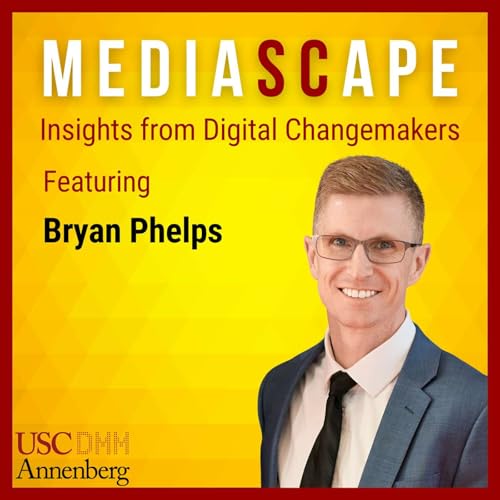
  • From Blue Links To AI Overviews: How Brands Stay Discoverable with Bryan Phelps
    2026/01/28

    The search box looks familiar, but the rules underneath are changing fast. We invited Bryan Phelps, CEO of Big Leap, to unpack what actually moves the needle as AI overviews, LLM assistants, and shifting user habits reshape discovery. Brian brings two decades of perspective, from early WordPress experiments to brand-led performance systems for national and growth-stage companies, and he explains why the core pillars of SEO—technical health, intent-true content, and real popularity—still determine whether you’re found and remembered.

    We dig into the data behind the headlines: Google’s enduring dominance, how AI summaries siphon long-tail clicks, and why audience research should guide your channel mix. Brian shares a clear content strategy for 2025—build assets that matter beyond search alone, inject firsthand expertise and data, and treat AI mentions as influence rather than last-click conversions. We explore multi-location SEO at scale, paid search and paid social that amplify organic momentum, and a simple north star: help buyers recall your brand when the moment to choose finally arrives.

    Transparency and trust run through the conversation. Bryan outlines Big Leap’s AI policy—assistive, not autonomous; no sensitive client data in public models; human review for originality and accuracy—and offers practical ways to use AI to speed research, standardize workflows, and improve consistency. We close on an unexpected edge in a synthetic era: face-to-face connection. Events, workshops, and real conversations rebuild credibility and turn awareness into durable relationships.

    If you’re rethinking your search strategy for an AI-shaped world, this conversation gives you a grounded roadmap. Subscribe for more candid talks with digital leaders, share this episode with a teammate who owns growth, and leave a quick review to tell us what you want us to tackle next.

    This podcast is proudly sponsored by USC Annenberg’s Master of Science in Digital Media Management (MSDMM) program. An online master’s designed to prepare practitioners to understand the evolving media landscape, make data-driven and ethical decisions, and build a more equitable future by leading diverse teams with the technical, artistic, analytical, and production skills needed to create engaging content and technologies for the global marketplace. Learn more or apply today at https://dmm.usc.edu.

    続きを読む 一部表示
    28 分
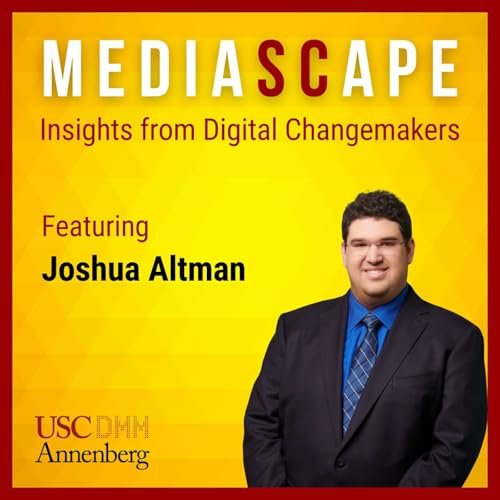
  • Be The Signal, Not The Noise: Building Trust In An AI-Drenched Media Landscape with Joshua Altman
    2026/01/14

    A reporter’s instincts, a producer’s toolkit, and a strategist’s vantage point—Joshua Altman brings all three as he walks us through his path from the newsroom to leading as a fractional chief communications officer. We dive into the real work of shaping perception and building trust, and why the best comms leaders think in systems, not silos.

    Joshua shares how a decade of hands-on content and video production evolved into guiding growth-stage companies and government teams through complex messaging challenges. We compare government’s layered approvals with private-sector speed, explore why internal emails must align with public posts, and show how a fractional CCO orchestrates agencies, sales, and product timelines so promises match delivery. Along the way, we unpack the PESO model, practical review-response tactics that actually protect revenue, and the mantra that keeps brands out of trouble: be the signal, not the noise.

    AI takes center stage as a force multiplier when handled with rigor. Joshua explains how to use AI for research, outlines, and style consistency—always with verification, sources, and a “pause for confirmation” step. We talk persona-building that goes beyond demographics into behavior and context, and why micro and nano influencers often move the needle more than celebrity accounts. Platform strategy gets specific too: when Pinterest drives outsized results, how LinkedIn anchors B2B credibility, and what to do when economic uncertainty makes full-time hiring risky.

    If you’re a founder juggling PR, a marketer drowning in channels, or a student plotting a career in a shifting media landscape, this conversation offers a clear framework for integrated communication that compounds trust over time. Subscribe, share with a colleague who needs a comms reset, and leave a quick review to tell us what you want us to tackle next.

    This podcast is proudly sponsored by USC Annenberg’s Master of Science in Digital Media Management (MSDMM) program. An online master’s designed to prepare practitioners to understand the evolving media landscape, make data-driven and ethical decisions, and build a more equitable future by leading diverse teams with the technical, artistic, analytical, and production skills needed to create engaging content and technologies for the global marketplace. Learn more or apply today at https://dmm.usc.edu.

    続きを読む 一部表示
    42 分
  • Why Great Design Still Matters When Robots Shop For Us with Nick Cawthon
    2025/12/31

    Booking a movie ticket used to mean opening a browser, clicking through tabs, and hoping checkout didn’t break. Now a voice agent can do it while you grab your coat. We explore what that shift means for design, marketing, and growth: when customers are people and robots, how do we build flows that serve both without losing our human edge?

    Nick Cawthon joins to map the journey from drafting tables to 640x480 “new media,” then to today’s LLM-driven search and autonomous browsers. We unpack why on-page SEO still matters, how standardized patterns help agents transact, and where many brands still fail at the basics—clarity, speed, and trust at the moment of decision. Nick argues that authentic language is the new moat: transcripts, stories, and thoughtful explanations that search can cite and people can believe. Shortcuts produce lookalike sites; research and insight produce signal that converts.

    We dive into adoption reality: enterprise copilots without context, tasks that actually benefit from AI, and the importance of setting psychological safety so teams can experiment in the open. The role of “translator” emerges as critical—leaders who turn strategy into prompts engineers can ship. With PMs, designers, and developers now creating in the same prompt-driven tools, coordination becomes the craft. Nick shares a direct-to-prototype approach using production stacks to validate faster, plus a free assessment for UX and product teams at retrain.gauge.io to benchmark readiness and close gaps.

    Along the way, a global study on skate culture shows why human research still beats the sea of sameness: details like scuffed shoes and counterculture norms shape real buying behavior. We close with a simple playbook for the fourth wave—after web, mobile, and cloud—where generative AI rewards specificity, consistency, and humane design. If you care about customer experience, growth, or building teams that learn fast, this one will sharpen your roadmap. Subscribe, share with a teammate, and leave a review with your biggest AI adoption win or challenge.

    https://gauge.io/

    This podcast is proudly sponsored by USC Annenberg’s Master of Science in Digital Media Management (MSDMM) program. An online master’s designed to prepare practitioners to understand the evolving media landscape, make data-driven and ethical decisions, and build a more equitable future by leading diverse teams with the technical, artistic, analytical, and production skills needed to create engaging content and technologies for the global marketplace. Learn more or apply today at https://dmm.usc.edu.

    続きを読む 一部表示
    45 分