エピソード

  • Before Kalshi and Polymarket there was the Iowa Electronic Markets
    2026/06/24
    Prediction markets aren’t new. Election betting was common until the 1940s, then mysteriously faded away.

    There was an entire political era when party bosses were expected to conspicuously gamble on their candidates (even if they secretly hedged).

    And in the 1980s, a few economists designed an election market that beat out election polling 74 percent of the time.

    Today, we’re running an excerpt from our friends at Throughline, NPR’s excellent history podcast. Subscribe right now if you don’t already. And, listen to their extended version of the episode to hear about the early markets for betting on terrorism and military uses of prediction markets.

    Support:
    • NPR+

    Read:
    • Our book: Planet Money: A Guide to the Economic Forces That Shape Your Life
    • Our weekly longform Planet Money newsletter
    • Our weekly Indicator round-up newsletter

    Follow:
    • Instagram
    • TikTok
    • YouTube
    • Facebook

    Today's episode was produced for Planet Money by Sam Yellowhorse Kesler, edited by Alex Goldmark, and engineered by Maggie Luthar. The original Throughline episode was produced by Rund Abdelfatah, Casey Miner, Cristina Kim, Devin Katayama, Sarah Wyman, Julia Redpath, and Kyana Moghadam.

    See pcm.adswizz.com for information about our collection and use of personal data for sponsorship and to manage your podcast sponsorship preferences.

    NPR Privacy Policy
    続きを読む 一部表示
    23 分
  • The real horror of ‘Alien’ and how it explains why we’re not paid enough
    2026/06/19
    Maybe the real monster in the Alien franchise isn’t actually the killer alien. Because behind the acid blood and jump scares is an even more insidious horror: a single employer with unchecked power. That employer is named Weyland-Yutani, a mega-corporation that dominates workers across the galaxy.

    Weyland-Yutani is a sort of extreme example of what economists call a monopsony — when one employer dominates a labor market and gains power to underpay and mistreat workers. Sure, it’s science fiction. But a growing number of economists argue that monopsony power is a much bigger deal in the real world than previously thought.

    We watch scenes from the movie Alien with labor economist Arin Dube, whose new book, The Wage Standard, shines a spotlight on the problem of monopsony power in the modern economy. We ask Arin what policy ideas he has that would have maybe prevented the worker tragedy seen in Alien. And we use his answer to try and rewrite the movie (spoiler: the movie becomes much shorter and less exciting).

    Plus, we speak with Fede Álvarez, the director and co-writer of Alien: Romulus, which puts Weyland-Yutani’s poor treatment of workers front row and center.

    For more on monopsony and anti-trust:
    • The labor economics of 'Alien' — and its lessons for inequality on Earth (PM newsletter)
    • The hidden power keeping wages low (PM newsletter)
    • Antitrust In America (PM series)
    • How we got free agents in baseball (PM episode)

    Support:
    • Planet Money+

    Read:
    • Our book: Planet Money: A Guide to the Economic Forces That Shape Your Life
    • Our weekly longform Planet Money newsletter
    • Our weekly Indicator round-up newsletter

    Follow:
    • Instagram
    • TikTok
    • YouTube
    • Facebook

    Today's episode of Planet Money was hosted by Greg Rosalsky and Kenny Malone. It was produced by James Sneed, edited by Jess Jiang, fact-checked by Sierra Juarez, and engineered by Robert Rodriguez. Our executive producer is Alex Goldmark.

    See pcm.adswizz.com for information about our collection and use of personal data for sponsorship and to manage your podcast sponsorship preferences.

    NPR Privacy Policy
    続きを読む 一部表示
    33 分
  • Can computer hackers get inside your mind?
    2026/06/17
    The cyber weapon that might have prevented nuclear war.

    The U.S. and Israel have long been in conflict with Iran over their nuclear development program. Some of that conflict has been out in the open, with bombs and blockades, but some of it has been invisible.

    Recently some security researchers discovered a cyberweapon likely tied to that invisible conflict. It looks like it was designed to hide on nuclear scientists computers, then throw off their calculations--just as they got close to achieving their goals.

    Sounds like something out of science fiction. But it was created 20 years ago.

    On today’s show: a whodunit about hackers, ‘Cyber Paleontologists’, spy-vs-spy protocols, cryptic intelligence leaks, nuclear physics, high-precision math, and epistemological warfare.

    Pictured: Juan Andres Guerrero Saade (JAGS) and his ‘Fast16 - NOTHING TO SEE HERE, CARRY ON’ tattoo.

    Support:

    • Planet Money+


    Read:

    • Our book: Planet Money: A Guide to the Economic Forces That Shape Your Life
    • Our weekly longform Planet Money newsletter
    • Our weekly Indicator round-up newsletter


    Follow:

    • Instagram
    • TikTok
    • YouTube
    • Facebook
    This episode was hosted by Nick Fountain and Erika Beras. It was produced by Willa Rubin and edited by Marianne McCune with help from Jess Jiang. It was fact-checked by Charlotte Isidore and engineered by Kwesi Lee. Alex Goldmark is our executive producer.

    Music: NPR Source Audio - “High Tech Expert,” “Digital Wave,” and “Hyper Pop.”

    See pcm.adswizz.com for information about our collection and use of personal data for sponsorship and to manage your podcast sponsorship preferences.

    NPR Privacy Policy
    続きを読む 一部表示
    30 分
  • It’s my tree. Why can’t I cut it down?
    2026/06/12
    Can the government stop you from cutting down your own tree? In many towns and cities these days, removing a tree now requires a permit. You might have to pay a fee, or promise to plant replacement trees. But sometimes, the city won't let you cut down the tree at all, even a tree in your own backyard.

    That's because trees are important for air quality, for flood control, and for public health. They help keep neighborhoods cool on hot days. But some think that tree protection laws have gone too far — that they might even be unconstitutional.

    On today's episode, it's the latest showdown between property rights and local zoning laws. Typically, towns and cities enjoy a lot of power when it comes to zoning and permits. They can ban certain types of buildings. They can make you paint your house a certain color. But can they make it illegal to cut down a tree? And what does it mean to "own" a piece of property anyway?

    Support:
    • Planet Money+


    Read:

    • Our book: Planet Money: A Guide to the Economic Forces That Shape Your Life
    • Our weekly longform Planet Money newsletter
    • Our weekly Indicator round-up newsletter


    Follow:

    • Instagram
    • TikTok
    • YouTube
    • Facebook

    This episode of Planet Money was hosted by Jeff Guo and Amanda Aronczyk. It was produced by James Sneed and Emma Peaslee, edited by Jess Jiang, and fact-checked by Vito Emanuel. It was engineered by Robert Rodriguez and Cena Loffredo. Alex Goldmark is our executive producer.


    See pcm.adswizz.com for information about our collection and use of personal data for sponsorship and to manage your podcast sponsorship preferences.

    NPR Privacy Policy
    続きを読む 一部表示
    25 分
  • Two indicators for lowering the rent
    2026/06/10
    One specific type of affordable housing used to be popular in American cities, kept rents low, then nearly vanished. Is it time to reconsider boarding houses and single room occupancy units? If they lowered rents in cities, why did they go away? We have the history.

    Then, let’s talk about corporate landlords. They’re blamed for driving up rents. Studies show they do the opposite. When corporate landlords come to town, they do buy up homes, which can raise the price to buy, but at the same time lower rents. We’ll parse the impact as we consider a Trump administration plan to restrict corporate home ownership.

    Related episodes:
    • Is the YIMBY movement doomed?
    • How to fix a housing shortage
    • How to build abundantly
    • Can Trump make buying a home more affordable?

    Support:
    • NPR+

    Read:
    • Our book: Planet Money: A Guide to the Economic Forces That Shape Your Life
    • Our weekly longform Planet Money newsletter
    • Our weekly Indicator round-up newsletter

    Follow:
    • Instagram
    • TikTok
    • YouTube
    • Facebook

    The original episodes of the Indicator were hosted by Darian Woods and Wailin Wong. They were produced by Julia Ritchey, Cooper Katz McKim and Corey Bridges with engineering by Travis Hagan and Robert Rodriguez. They were fact checked by Vito Emanuel and Sierra Juarez. Kate Concannon edits the show. This episode of Planet Money was produced by James Sneed with help from Emma Murphy. Alex Goldmark is our executive producer.

    See pcm.adswizz.com for information about our collection and use of personal data for sponsorship and to manage your podcast sponsorship preferences.

    NPR Privacy Policy
    続きを読む 一部表示
    18 分
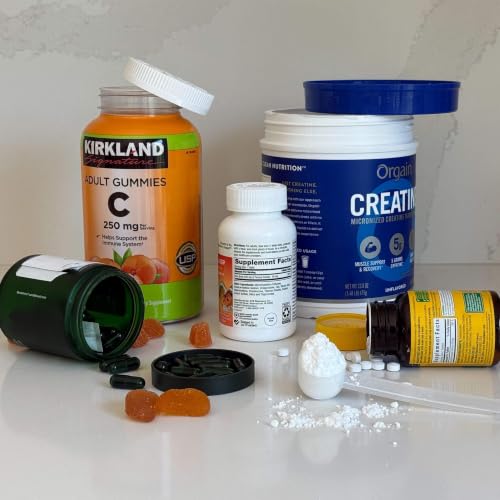
  • Why is there a supplement craze if they don’t even work?
    2026/06/05
    One reason the $70 billion supplement industry is set to double in the next seven years? Lax regulation.

    On today's show, we tell the story of a century-long battle between the U.S. government and … you, the people, blinded by your love of a magic pill.

    We’re talking about protein powders, pre-workouts, creatine, stuff for gut health, joint health, vitamin C, turmeric supplements. All that. You might not wanna hear this.

    Sources mentioned in the episode:
    • Marion Nestle, Food Politics
    • Catherine Price, Vitamania

    Support:
    • Planet Money+
    Read:
    • Our book: Planet Money: A Guide to the Economic Forces That Shape Your Life
    • Our weekly longform Planet Money newsletter
    • Our weekly Indicator round-up newsletter
    Follow:
    • Instagram
    • TikTok
    • YouTube
    • Facebook

    This episode was hosted by Sarah Gonzalez and Jane Black. It was produced by Sam Yellowhorse Kesler, edited by Marianne McCune, and fact checked by Sierra Juarez with help with Vito Emanuel. It was engineered by Robert Rodriguez with help from Jimmy Keeley. Alex Goldmark is Planet Money’s executive producer.

    See pcm.adswizz.com for information about our collection and use of personal data for sponsorship and to manage your podcast sponsorship preferences.

    NPR Privacy Policy
    続きを読む 一部表示
    35 分
  • There's no business like dough business
    2026/06/03
    Have you ever walked around a street, mall, or airport and noticed two or three of the same franchise restaurant within walking distance? Why might one Starbucks or McDonald’s or Wetzel’s Pretzels sometimes be built so close to another? Are they friends or competitors? And how can that possibly be profitable?

    Today’s show is one such example. Our pals at Hyperfixed got a knotty question we just had to help them untangle: Why are there so many Wetzel’s Pretzels so close to one another at the Atlantic Avenue-Barclays Center Station?

    To find out, Alexi Horowitz-Ghazi followed the dough all the way to the top. His journey led him to a jolly pretzel executive, a franchisee with a deep-fried American dream, and a brush with mall security.

    Support:

    • Planet Money+
    Read:

    • Our book: Planet Money: A Guide to the Economic Forces That Shape Your Life
    • Our weekly longform Planet Money newsletter
    • Our weekly Indicator round-up newsletter
    Follow:

    • Instagram
    • TikTok
    • YouTube
    • Facebook

    This episode was hosted by Alex Goldman and Alexi Horowitz-Ghazi. Hyperfixed is produced and edited by Emma Courtland, Amor Yates, Sari Soffer Sukenik and Tori Dominguez Peak.  The music is by the mysterious Breakmaster Cylinder and Alex Goldman. It was engineered by Tony Williams. Fact checking by Naomi Barr. The Planet Money version was produced by Sam Yellowhorse Kesler and edited by Jess Jiang. It was engineered by Robert Rodriguez. Alex Goldmark is Planet Money’s executive producer.

    See pcm.adswizz.com for information about our collection and use of personal data for sponsorship and to manage your podcast sponsorship preferences.

    NPR Privacy Policy
    続きを読む 一部表示
    27 分
  • The sneaky way companies get new chemicals into our food
    2026/05/29
    99% of chemicals in our food right now were added without FDA approval. Many were added in secret, through a sneaky loophole built into the 1958 Food Additives Amendment.

    It was supposed to require FDA approval for new additives. But food companies and chemical makers found a workaround. And the FDA formally okayed the loophole in the 90s — in the process bringing attention to a loophole to the loophole.

    The FDA has essentially admitted it doesn’t have the capacity to verify the safety of new food chemicals. So they leave it up to food companies and chemical makers to declare their brand new chemicals are safe. These chemicals are used in everything from chocolate and smoked fish, to tea bags, protein drinks, popcorn, and seeds.

    So, how’d the loophole get there, and what does it tell us about the priority the U.S. places on safety versus speed and innovation? And, how much can one lawyer do about it?

    Live show tour and book info. / Subscribe to Planet Money+

    Listen free: Apple Podcasts, Spotify, the NPR app or anywhere you get podcasts.

    Facebook / Instagram / TikTok / Our weekly Newsletter.

    This episode was hosted by Sarah Gonzalez, produced by Sam Yellowhorse Kesler, edited by Jess Jiang, fact checked by Sierra Juarez, and engineered by Robert Rodrguez with help from Kwesi Lee. Alex Goldmark is Planet Money’s executive producer.

    See pcm.adswizz.com for information about our collection and use of personal data for sponsorship and to manage your podcast sponsorship preferences.

    NPR Privacy Policy
    続きを読む 一部表示
    36 分