エピソード

  • The Quiet Cart: Dignity‑First Scripts & Micro‑Accommodations for Shopping Trips
    2026/04/01
    Errands—groceries, pharmacy runs, or quick store stops—turn into high‑cost days when sensory overload, decision fatigue, or hidden disability spikes. In this concise monologue Dr. Disruptor opens with a doorway image of entering a crowded aisle and feeling the momentum melt away, then offers the Quiet Cart: a compact toolkit for shoppers and hosts. Listeners learn three portable moves: a one‑line Shopper Script to request pacing or brief help without medical detail; a discreet Cart Card (physical or screenshot) that signals needs like aisle space, extra time at checkout, or a low‑stimulus lane; and a host/staff micro‑response checklist so employees can act quickly and privately. The episode gives paste‑ready phrasings for shoppers and clerks, low‑tech delivery options, a 60‑second rehearsal to draft your script now, and a one‑trip pilot plan. Outcome: fewer shame exits, safer errands, and everyday public spaces that keep dignity first.
    続きを読む 一部表示
    7 分
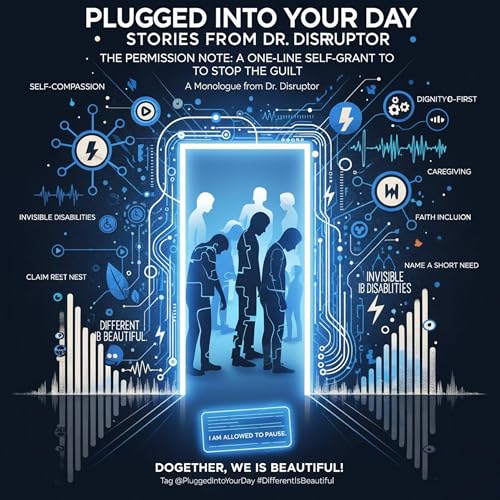
  • The Permission Note: A One‑Line Self‑Grant to Stop the Guilt
    2026/04/03
    We carry internal scripts that pressure us to prove we deserve rest, help, or a smaller role. In this episode Dr. Disruptor introduces the Permission Note: a single, dignity‑first sentence you create that grants yourself permission to pause, decline, or name a short need without apology. The monologue opens with a doorway image of arriving to a meeting already depleted and waiting to justify every breath. Listeners learn the Permission Note anatomy (value line • boundary line • brief return signal), three low‑visibility delivery modes (pocket card, lock‑screen, soft whisper), and paste‑ready templates tailored for worship, classroom, and caregiving moments. There’s tonal coaching so notes land warm, a 60‑second rehearsal to draft your first line now, a one‑week pilot to test the note in real settings, and a social CTA aligned with our social_media style: post a redacted sample, tag @PluggedIntoYourDay with #DifferentIsBeautiful. Outcome: less self‑interrogation, clearer boundaries, and a small habit that protects dignity without disclosure.
    続きを読む 一部表示
    6 分
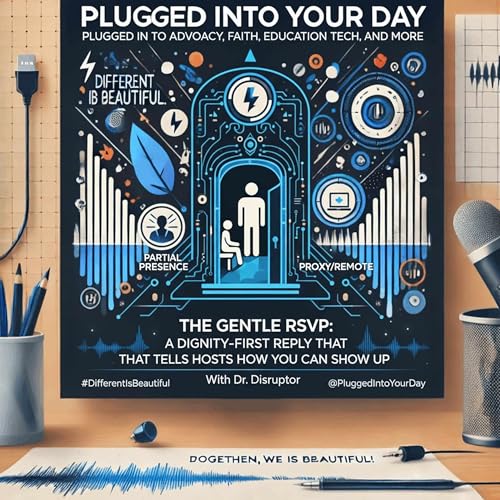
  • The Gentle RSVP: A Dignity‑First Reply That Tells Hosts How You Can Show Up
    2026/04/06
    Events still assume binary yes/no RSVPs that hide how people really have energy to participate. In this episode Dr. Disruptor opens with a doorway image—a volunteer who crashed the night before seeing their name on the roster—and offers the Gentle RSVP: a tidy, three‑option reply format (Full Presence • Partial Presence • Proxy/Remote) plus a single, nonmedical support line so hosts know what to plan without curiosity. Listeners learn RSVP anatomy, paste‑ready reply templates for worship, classrooms, and volunteer shifts, low‑visibility delivery options (DM, form dropdown, pocket token), and exact host commitments that convert every signal into practical pre‑event actions (seat hold, micro‑shift, named backup, low‑stimulus seat). The episode includes a 60‑second rehearsal to choose your default RSVP, a one‑week pilot plan to try it with one event, and a social CTA: post a redacted example and tag @PluggedIntoYourDay with #DifferentIsBeautiful. Outcome: fewer surprises, less repeated explanation, and events designed around real capacity.
    続きを読む 一部表示
    8 分
  • The Small‑Favor Ledger: A One‑Page Habit to Request & Return Tiny Helps with Dignity
    2026/04/07
    Small, everyday favors—an extra hand moving a chair, a brief lift to a car, a one‑time meal drop—keep people connected but can also create hidden shame when requests accumulate and no one tracks reciprocity. In this episode Dr. Disruptor introduces the Small‑Favor Ledger: a simple, one‑page habit both individuals and hosts can use to request, accept, and record tiny supports privately and respectfully. Listeners learn ledger anatomy (request line • one small ask • suggested return gesture • steward initials), three discrete delivery modes (pocket card, private DM, steward log), and host promises that prevent curiosity. The episode offers paste‑ready templates for faith communities, classrooms, and volunteer teams, a 60‑second rehearsal to draft your first line, and a one‑week pilot plan to try the Ledger in one setting. Outcome: fewer unpaid emotional IOUs, clearer norms for small help, and a community rhythm that keeps dignity first while staying practically helpful.
    続きを読む 一部表示
    6 分
  • Care Credits: A Tiny, Dignity‑First Exchange for Short Respite
    2026/04/09
    Care work is quiet, relentless, and often unshared. The Care Credit reframes community support as a tiny, dignified currency: thirty‑ to sixty‑minute credits neighbors, volunteers, and teams offer, redeem, or trade so caregivers get predictable respite without repeated explanations. In this episode Dr. Disruptor opens with a doorway image of a parent stepping out for two minutes and returning to find help was not available, then walks listeners through a low‑burden model: how to seed credits, steward privacy, cap value to keep requests small, and set an equitable triage so credits reach urgent need rather than social capital buyers. Paste‑ready steward scripts, three delivery modes (physical cards, a private app whisper channel, stewarded sign‑up sheet), a 60‑second rehearsal to request one credit aloud, and a one‑week pilot plan make the Care Credit immediately usable in faith communities, classrooms, and volunteer networks. Outcome: more reliable short relief, preserved dignity, and a culture where care is shared, not rationed.
    続きを読む 一部表示
    8 分
  • The Invisible‑Load Ledger: A 60‑Second Daily Record to See, Validate, and Use Your Patterns
    2026/04/10
    When your day feels like a fog of small failures and unexplained crashes, a private record becomes proof and compassion at once. In this episode Dr. Disruptor invites listeners to try the Invisible‑Load Ledger: a three‑line, one‑minute daily habit (Score • Spark • Shelter) you keep in voice memo, notes app, or a pocket card. Score = one quick energy number (0–5); Spark = one small trigger or bright moment; Shelter = one tiny support that helped or that you wish you'd had. Over a week the Ledger turns scattered shame into actionable patterns you can use for self‑care, to tune a Capacity Map, or to share a redacted snapshot with a trusted leader or clinician. Listeners get paste‑ready prompts, privacy rules to keep entries nonmedical, a 60‑second rehearsal to start today, and a one‑week pilot plan to notice one pattern and one small, dignity‑preserving tweak. Outcome: clearer self‑knowledge, less self‑doubt, and gentle data that supports advocacy without spectacle.
    続きを読む 一部表示
    7 分