エピソード

  • 507-593-9775 Call and Listen Now
    2026/06/02

    Tell Another Positive Person About This Message Line

    Black History Is American History — No Permission Required

    Black People do not need consent to learn the truth about their own history. Learning about Black Patriots, Black brilliance, and Black resistance is not optional — it is essential to understanding America itself.

    Asking for “permission” to teach Black history sends the wrong message. It suggests that truth needs approval. It suggests that identity must be softened. It suggests that pride must be negotiated.

    We reject that.

    Stand tall. Stand informed. Stand honorable. Black USA, your history is not a side note — it is a foundation of this nation.

    Say it with your chest: “I’m Black and I’m proud.”

    And mean it every day.

    Tell Another Black American About This Podcast and Message Line.

    Comments: radiotalklr@gmail.com

    続きを読む 一部表示
    3 分
  • 250 YEARS: BLACK PATRIOTS MATTER
    2026/05/29

    Order My Book: www.weusoursluckybooks.com

    Contact; radiotalklr@gmail.com

    Lesson Plan: 250 Years of Black Military Service

    Objective 1: Students will explain how Black Americans have served in every U.S. war from the Revolution to today. Example: A student identifies the 54th Massachusetts, the Harlem Hellfighters, and the 6888th Battalion and states how each advanced American democracy.

    Objective 2: Students will evaluate how racism shaped Black veterans’ experiences during and after service. Example: A student explains how Vietnam veterans returned to racial covenants, GI Bill discrimination, and unequal access to housing and education.

    Learning Outcomes

    Outcome 1: Students will produce a short written or verbal explanation of how Black service members showed patriotism despite barriers. Example: A student describes how the 54th fought for a nation that denied them equal pay.

    Outcome 2: Students will connect past discrimination to modern debates about equity and national memory. Example: A student explains how GI Bill exclusion contributed to the racial wealth gap still visible today.

    Student Challenge (Instructor Must Complete)

    Students challenge the instructor to identify one overlooked Black military figure or unit not covered in class and explain their contribution in under 60 seconds. If the instructor cannot answer, students choose the next figure or topic for class exploration.

    5E Learning Model

    Engage: Students examine images of Black soldiers from the Revolution, Civil War, WWI, WWII, Vietnam, and modern conflicts. Prompt: “What patterns do you see across time?”

    Explore: Students rotate through stations on the 54th Massachusetts, Harlem Hellfighters, Tuskegee Airmen, the 6888th, and Vietnam veterans facing discrimination.

    Explain: Students share findings. Instructor clarifies themes: service in every war, racism in the ranks, denied benefits, and the contradiction between service and citizenship.

    Elaborate: Students respond to: “How does recognizing 250 years of Black service change our understanding of American democracy?” They must use two historical examples.

    Evaluate (Formative Assessment): Exit Ticket:

    1. Name one Black military unit or figure and explain their contribution.
    2. Describe one form of discrimination Black veterans faced and its impact.
    続きを読む 一部表示
    28 分
  • Breaking News: WHITE FRAGILITY ALLOWED FRAUD
    2026/05/25

    Comments: radiotalklr@gmail.com

    続きを読む 一部表示
    19 分
  • Aimee as Shirley Temple: Mr. T, Batman and Tap-Dancing Men
    2026/05/22

    Aimee Bock today's Shirley Temple

    Aimee Bock (aka Shirley Temple) didn’t just walk into Minnesota’s nonprofit world — she twirled in like a tap‑dancing prodigy from a 1930s movie reel. With a smile sweet enough to charm a courtroom and an innocence polished to a Hollywood shine, she projected the kind of “golly‑gee” wholesomeness that made people believe every grant, every meal count, every signature was pure as sugar.

    But behind the curls‑and‑dimples routine was a performance far more elaborate than any Shirley Temple musical. While the public saw a benevolent leader feeding children, the backstage reality was a choreography of paperwork, partnerships, and meal claims that didn’t always match the script. The spotlight she sought for her organization slowly shifted, revealing shadows where the applause used to be.

    As the allegations grew louder, the contrast sharpened: the child‑star innocence she projected versus the federal‑investigation gravity surrounding her. It wasn’t just a fall from grace — it was a tap‑dance routine gone off‑beat, a show where the props didn’t match the story, and the audience suddenly realized the orchestra had stopped playing.

    In the world of MinneFrauda, where trust is currency and oversight is the stage manager, her act became a cautionary tale: a reminder that even the brightest smile can hide the most complicated script, and even the sweetest persona can lead an entire cast into chaos when the performance collapses.

    続きを読む 一部表示
    18 分
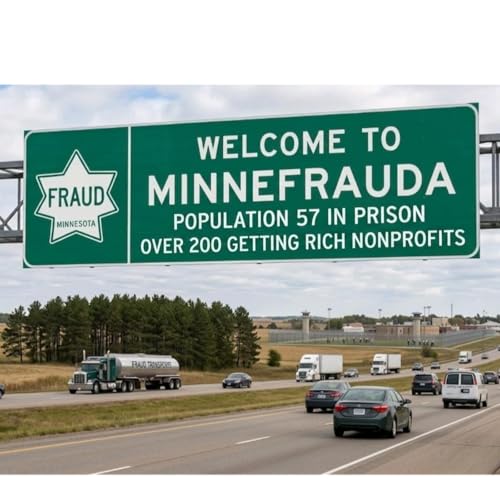
  • $$$ MinneFrauda $$$ -
    2026/05/21

    My Cool Term "MinneFrauda" LOL

    The new "MinneFrauda" Task‑Force is a specialized, rapid‑response investigative unit established to identify, analyze, and disrupt patterns of financial misconduct affecting Minnesota’s public programs, nonprofit sectors, and community‑based service networks. The task‑force operates with a dual mandate: protect taxpayer resources and restore public trust through transparent, data‑driven accountability.

    Core Functions

    • Fraud Detection & Analysis — Conducts targeted audits, cross‑agency data reviews, and pattern‑tracking to identify irregularities in funding streams, grant usage, and program reporting.
    • Field Investigations — Deploys investigators to conduct interviews, site visits, and compliance checks across agencies, nonprofits, and contracted service providers.
    • Community Impact Assessment — Evaluates how fraud schemes harm vulnerable populations, disrupt service delivery, or distort public narratives about need, equity, and resource allocation.
    • Public Reporting — Produces clear, accessible summaries of findings to ensure Minnesotans understand how public dollars are being used — or misused.
    • Policy Recommendations — Issues corrective guidance, structural reforms, and legislative recommendations to prevent future fraud and strengthen oversight systems.

    Guiding Principles

    • Transparency — Every finding is documented, traceable, and publicly reportable.
    • Equity — Investigations consider the disproportionate impact fraud has on marginalized communities.
    • Accountability — No agency, organization, or individual is exempt from review.
    • Integrity — Evidence‑based decision‑making drives every action.

    Operational Motto “Protecting Minnesota’s Resources. Exposing Minnesota’s Frauda.”

    続きを読む 一部表示
    41 分
  • Using Opposition to Succeed
    2026/05/19

    Order My Book: weusoursluckybooks.com

    LOGIC MODEL: Using Opposition as Motivation

    Program Goal: Equip students, graduates, and emerging leaders to convert opposition—negative people, “isms,” doubt, and resistance—into motivation, strategy, and personal advancement.

    Inputs

    • Personal experiences with opposition
    • Supportive peers and mentors
    • Leadership frameworks (task, transformational, servant, adaptive)
    • Historical examples (Tubman, Hamer, Malcolm X, Dr. King)
    • Self‑reflection and discipline
    • Awareness of haters, prejudices, and systemic barriers

    Activities

    • Identify sources of opposition and categorize them (ignore vs. use)
    • Reframe negative messages into action questions (“What CAN I do?”)
    • Practice leadership strategies that anticipate resistance
    • Study historical leaders who turned pressure into purpose
    • Convert critics’ words, jealousy, and actions into strategic fuel
    • Teach students to transform discouragement into momentum

    Outputs

    • Examples showing how opposition becomes usable
    • Student‑created strategies for responding to haters and “isms”
    • Leadership plans built around resistance
    • Reflection statements on how opposition reveals potential
    • Tools for turning negativity into progress

    Short‑Term Outcomes

    • Students recognize opposition as material, not a barrier
    • Increased confidence when facing discouragement
    • Ability to ignore unproductive critics
    • Ability to convert negative messages into strategic action

    Long‑Term Outcomes

    • Stronger leadership identity
    • Greater resilience in college, career, and entrepreneurship
    • Ability to build more from opposition than from agreement
    • Strategic use of resistance to amplify goals and message
    • Transformation of opposers into unintentional contributors to success

    Impact

    Learners adopt the mindset that opposition is not the enemy—it is the material. Motivation is the builder. Strategy is the result. They grow from supporters but rise by converting resistance into power.

    Assumption

    This model assumes that students and leaders are willing to reflect honestly, confront discomfort, and apply disciplined action. It also assumes that opposition—whether rooted in jealousy, prejudice, or fear—can be reframed and repurposed into constructive energy when guided by intentional leadership.

    Contact: radiotalklr@gmail.com

    続きを読む 一部表示
    24 分
  • Dr. Walter D. Greason: Afrofuturism and Historic Preservation
    2026/05/18

    See My Book: www.weusoursluckybooks.com

    Contact Dr. Greason; wgreason@macalester.edu

    The Graphic History of Hip Hop

    https://www.graphichistorycompany.com/graphichistoryofhiphop

    Lesson Plan: Reimagining Communities through Afrofuturism and Economic Justice

    (Based on themes from WalterDGreason.com)

    Overview

    Dr. Walter D. Greason’s work blends history, economics, Afrofuturism, and digital innovation to show how communities can rebuild themselves through cultural preservation and creative problem‑solving. His projects demonstrate how understanding the past helps us design a more just future.

    Learning Objectives

    1. Students will analyze how Afrofuturism and historic preservation can transform vulnerable communities. Example: Students review Greason’s Eatonville preservation work and explain how protecting cultural history strengthens community identity.
    2. Students will evaluate how digital innovation can promote racial and economic equity. Example: Students explore The Graphic History of Hip Hop and identify how technology communicates social justice messages.

    Learning Outcomes

    1. Students will demonstrate understanding of interdisciplinary approaches to community uplift. Example: Students create a short presentation connecting Afrofuturism to a local urban renewal effort.
    2. Students will apply Greason’s model of cultural preservation to propose solutions for modern issues. Example: Students design a mini‑plan to revitalize a local landmark using digital storytelling.

    5E Learning Model (Student‑Friendly Version)

    Engage — Get Curious

    Students watch a short clip or explore images from Greason’s Eatonville project. They discuss: “Why does preserving history matter for our future?”

    Explore — Investigate the Ideas

    Students work in small groups to explore one of Greason’s projects (Eatonville, Gallier House, Graphic History of Hip Hop). They take notes on how history, art, and economics connect.

    Explain — Make Meaning

    The teacher breaks down how Afrofuturism, economics, and cultural design work together. Students share what they discovered and connect it to real‑world community issues.

    Elaborate — Apply What You Learned

    Students create a digital poster, short essay, or mini‑proposal showing how they would preserve or redesign a local space using Greason’s principles.

    Evaluate — Show What You Understand

    Students reflect on how creative history can inspire social change. They share their ideas with peers and give feedback.

    Formative Assessment

    Reflection Journal Prompt:

    • How does Afrofuturism help us imagine better communities?
    • What lessons from Dr. Greason’s work could help improve your city or school?

    To Be a Guest on This Podcast Email: radiotalklr@gmail.com

    続きを読む 一部表示
    35 分
  • Have Fun Challenging Job-Related Bias
    2026/05/12

    radiotalklr@gmail.com

    Easy Way to Challenge Job‑Related Bias and Low Expectations

    Purpose

    To help participants recognize and challenge workplace bias, microaggressions, and low expectations through humor, transparency, and confidence—without confrontation or loss of professionalism.

    Learning Objectives

    By the end of this session, participants will be able to:

    1. Identify subtle forms of workplace bias and low expectations that appear as “compliments,” jokes, or DEI‑related comments. Example: Recognizing phrases like “You’re lucky to be here” or “We needed diversity” as coded bias.
    2. Apply humor and transparency as tools to disarm bias and expose projection. Example: Suggesting the “Transcript Transparency Challenge” as a playful way to level the field.
    3. Demonstrate professional confidence rooted in earned experience and qualifications. Example: Responding to bias with calm facts—“I’ve been doing this work for 15 years across schools and juvenile justice systems.”

    Lesson Flow

    1. Opening (5 minutes)

    Display the sign: “Easy Way to Challenge Job‑Related Bias and Low Expectations.” Ask participants: “What does this phrase mean to you? Where have you seen low expectations show up at work?”

    Encourage quick responses—keep tone light but real.

    2. Mini‑Lesson (10 minutes)

    Explain that bias often hides behind humor or “casual” comments. Discuss how transparency and humor can flip the power dynamic.

    Example Discussion Points:

    • “You’re only here because of DEI” → reveals insecurity, not truth.
    • “We lowered the bar for you” → projection of someone else’s fear of comparison.
    • “You’re so articulate” → coded surprise at competence.

    Show how humor can expose bias without hostility:

    “Let’s all post our transcripts in the break room—celebrate everyone’s academic journey!”

    The laughter opens space for reflection.

    3. Activity (10 minutes)

    Role‑Play: Participants act out short workplace scenarios involving bias or low expectations. Each group practices responding with humor and professionalism.

    Example: A colleague says, “You’re lucky DEI opened doors.” Response:

    “Maybe! But I’ve been opening doors for myself since before DEI had a budget.”

    Encourage creativity and laughter while reinforcing dignity.

    4. Reflection (5 minutes)

    Ask: “What happens when we respond with humor instead of anger?” “How does transparency shift power?” “How can we protect our peace while still challenging bias?”

    Participants share insights.

    Expected Outcomes

    • Participants recognize bias and projection in workplace interactions.
    • Participants gain confidence using humor and transparency to respond.
    • Participants leave with a clear sense of earned worth and professional legitimacy.

    Cool Closing Strategy: “You Earned Your Way”

    End with a group affirmation:

    “I earned my way here. My work speaks louder than anyone’s assumptions.”

    Invite participants to say it aloud together. Then challenge them to post their own credentials proudly—not to prove worth, but to remind others that excellence is not accidental.

    Participants write one short reflection:

    • Describe a time they faced bias or low expectations.
    • Explain how they could use humor or transparency to respond next time.

    続きを読む 一部表示
    14 分