エピソード

  • The Ruthless Guide to Mastering Your Time
    2026/04/23

    Ever finish a full day and still feel like nothing important got done? This episode is your wake-up call. If your schedule feels packed but your progress feels stuck, it's time to stop being busy and start being intentional. In this episode, you'll learn why your brain keeps pulling you toward distractions, how saying "yes" too often is quietly draining your time, and what it actually means to be ruthless with your schedule without becoming miserable.

    You'll walk away with simple, real strategies you can use immediately to protect your time, reduce stress, and start focusing on what actually moves your life forward—mentally, morally, physically, spiritually, and financially.

    If you're ready to take back control of your day instead of reacting to everything around you, this episode is for you.

    Key Topics

    • Decision fatigue and its impact on productivity
    • The role of habits and routines in time management
    • The importance of boundary setting and saying no
    • Psychological triggers that lead to distraction
    • The concept of opportunity cost in daily decisions
    • Real-life example of Warren Buffett's goal prioritization
    • The spiritual perspective on time as stewardship
    • Actionable steps to audit and protect your time

    🔗 Learn more and explore additional resources: www.Quest-Success.com

    📚 Suggested Reading & Resources
    • Essentialism: The Disciplined Pursuit of Less by Greg McKeown
    • Baumeister, R. F., et al. (1998). "Ego Depletion: Is the Active Self a Limited Resource?"
    • Duhigg, Charles. The Power of Habit
    • Newport, Cal. Deep Work
    🎬 Hashtags

    #SpiderMan #WarrenBuffett #Essentialism #DeepWork

    続きを読む 一部表示
    26 分
  • Why Not Being Chosen Might Be Your Greatest Opportunity
    2026/04/22

    You've felt it before… that moment when you didn't get picked, didn't get the opportunity, or didn't hear your name called when you thought you would. It's frustrating, confusing, and sometimes it sticks with you longer than you'd like. But what if those moments are doing more for you than you realize?

    In this episode, you'll start to see rejection differently. You'll learn what's actually happening in your mind when you're not chosen, why it can feel so personal, and how those experiences can quietly redirect you toward something better. This isn't about pretending rejection feels good—it's about understanding how to use it so it doesn't hold you back.

    If you've ever questioned your path, compared yourself to others, or wondered if you missed your shot, this episode will give you a new way to look at it and a practical way to move forward.

    Key Topics

    • The brain's response to rejection and social pain
    • The concept of post-traumatic growth and resilience
    • The role of imagination and failure in success stories like Walt Disney and Harry Potter
    • The impact of rejection on mental, moral, physical, spiritual, and financial pillars of success
    • Practical steps to reframe rejection and turn setbacks into opportunities

    Listen now and take the next step on your path: www.Quest-Success.com

    Suggested Reading / References

    • Baumeister, R. F., & Leary, M. R. (1995). The Need to Belong: Desire for Interpersonal Attachments as a Fundamental Human Motivation
    • Roese, N. J. (1997). Counterfactual Thinking (Psychological Bulletin)
    • Seery, M. D. (2011). Resilience and Post-Traumatic Growth research
    • Merton, R. K. (1968). The Matthew Effect in Science

    Related Hashtags
    #WaltDisney #HarryPotter

    続きを読む 一部表示
    31 分
  • Breaking Free from Black-and-White Thinking
    2026/04/21

    Do you ever feel like you're either crushing life or completely falling apart… with no in-between? In this episode, we break down dichotomous thinking—why your brain loves extremes and how that pattern quietly holds you back in your mindset, habits, relationships, and decisions. You'll learn what's actually happening in your brain when you jump to all-or-nothing conclusions, why it feels so convincing in the moment, and how it can lead to stress, burnout, and missed opportunities.

    More importantly, you'll walk away with practical strategies to shift your thinking, make better decisions, and build real progress across the five pillars of success. This isn't about becoming perfect—it's about becoming consistent, aware, and in control of how you think and respond.

    If you're ready to stop letting one bad moment define your whole day—or your whole life—this episode will give you a new way to see things and a simple way to start changing it today.

    Key Topics

    • Dichotomous thinking and its impact on mental health
    • Neurological basis of black-and-white thinking
    • Relationship between perfectionism and cognitive distortions
    • Practical steps to recognize and challenge dichotomous thoughts
    • The role of dopamine and evolutionary psychology in thinking patterns

    🔗 Learn more and explore additional resources: www.Quest-Success.com

    Suggested Reading & Resources

    • Dweck, C. (2006). Mindset: The New Psychology of Success
    • Burns, D. D. (1980). Feeling Good: The New Mood Therapy
    • Beck, A. T. (1976). Cognitive Therapy and the Emotional Disorders
    • Kahneman, D. (2011). Thinking, Fast and Slow

    Hashtags & References
    #HowardHughes #CarolDweck #TheGreatestShowman

    続きを読む 一部表示
    31 分
  • How Avoidance Sabotages Your Success
    2026/04/20

    What's the one conversation you keep putting off… the one that keeps replaying in your head but never quite makes it out of your mouth? In this episode, you're going to learn why avoiding that conversation feels easier in the moment—but quietly creates more stress, frustration, and missed opportunities over time. More importantly, you'll walk away with a clear, practical way to start handling those conversations with confidence, clarity, and purpose.

    We break down what's happening in your mind and body when you avoid difficult conversations, how it impacts your relationships, your growth, and even your success across all areas of life, and what you can do this week to finally take action. This isn't about becoming perfect with your words—it's about showing up when it matters.

    If you're ready to stop overthinking and start moving forward, this episode will give you the push you need.

    Takeaways

    • Avoidance provides short-term relief but hampers long-term growth.
    • The brain's negativity bias amplifies fears of confrontation.
    • Writing out key points can prepare you for difficult conversations.
    • Addressing avoidance improves mental clarity and reduces stress.
    • Courage and truthfulness are essential for personal and leadership growth.

    🔗 Learn more and explore additional resources: www.Quest-Success.com

    📚 Suggested Reading & Resources:

    • Crucial Conversations: Tools for Talking When Stakes Are High — Kerry Patterson et al.
    • Difficult Conversations: How to Discuss What Matters Most — Douglas Stone, Bruce Patton, Sheila Heen
    • The Courage to Be Disliked — Ichiro Kishimi & Fumitake Koga

    #winstonchurchill

    続きを読む 一部表示
    31 分
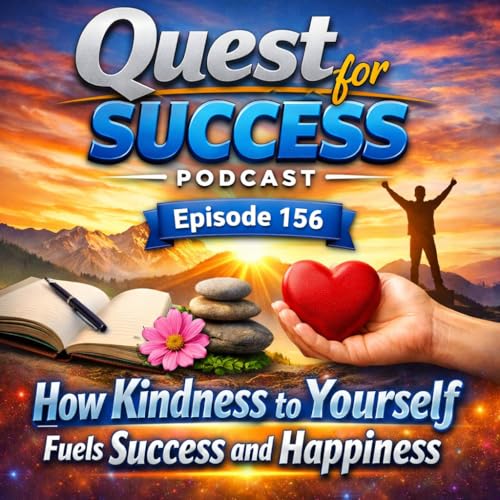
  • How Kindness to Yourself Fuels Success and Happiness
    2026/04/16

    What if the way you talk to yourself is the very thing holding you back?

    In this episode of Quest for Success, you'll discover why being hard on yourself isn't making you stronger—it's quietly draining your motivation, confidence, and ability to grow. If you've ever replayed mistakes, doubted your worth, or felt like your inner voice sounds more like a critic than a coach, this conversation is for you.

    You'll learn how self-compassion actually fuels success across every area of your life—mentally, morally, physically, spiritually, and financially. More importantly, you'll walk away with a new way of thinking that helps you recover faster, stay consistent, and move forward without carrying unnecessary weight.

    This isn't about lowering your standards—it's about finally giving yourself a fair shot at reaching them.

    If you're ready to stop beating yourself up and start building yourself up, this episode will challenge how you think and change how you move forward.

    Takeaways

    • Self-compassion activates caregiving brain regions, reducing stress responses.
    • Harsh self-criticism triggers threat responses, increasing stress and negative emotions.
    • Practicing self-compassion enhances motivation and resilience over time.
    • Modeling kindness and patience, like Fred Rogers, fosters emotional strength.
    • Changing internal dialogue from criticism to encouragement promotes growth.

    🔗 Learn more and explore additional resources at: www.Quest-Success.com

    References for Further Learning

    • Neff, K. (2011). Self-Compassion: The Proven Power of Being Kind to Yourself
    • Germer, C. (2009). The Mindful Path to Self-Compassion
    • Gilbert, P. (2009). The Compassionate Mind
    • Breines, J. G., & Chen, S. (2012). Self-compassion increases self-improvement motivation (Journal of Personality and Social Psychology)
    続きを読む 一部表示
    26 分
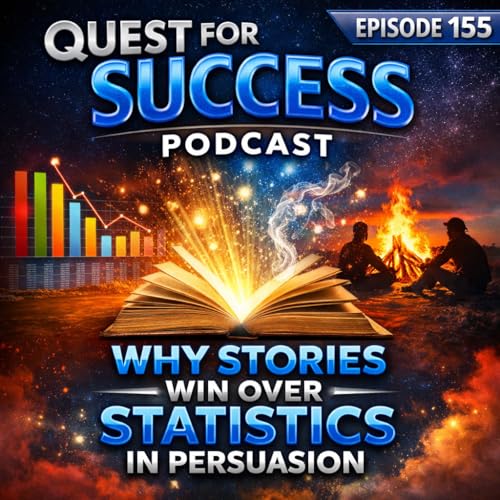
  • Why Stories Win Over Statistics in Persuasion
    2026/04/15

    What if the key to being heard, remembered, and respected in your daily life isn't what you say—but the stories you tell?

    In this episode of the Quest for Success Podcast, Dr. Jerry Cunningham breaks down how storytelling isn't just for speakers, authors, or Hollywood—it's something you use every single day, whether you realize it or not. You'll discover why your brain is wired for stories, how your ancestors relied on them to survive and connect, and why facts alone rarely change minds—but stories do. More importantly, you'll learn how to use simple, real-life stories to strengthen your relationships, influence others, and communicate in a way that actually sticks.

    This episode will challenge the way you think about conversations, leadership, and connection—and give you a practical edge in how you show up every day.

    If you're ready to stop being overlooked and start being unforgettable, this one is for you.

    Takeaways

    • Stories create neural coupling, making listeners experience the story as if they lived it.
    • Emotions attached to stories make them more memorable and impactful.
    • Storytelling is the original communication strategy, used for thousands of years.
    • Using stories in daily life builds connection, influence, and leadership.
    • You don't need to be a professional storyteller; everyday moments are enough.

    Listen now and take the next step on your journey:
    www.Quest-Success.com

    References to Learn More:

    • Zak, P. J. (2014). Why Your Brain Loves Good Storytelling. Harvard Business Review.
    • Sinek, S. (2009). Start With Why: How Great Leaders Inspire Everyone to Take Action.
    • King, S. (2000). On Writing: A Memoir of the Craft.
    • Gottschall, J. (2012). The Storytelling Animal: How Stories Make Us Human.
    続きを読む 一部表示
    28 分
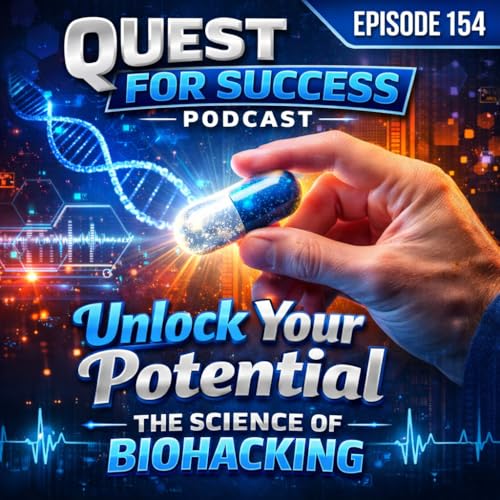
  • Unlock Your Potential: The Science of Biohacking
    2026/04/14

    What if your struggle with focus, energy, and discipline isn't a motivation problem… but a biology problem? In this episode of the Quest for Success Podcast, you'll discover how bio-hacking can help you work with your brain and body instead of constantly fighting against them. This isn't about extreme routines or complicated systems—it's about simple, science-backed strategies that can help you think clearer, feel better, and perform at a higher level across every area of your life.

    You'll learn how your brain is wired for survival (not success), why your habits feel harder than they should, and how small adjustments to your daily routine can create massive improvements in your mental clarity, physical energy, decision-making, and even financial behavior. If you've ever felt stuck, overwhelmed, or inconsistent, this episode will give you a new way to approach personal growth that actually works.

    Key Topics

    • Biohacking fundamentals and misconceptions
    • The role of the brain's systems in behavior
    • Habit formation and environmental design
    • Circadian rhythms and biological cycles
    • Dopamine, motivation, and reward systems
    • Practical steps for mental, physical, spiritual, and financial health

    Start optimizing your life today by learning more at www.Quest-Success.com and take the next step on your journey toward becoming the best version of yourself.

    References to Learn More:

    1. Fogg, B.J. (2019). Tiny Habits: The Small Changes That Change Everything
    2. Walker, Matthew (2017). Why We Sleep: Unlocking the Power of Sleep and Dreams
    3. Duhigg, Charles (2012). The Power of Habit
    4. Ferriss, Tim (2007). The 4-Hour Workweek
    5. Huberman, Andrew (2021). Huberman Lab Podcast
    続きを読む 一部表示
    29 分
  • How to Reinterpret Life's Challenges for Success
    2026/04/13

    Most people don't struggle because of what happens to them… they struggle because of what they think it means. In this episode, you're going to discover how one mental shift—cognitive reappraisal—can completely change how you handle stress, setbacks, and everyday challenges.

    If you've ever replayed a situation in your head, assumed the worst, or let one bad moment ruin your entire day, this episode is going to hit home. You'll learn how to reinterpret those moments in a way that gives you control instead of taking it away, helping you stay focused, resilient, and moving forward when life doesn't go as planned.

    This isn't about ignoring reality or pretending everything is perfect. This is about training your mind to work for you instead of against you so you can lead better, think clearer, and respond with purpose in every area of your life.

    If you're ready to change how you think so you can change how you live, this episode is for you.

    Takeaways

    • Your interpretation of events shapes your emotional response.
    • Cognitive reappraisal decreases activity in the amygdala and increases prefrontal cortex activity.
    • Reframing stress responses can improve performance and reduce fatigue.
    • Viewing obstacles as opportunities aligns with Stoic philosophy.
    • Changing the meaning of events can transform your life and relationships.

    Learn more and explore additional resources at www.Quest-Success.com.

    References:

    1. Gross, J. J. (1998). The emerging field of emotion regulation: An integrative review.
    2. Lazarus, R. S. (1991). Emotion and Adaptation.
    3. Holiday, R. (2014). The Obstacle Is the Way.
    4. Jamieson, J. P., et al. (2012). Rethinking stress improves performance.
    続きを読む 一部表示
    24 分