エピソード

  • Seed Cycling for Hormones: Why Women of All Ages Are Talking About It
    2026/04/29
    Seed Cycling & Hormones: What Women Are Being Told—and What’s Missing (From Your 20s to Menopause: Why Women Are Turning to Seed Cycling)Seed cycling is having a moment.But if I’m being honest—this conversation isn’t really about seeds.It’s about what happens when women—across generations—start pausing… and asking better questions about their bodies.Because whether you’re in your 20s, navigating your first hormonal shifts, or in midlife trying to make sense of changes no one really explained— the questions are actually the same.They just show up at different times.In this episode, I sit down with the founders of Two Moons Health for a conversation that moves beyond trend and into something much more layered.We talk about seed cycling, yes— but also what women are being told… what’s missing… and where things start to feel unclear.Where does the science actually stand?Where is it still evolving?And why are so many women—across generations—starting to look outside traditional pathways for answers?From my perspective—after nearly three decades in healthcare— this is the shift I’m seeing:Not more options.More curiosity.More women reading.Questioning.Connecting dots that were never fully explained.We get into:The tension between food and supplementsThe gap between clinical medicine and lived experienceWhy some symptoms are normalized instead of exploredAnd what it actually means to take a more active role in your healthThis is not a “yes or no” conversation.It’s a how do you think about this conversation. WHAT THIS EPISODE IS REALLY ABOUTWhy seed cycling is trending—and what’s behind the interestThe disconnect between what’s studied and what’s experiencedHow hormone conversations are shifting across generationsFood vs supplements: what actually mattersThe rise of women as informed decision-makersBuilding something in a space that isn’t fully definedTHE CONVERSATIONWhat makes this interesting to me— is the intersection.You have a founder who saw a pattern and decided to build something.And a physician who understands the system—but also its limitations.That’s where the real conversation lives.WHAT YOU’LL START TO NOTICEThis isn’t just a midlife conversation anymore.Women in their 20s, 30s, 40s and beyond are asking the same questions—just at different moments in life.Seed cycling is the entry point.Not the answer.The system isn’t broken—but it’s not complete.And more women are starting to feel that.Curiosity is the shift.Not chasing trends— but learning how to evaluate them.RESOURCESExplore more from Two Moons Health: 👉 https://twomoonshealth.comWhat makes this company interesting isn’t just the product—it’s how it started.Two Moons Health was founded by Terry Chang, JD and Dr. Ulrike Kaunzner, MD—an attorney and a physician whose friendship evolved into a shared curiosity around women’s health, hormonal patterns, and the gaps they were both seeing from very different vantage points.Their work sits at the intersection of clinical medicine, lived experience, and a more thoughtful approach to natural hormone support. What began as a shared curiosity evolved into a simplified, capsule-based approach to seed cycling—rooted in both science and personal experience.“Two Moons” reflects that foundation: connection, cyclical health, and a willingness to question traditional frameworks. WHO THIS EPISODE IS FORWomen navigating hormonal shifts at any stageDaughters learning earlier what their mothers weren’t taughtMothers rethinking what they’ve been toldAnyone who has ever felt like something wasn’t fully explainedListeners who want clarity—not noiseIf this struck a nerve— send it to someone who needs to hear it.Follow Second Opinion wherever you listen.Second Opinion is independently produced by Rosemarie Beltz in New York City— a healthcare professional turned journalist, bringing nearly three decades of clinical experience into conversations that prioritize clarity, curiosity, and informed decision-making. 🔗 Follow & Subscribe to never miss an episode. If you love the show, leave a review—it helps others get a second opinion!💡 Have a topic you’d love for us to cover? Reach out at www.rosemarieb.com.
    続きを読む 一部表示
    48 分
  • Colonoscopy, Colon Health & Longevity: The Screening That Saves Lives
    2026/04/22
    Why your colon may be the most overlooked driver of midlife health—and what to do about it nowWhat if one of the most preventable cancers is also one of the most avoided conversations?And what if a single decision in midlife could quietly shape your long-term health more than most of what we call “wellness”?We’ve normalized investing in wellness—supplements, longevity protocols, performance metrics. But one of the most effective tools for preventing disease isn’t trending… and it’s often delayed.Because the colon isn’t just about digestion—it’s deeply connected to inflammation, immunity, and long-term disease risk.In this solo episode, Rosemarie Beltz brings her clinical experience and current global research into focus—examining why colon health deserves a central place in the longevity conversation.The ReframeColonoscopy is often misunderstood as a diagnostic procedure.In reality, it is one of the few interventions in modern medicine that can detect and prevent cancer in the same moment.We’ve been taught to think of colonoscopy as something to react to. This episode challenges that idea.As colorectal cancer rises globally—particularly in younger adults—this conversation reframes screening as a proactive, informed decision, not a reactive one.The Insight PromiseYou’ll gain a clear, evidence-based understanding of how the colon functions, what influences its health, and how midlife physiology, lifestyle patterns, and modern interventions are shaping risk in real time.What You’ll LearnWhy colorectal cancer is increasing globally—especially in adults under 50How the colon functions beyond digestion, including its role in inflammation and immunityThe difference between a healthy colon and one at risk for diseaseHow midlife hormonal and metabolic changes affect colon health in both men and womenWhat actually happens during a colonoscopy—and why most people misunderstand the experienceHow to choose the right physician and facility, and why environment and preparation matterWhy This Conversation MattersColorectal cancer develops slowly—often over a decade or more.That timeline creates something rare in medicine: an opportunity to intervene early, prevent progression, and change outcomes before symptoms ever appear.Avoidance doesn’t eliminate risk—it delays awareness.And increasingly, this is a global pattern—not a regional one.About This Episode (Solo Feature)This is a solo episode guided by Rosemarie Beltz- A healthcare professional and journalist with nearly 30 years of experience in high-acuity surgical environments, combined with current research from leading medical institutions.Rather than a guest interview, this conversation integrates:clinical observationglobal epidemiological dataevidence-based screening guidelinesreal-world patient decision-making patternsIt reflects the perspective of someone who has spent decades in operating rooms—where the difference between early detection and delayed care is not theoretical.About the HostRosemarie Beltz is a cardiovascular perfusionist with nearly three decades of experience working alongside surgical teams in operating rooms across the country.She is the host of Second Opinion, a podcast exploring health, decision-making, and reinvention in midlife through the lens of science and lived experience.The show is independently produced in New York City and reaches listeners across more than 40 countries.Shareable Takeaways“Colonoscopy isn’t just screening—it’s prevention in real time.”“The most powerful longevity decisions aren’t complicated—they’re the ones we avoid.”“A healthy colon is quiet. Disease is what makes it loud.”“Prevention is rarely dramatic—but its absence is.”Listen & FollowFollow Second Opinion wherever you listen.If this episode sparked something for you, send it to one thoughtful friend—because the most important health conversations rarely happen alone.Sources & Scientific ReferencesThis episode was built from a combination of clinical experience and current research across U.S. and global health institutions.American Cancer SocietyCenters for Disease Control and PreventionWorld Health OrganizationInternational Agency for Research on CancerU.S. Preventive Services Task ForceNational Institutes of HealthJAMA Oncology (early-onset colorectal cancer trends)PubMed-indexed colorectal cancer researchGlobal epidemiology data on obesity, diabetes, and colorectal cancerConnect with Second OpinionWebsite: RosemarieB.comAvailable on Apple Podcasts, Spotify, Amazon Music, and YouTubeWe’ve normalized investing in wellness—but we still avoid the conversations that could actually save our lives.Colonoscopy isn’t just screening—it’s prevention. And in a world where colorectal cancer is rising earlier and globally, understanding your body isn’t optional—it’s power.Better decisions in midlife aren’t about doing more—they’re about understanding what matters ...
    続きを読む 一部表示
    26 分
  • When You Lose a Pet: Why It Hurts So Much in Midlife
    2026/04/15
    When You Lose a Pet: Why It Hurts So Much The science of grief, the weight of love, and how to find your way forwardWhat if the grief you’re feeling after losing a pet… isn’t something to “get over”—but something your body and brain are wired to experience?In this deeply personal solo episode, Rosemarie Beltz—cardiovascular perfusionist and medical journalist—explores the profound emotional and physiological impact of losing a beloved pet in midlife.After the recent loss of her 15-year-old Bichon Havanese companion, Oscar, Rosemarie shares an intimate, unfiltered look at grief as it’s actually lived: the silence, the guilt, the disruption of daily life, and the unexpected questions it raises about time, identity, and mortality.Blending nearly 30 years of clinical experience with emerging research in neuroscience, psychology, and cardiovascular health, this episode examines why pet loss can feel as devastating as losing a human loved one—and why so many people feel alone in that experience.You’ll learn:Why the brain processes pet loss similarly to human lossHow oxytocin withdrawal affects emotional and physical healthWhat “disenfranchised grief” means—and why it mattersHow midlife transitions intensify the experience of lossThe real reason guilt shows up after euthanasia decisionsHow grief can manifest physically, including “broken heart syndrome”But more importantly…This episode offers something rarely given in conversations about grief: Permission.Permission to feel it fully.Permission to not rush the process.Permission to understand that grief is not weakness— it’s the continuation of love.If you’ve ever lost a dog, a cat, or any animal who felt like family…this conversation will meet you exactly where you are.Research shows that losing a pet activates the same brain regions associated with human grief, while also triggering a measurable drop in oxytocin—the hormone responsible for bonding and emotional regulation.In some cases, the emotional stress of loss can even contribute to Takotsubo cardiomyopathy, commonly known as “broken heart syndrome,” which mimics a heart attack and is most frequently seen in women over 40.Translation:This isn’t “just emotional.”Your body is processing loss on a physiological level.Key TakeawaysPet loss is a form of grief that is both psychologically valid and biologically realThe absence of daily routines (feeding, walking, presence) creates a profound disruption in identity and nervous system regulationFeelings of guilt after euthanasia are common—and rooted in responsibility, not failureMidlife amplifies loss due to simultaneous life transitions and shifting identityGrief is not something to eliminate—it’s something to integrateAction StepsIf you’re navigating this right now:1. Awareness Name what you’re feeling: “This is grief. This is love with nowhere to go.”2. Adjustment Create one small daily anchor—something that gently replaces the rhythm you’ve lost.3. Alignment Redirect your love through memory, reflection, or intentional connection.Because love doesn’t disappear. It changes form.Midlife MomentYou didn’t just lose a pet.You lost a rhythm… a witness… a piece of your everyday life.And in that loss, many people experience something deeper—an awareness of time, change, and their own mortality.But awareness is not an ending.It’s an awakening.Midlife teaches us this:You can be deeply grateful… and completely heartbroken… at the same time.Dedication This episode is dedicated to Oscar—my 15-year Bichon Havanese companion, quiet witness, and constant source of unconditional love.A life that was small in size…but immeasurable in heart and presence.And to my parents—who helped me raise him during seasons of long hospital hours, unpredictable schedules, and going back to school.They cared for Oscar as if he were their own.He was never just my dog… he was ours. And they feel this loss just as deeply.With deep gratitude, I also want to acknowledge the veterinary teams who cared for him—and for me—during his final days.At The Heart of Chelsea Animal Hospital and VEG Animal ER in Manhattan.Their compassion, professionalism, and humanity in one of life’s hardest moments did not go unnoticed.In a space where medicine meets emotion…they brought both skill and heart.Resources and ReferencesHealth for Animals Global Pet Report (2024) — Global pet population + human health impactAmerican Heart Association / NEJM — Takotsubo CardiomyopathyPsychology Today — Pet bereavement and emotional processingAKC Canine Health Foundation — grief and physical healthHelpGuide.org — coping with pet lossConnect and ContinueFor more evidence-based insights and midlife guidance:Visit RosemarieB.com Download: The Midlife Guide to Choosing the Right Healthcare Provider (and Avoiding Costly Mistakes)Share and CommunityIf this episode resonated with you, share it with one thoughtful ...
    続きを読む 一部表示
    25 分
  • Longevity After 40: What Actually Matters for Aging Well
    2026/04/08

    What if aging isn’t the problem—but how we’ve been taught to think about it is?

    By midlife, most people aren’t lacking information. They’re navigating conflicting advice, subtle physical shifts, and a quiet question that rarely gets answered clearly: what actually determines how well you age?


    The Reframe

    Longevity has become a cultural obsession—wrapped in supplements, metrics, and optimization strategies that promise control. But the science tells a different story. The majority of how we age is shaped by daily patterns, not extreme interventions. This episode reframes longevity as something far more grounded, measurable, and personal.


    The Insight Promise

    In this solo episode, Rosemarie Beltz—cardiovascular perfusionist and medical journalist—brings nearly 30 years of clinical experience together with research from Harvard Health and Mayo Clinic to clarify what truly impacts health-span after 40.

    This is not about doing more.
    It’s about understanding better.


    What You’ll Learn

    • Why longevity is defined by health-span, not just lifespan
    • What VO₂ max reveals about long-term survival and performance
    • How cellular senescence (“zombie cells”) contributes to aging
    • Why much of the longevity industry lacks meaningful human data
    • What Blue Zone populations reveal about living well—without optimization
    • How midlife changes energy, recovery, and decision-making


    Why This Conversation Matters

    At this stage of life, the question isn’t whether you care about your health—it’s how clearly you understand it.

    This conversation connects science to lived experience, offering a more precise way to think about aging, performance, and long-term health decisions. Not through fear or urgency—but through clarity.


    About the Host

    Rosemarie Beltz is a cardiovascular perfusionist with nearly 30 years of experience in high-acuity surgical environments and the host of Second Opinion—a podcast exploring health, reinvention, and decision-making in modern life.

    Independently produced in New York City, the show reaches a global audience of thoughtful, high-performing listeners seeking credible, nuanced conversations.


    Shareable Takeaways

    • “Longevity isn’t something you buy—it’s something you build.”
    • “Midlife isn’t decline. It’s refined decision-making.”
    • “You don’t need more information—you need better interpretation.”


    Listen & Follow

    If this episode gave you a clearer way to think about longevity, share it with someone navigating this stage of life alongside you.

    Follow Second Opinion for evidence-informed conversations that cut through noise and bring clarity to complex health decisions. You can also explore more resources and a complimentary guide at the podcast website.


    Sources Mentioned

    Harvard Health Publishing
    Mayo Clinic
    NIH
    PubMed


    Connect

    Website: RosemarieB.com
    Instagram: @SecondOpinionPodcast
    LinkedIn: Rosemarie Beltz


    Second Opinion is where science meets lived experience—helping you make clearer, more informed decisions in midlife and beyond.


    🔗 Follow & Subscribe to never miss an episode. If you love the show, leave a review—it helps others get a second opinion!

    💡 Have a topic you’d love for us to cover? Reach out at www.rosemarieb.com.

    続きを読む 一部表示
    31 分
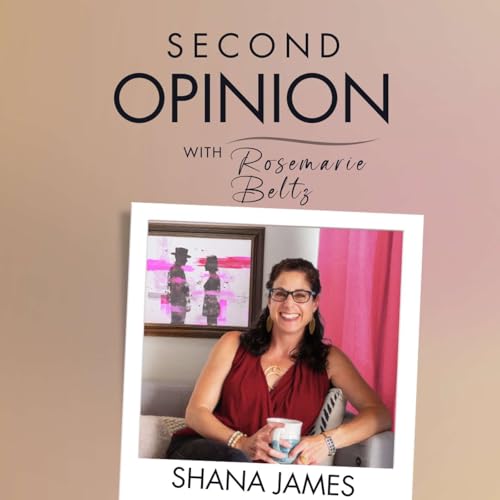
  • Love After 40: Trust, Chemistry, and “Honest Sex” in Modern Dating | With Shana James
    2026/04/01

    Why does dating often feel harder after 40—even for thoughtful, successful adults who have done the work?


    Relationship coach Shana James believes the issue isn’t that good partners don’t exist. It’s that many people are trying to build modern relationships with outdated expectations.


    In this episode of Second Opinion, healthcare professional and medical journalist Rosemarie Beltz explores the psychology of modern dating, emotional safety, and what actually creates connection in midlife.


    By the time we reach our 40s and 50s, most of us carry history—careers, divorce, parenting, heartbreak, independence, and changing bodies. Dating isn’t just about attraction anymore. It’s about how two fully formed lives intersect.


    Shana James has spent more than two decades helping men and women understand each other more clearly and build relationships rooted in honesty, communication, and trust.


    This conversation explores why dating often feels different in midlife—and what actually works.


    In This Episode


    • Why dating after 40 often feels more complicated than expected

    • The cultural shifts shaping relationships between men and women

    • What Shana learned from coaching thousands of clients about emotional vulnerability

    • Why chemistry can be misleading when evaluating compatibility

    • What emotional safety actually looks like in early dating

    • How hormonal shifts and life experience influence attraction and communication

    • Why many thoughtful adults feel burned out by modern dating—and how to reset


    “Chemistry sparks attraction. Consistency builds trust.”


    Why This Conversation Matters


    Midlife is often framed as a time when romantic options narrow.


    Yet many relationship experts argue the opposite: people over 40 may actually be better positioned to build meaningful partnerships—because clarity replaces fantasy.


    Dating after 40 isn’t necessarily easier.


    But it can be far more intentional.


    About the Guest


    Shana James, MA is a relationship coach, TEDx speaker, and author of Honest Sex: A Passionate Path to Deepen Connection and Keep Relationships Alive.


    With more than 20 years of coaching experience, she helps men and women rebuild trust, communicate honestly, and create deeper emotional and physical intimacy.


    She also hosts the podcasts Man Alive and Practicing Love and has led workshops in the global Authentic Relating movement.


    Website:

    https://shanajamescoaching.com


    About the Podcast


    Second Opinion explores health, relationships, reinvention, and decision-making in modern midlife.


    Hosted by Rosemarie Beltz, a healthcare professional and medical journalist with nearly three decades of clinical experience.


    Produced independently in New York City.


    Share This Episode


    If this conversation resonated, share it with someone navigating relationships, dating, or reinvention in midlife.


    Follow Second Opinion wherever you listen.


    🔗 Follow & Subscribe to never miss an episode. If you love the show, leave a review—it helps others get a second opinion!

    💡 Have a topic you’d love for us to cover? Reach out at www.rosemarieb.com.

    続きを読む 一部表示
    56 分
  • Spring Reset: Habits, Rituals, and Why Letting Go Feels Harder in Midlife. Neuroscience, emotional memory, and the psychology of real change
    2026/03/25
    Spring Reset: Habits, Rituals, and Why Letting Go Feels Harder in MidlifeEvery spring something subtle begins to shift.The light lingers longer in the evening. Windows open. Energy returns after the slower rhythm of winter. And for many people, the season brings a quiet but powerful impulse: the desire to reset.For centuries, cultures around the world have treated spring as a time for renewal. Homes are cleaned before Nowruz, Passover preparations include clearing out the household, and traditional Chinese New Year rituals begin with sweeping away the past year’s energy.Today, neuroscience and psychology offer insight into why this seasonal instinct feels so powerful.In this solo episode of Second Opinion, host Rosemarie Beltz explores the science behind the spring reset — and why midlife often becomes the moment when people begin asking deeper questions about identity, habits, and the life they want to build moving forward.Drawing on nearly three decades of clinical experience inside medicine, Rosemarie examines how emotional memory, self-deception, and the difference between habits and rituals influence real change. She also explores why letting go of old patterns can feel more difficult in midlife — and why clarity often emerges at this stage of life.For listeners navigating careers, relationships, and evolving priorities, this episode offers a thoughtful reflection on how change actually happens.And perhaps more importantly, where it begins.⸻What You’ll Learn in This Episode• Why spring often triggers psychological and behavioral reset moments• The biological connection between sunlight, circadian rhythms, and mood• Why change can feel harder in midlife than earlier in life• The psychology of self-deception and the stories we tell ourselves• How clutter and environment affect stress hormones like cortisol• The neurological difference between habits and rituals• Why emotional memory can keep people stuck in old patterns• How letting go reduces emotional charge and restores clarity• A simple three-step framework for creating a personal spring reset• Why midlife may be the most powerful time to realign life decisions⸻About the HostRosemarie Beltz is a cardiovascular perfusionist with nearly 30 years of experience working in operating rooms across the United States. Through her work in medicine and medical journalism, she has spent decades observing how people navigate health decisions, life transitions, and personal reinvention.She created Second Opinion to explore the intersection of science, identity, relationships, and longevity in midlife.The podcast now reaches listeners in more than 25 countries and is available on major platforms including Apple Podcasts, Spotify, Amazon Music, iHeart Radio, and YouTube.⸻A Midlife ReflectionMidlife is often portrayed as a time of crisis or decline.But for many people, it becomes something very different.A moment of clarity.The years of experience accumulated through careers, relationships, successes, and disappointments begin to reveal patterns more clearly. What once felt uncertain becomes easier to recognize.And sometimes the most important step forward begins with a simple question:What am I still carrying that I no longer need?Letting go rarely means losing something important.More often, it means making space for the life that is still unfolding.⸻Research and Concepts Referenced• Circadian rhythm research on light exposure and serotonin regulation• Psychological studies on cognitive dissonance and self-deception• UCLA Center on Everyday Lives of Families research on clutter and cortisol• Behavioral psychology research on ritual formation and stress reduction• Neuroscience research on emotional memory and limbic system activation⸻ResourcesVisit the website for more insights and resources:https://rosemarieb.comYou can also download the complimentary guide:The Midlife Minute Luxe Guide to Selecting Your Ideal Healthcare Provider (and Avoiding Costly Mistakes)This practical resource helps listeners navigate medical decisions more confidently.⸻Listen & ConnectIf you found this episode thoughtful or helpful:• Follow Second Opinion on your favorite podcast platform• Share the episode with a colleague or friend• Leave a review to help more listeners discover the showThe best conversations about health and life transitions rarely happen alone.Second Opinion is produced by Rosemarie in New York City.🤍Rosemarie 🔗 Follow & Subscribe to never miss an episode. If you love the show, leave a review—it helps others get a second opinion!💡 Have a topic you’d love for us to cover? Reach out at www.rosemarieb.com.
    続きを読む 一部表示
    29 分
  • Perimenopause Nutrition & Brain Fog | Eat for Cortisol, Blood Sugar, Clarity
    2026/03/18

    Episode Description

    This episode explores perimenopause nutrition and brain fog—not from a trend-driven perspective, but through evidence, lived experience, and thoughtful analysis.

    In this conversation, Rosemarie Beltz examines why “doing everything right” can suddenly stop working in midlife, why it matters now, and what high-functioning women often misunderstand about cortisol, blood sugar, gut health, and food quality during hormonal transition.

    This episode is for listeners who value clarity over noise, nuance over extremes, and insight that actually applies to real life.

    Rosemarie is joined by Sarah Lynn Wayne, holistic nutritionist and midlife wellness consultant, whose work bridges nutrition science, nervous system awareness, and practical physiology for women navigating perimenopause.


    What You’ll Learn in This Episode

    • Why “eat less and exercise more” deserves a second look in perimenopause
    • What clinical experience shows about brain fog, cortisol shifts, and blood sugar instability
    • Why nutrient density matters more than calorie counting in midlife
    • How gut health influences hormone production and cognitive clarity
    • The role of protein timing, mineral intake, and detoxification in hormonal recalibration
    • Common mistakes women make when using GLP-1 medications without foundational support
    • Why alcohol—even in small amounts—can quietly impact brain function and endocrine health
    • How digital overload affects cortisol, cognition, and midlife resilience
    • Practical strategies to stabilize energy without overhauling your life


    Who This Episode Is For

    • Midlife listeners who want credible, grounded health insights
    • Professionals tired of surface-level biohacking advice
    • Women navigating brain fog, fatigue, weight shifts, or hormonal recalibration
    • Anyone seeking second opinions rooted in physiology—not trends

    This episode may not be for listeners looking for quick fixes, hype, or one-size-fits-all protocols.


    Key Takeaways

    • Midlife is not a failure of willpower—it is a shift in physiology
    • Brain fog is common—and often reversible with targeted support
    • Eating for cortisol and blood sugar stability changes the conversation
    • Muscle preservation and mineral density matter more than scale weight
    • Sustainable change begins with awareness, not urgency
    • The nervous system influences everything—from cravings to cognition


    About the Guest

    Sarah Lynn Wayne is a holistic nutritionist and wellness consultant specializing in perimenopause and midlife hormone transitions.

    After navigating severe brain fog and hormonal disruption in her early 40s, she shifted her practice to focus on helping women work with their biology—not against it.

    She offers personalized assessments and her signature 3-Day Brain Fog Reset, designed to help women restore cognitive clarity, stabilize hormones, and rebuild metabolic resilience from the inside out.

    Learn more about Sarah’s work and programs:
    🌿 Website: hwww.sarahlynnwayne.com


    About the Host

    Rosemarie Beltz is a cardiovascular perfusionist with nearly 30 years of clinical experience and the host of Second Opinion—a platform where science meets story and age is always your advantage.

    Her work bridges medical insight, journalistic integrity, and real-life midlife recalibration for high-functioning professionals seeking better questions—and better answers.

    The Second Opinion Podcast is produced by Rosemarie in New York City.


    Listen & Subscribe

    If this episode resonated, subscribe to Second Opinion on Apple, Spotify, or your preferred platform.

    Share it with someone navigating perimenopause, brain fog, or a midlife reset who values credible conversation over quick fixes.

    New episodes weekly.


    Connect

    Website: https://rosemarieb.com
    Instagram: @rosemariebeltz
    LinkedIn: Rosemarie Beltz


    🔗 Follow & Subscribe to never miss an episode. If you love the show, leave a review—it helps others get a second opinion!

    💡 Have a topic you’d love for us to cover? Reach out at www.rosemarieb.com.

    続きを読む 一部表示
    1 時間 4 分
  • Midlife Insomnia, Perimenopause & Heart Risk: Why Sleep Changes After 40
    2026/03/11
    When was the last time you woke up tired and told yourself it was normal?Not sick. Not burned out. Just… tired.For many women over 40, exhaustion quietly becomes part of everyday life. We normalize fragmented sleep, middle-of-the-night wakeups, and mornings that never quite feel restorative. But what if sleep isn’t just a lifestyle issue?What if it’s a signal?In this solo episode of Second Opinion, host Rosemarie Beltz—cardiovascular perfusionist with nearly 30 years of clinical experience—explores the science behind midlife insomnia, hormonal shifts, and cardiovascular risk.March is National Sleep Awareness Month, and the research is clear: we are living through a global sleep crisis. According to the ResMed Global Sleep Survey (2025) of more than 30,000 people across 13 countries:• 7 out of 10 adults struggle with sleep • Nearly three nights per week are unsatisfactory • 22% of people simply “live with it” • 71% of workers have called in sick due to poor sleepBut the story becomes more complex—and more concerning—when we look at midlife.Women between 40 and 60 consistently report worse sleep than men, particularly during perimenopause and menopause, when hormonal changes affect nearly every system involved in sleep regulation.This episode explores why sleep disruption during midlife is not simply inconvenient. It is neurological, metabolic, and cardiovascular.And for many women, it is misunderstood.Episode OverviewSleep is often framed as a soft wellness topic—something associated with bedtime routines, herbal tea, or productivity hacks.But the research tells a different story.A growing body of literature—from JAMA Network Open, Circulation, and NIH-funded studies—demonstrates that insufficient sleep is associated with increased risks of:• cardiovascular disease • stroke • type 2 diabetes • hypertension • obesity • mood disorders • cognitive declineA major JAMA Network Open cohort study found that chronic sleep deprivation is associated with a 29% increase in mortality risk.Not fatigue.Mortality.In this conversation, Rosemarie explains why midlife women are uniquely affected, examining the hormonal changes that reshape sleep architecture and increase vulnerability to conditions like obstructive sleep apnea, insomnia, and circadian rhythm disruption.Drawing on her clinical background and research insights, she reframes sleep not as a lifestyle luxury—but as a critical pillar of cardiovascular and neurological health.What You’ll Learn in This Episode• Why the world is experiencing a documented global sleep crisis • How estrogen and progesterone influence sleep architecture • Why perimenopause increases insomnia and nighttime awakenings • The connection between sleep deprivation and cardiovascular disease • Why sleep apnea risk rises in postmenopausal women • How REM sleep disruption affects memory, mood, and brain health • The role of melatonin, cortisol, and circadian rhythm changes in midlife • Why poor sleep may accelerate brain aging according to the CARDIA study • How sleep disruption affects relationships and emotional regulation • Evidence-based strategies midlife women can implement to improve sleepMidlife TakeawayFor decades, many of us believed functioning on four or five hours of sleep was a sign of resilience.Midlife reveals the truth.Sleep is not a luxury—it is a biological necessity that protects the heart, brain, and nervous system.As hormonal transitions reshape physiology, the body becomes less tolerant of chronic sleep deprivation. What once seemed manageable can begin to affect mood, cognition, metabolism, and cardiovascular health.Understanding these shifts allows women to respond intelligently—not with frustration, but with strategy.Because midlife isn’t fragile.It’s responsive.And when we protect sleep, we protect long-term health.References & ResearchResMed Global Sleep Survey (2025) JAMA Network Open – Sleep deprivation and mortality risk National Institute on Aging (NIH) research on sleep and cardiovascular disease American Heart Association – Life’s Essential 8 CARDIA Study – Coronary Artery Risk Development in Young Adults PubMed – “The Global Problem of Insufficient Sleep and Its Public Health Implications” Circulation – Sleep and cardiovascular outcomes in midlife womenContinue the ConversationIf this episode resonated, consider sharing it with someone navigating midlife health transitions.Second Opinion is now heard in over 25 countries worldwide, and the goal remains the same: thoughtful, credible conversations about health, longevity, and reinvention.And if you’re looking to become a more informed healthcare consumer, visit:https://rosemarieb.comDownload the complimentary resource:Midlife Minute Luxe Guide to Selecting Your Ideal Healthcare ProviderIf you enjoy the show, please follow, share, and leave a review. It helps more people discover the ...
    続きを読む 一部表示
    43 分