• Praise: Psalm 126
    2026/06/30

    The Text: Psalm 126 (New Living Translation) — a psalm of praise recalling Israel's return from exile in Babylon.

    Opening Hook — The "Fresh Start" Effect
    Vijay begins by observing the universal human longing for a fresh start — at New Year, birthdays, or even a Monday morning. Beneath that, he argues, is a deeper desire: not just to improve, but to be made new — to undo mistakes and mend what's broken. That longing, he says, sits at the heart of Psalm 126.

    The Historical Context
    The psalm recalls Israel's return from decades of Babylonian exile. When the Persian king Cyrus allowed them to go home, it seemed impossible — like a dream. The surrounding nations even marvelled: "The Lord has done amazing things for them." Vijay notes this sits at the literal centre of the psalm — the focus is on what God did, not what Israel achieved.

    The Deeper Exile
    Israel's real problem was never Babylon — that was just a symptom. Their deeper problem was distance from God. And Vijay broadens this: it's everyone's story. All humanity was created for relationship with God but has wandered far — making us all spiritual exiles.

    Jesus as the Way Home
    Jesus didn't come merely as a moral teacher or inspiring figure. He came to bring exiles home. At the cross, he experienced the exile we deserved — crying out "My God, my God, why have you forsaken me?" — so that we could be brought in, adopted as children of God, and welcomed home.

    Restoration Is a Process
    When the psalmist prays "restore our fortunes," it seems puzzling — weren't they already home? Vijay explains: restoration has begun, but it isn't finished. He illustrates this with a vivid image of a derelict house. When someone buys it, the ownership changes instantly — but the renovation takes time. Similarly, when someone trusts Christ, they belong to God immediately, but God then begins the ongoing work of rebuilding from the inside out.

    The Desert Image
    The psalmist prays for restoration "as streams renew the desert" — referring to the Negev, where dry riverbeds suddenly burst to life when the rains come. The prayer is: Lord, do that for our dry places — our regret, grief, guilt, and shame.

    Closing — Sowing in Tears
    The psalm ends with a farmer image: he weeps as he plants, because every seed buried could have fed his family — yet he trusts the harvest. That, says Vijay, is what faith looks like. Not just believing in your head, but entrusting yourself fully to God's promises even when you can't yet see them. Every act of obedience — forgiving someone, resisting temptation, keeping on praying through disappointment — is sowing seed in hope.

    The final promise: tears are real, but they're not the last chapter. The harvest is coming. The Bible ends not with sorrow or exile, but with joy — every sin removed, every tear wiped away, every exile brought safely home.

    0:00 Introduction & Series Context
    1:18 The Fresh Start Effect
    2:19 The Deeper Longing to Be Made New
    3:32 Psalm 126 — Reading
    4:46 Israel's Exile and the Impossible Return
    6:44 God's Amazing Things — The Centre of the Psalm
    7:16 Israel's Story Is Everyone's Story
    8:49 Jesus — The Way Home
    10:33 Restoration Has Only Just Begun
    12:09 The Derelict House Illustration
    14:36 Streams in the Desert
    15:29 Sowing in Tears — What Faith Looks Like
    18:28 The Final Chapter Is Joy
    19:32 Baptism — Being Brought Home

    続きを読む 一部表示
    21 分
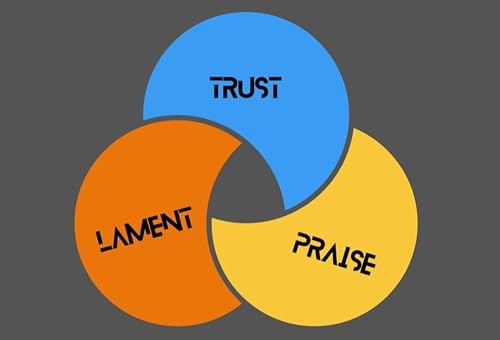
  • Lament, Trust and Praise
    2026/06/18

    Florence continues the series "Lament, Trust and Praise", moving into the theme of praise through Psalm 118. The sermon's main message is that God's people are called to praise him not only when life is easy, but also in times of difficulty, because his love endures forever.

    She explains that Psalm 118 is full of confidence in God's steadfast love, mercy, goodness and faithfulness. The psalm may have been used at Passover, and Florence notes its strong connection to Jesus, especially as he approached the cross.

    The sermon follows five main responses from the psalm.

    First, we should thank the Lord for his enduring love. The repeated phrase "his love endures forever" reminds us that God's love outlasts every difficult circumstance. Florence encourages listeners to say this truth aloud and let it shape their perspective.

    Second, we should focus on the Lord in difficult situations. The psalmist is hard pressed and surrounded by enemies, yet he keeps returning to the truth that the Lord is with him and is his helper. Florence encourages believers to take refuge in God rather than relying ultimately on people or circumstances.

    Third, we should praise the Lord for what he has done. The psalm speaks of the Lord's right hand acting with power. Florence encourages specific praise, not vague thankfulness, and suggests remembering the many ways God has helped, protected and sustained us.

    Fourth, we should rejoice in the Lord's provision of a Saviour. Florence highlights the verse, "The stone the builders rejected has become the cornerstone," explaining that it points to Jesus. Though rejected by people, Jesus is God's chosen foundation. Through him, believers are saved from sin and given secure hope.

    Finally, we should exalt the Lord for his goodness and love. The psalm ends in personal praise: "You are my God, and I will praise you." Florence explains that praise means adoring God for who he is and thanking him for what he has done. The sermon closes by encouraging listeners to praise God throughout the week, especially when life is hard.

    0:00 Introduction: Lament, Trust and Praise
    0:39 Psalm 118: Praising God in Difficult Times
    1:04 Praise in Every Circumstance
    2:05 God's Enduring Love and Faithfulness
    3:07 Five Bends in the Road
    3:52 Give Thanks: His Love Endures Forever
    7:13 Focus on the Lord in Difficulty
    13:24 Praise the Lord for What He Has Done
    20:39 The Rejected Stone Becomes the Cornerstone
    25:46 Rejoice in the Day the Lord Has Made
    29:53 Rejoice in the Lord's Provision of a Saviour
    31:56 Exalt the Lord for His Goodness and Love

    続きを読む 一部表示
    36 分
  • Psalm 100 - Praising God with our whole being, James Mackenzie
    2026/06/12

    James' main theme is that Psalm 100 calls God's people to praise Him with their whole being.

    Psalm 100 is a "doubly perfect" psalm because it contains two sets of seven: seven encouragements to praise God and seven reasons to praise Him. The sermon first walks through the calls to worship: shout joyfully, serve gladly, sing, give thanks, praise, be thankful, and bless the Lord's name. Praise is presented as something expressive, joyful, grateful, and active—not just singing, but the whole life of worship and service.

    The second half gives the reasons for praise: Yahweh alone is God, He made us personally, we belong to Him, we are the sheep of His pasture, He is good, His mercy/loving-kindness lasts forever, and His truth endures to all generations. The sermon ends by encouraging the congregation to respond to Psalm 100 in worship.

    00:00 Introduction to the Psalms series and theme of praise
    02:39 Psalm 100 as a "doubly perfect" psalm
    04:14 Seven encouragements to praise God
    05:14 Make a joyful shout to the Lord
    07:19 Serve the Lord with gladness
    08:37 Come before Him with singing
    09:34 Enter His gates with thanksgiving
    11:24 Enter His courts with praise and be thankful
    13:57 Bless the Lord's name
    15:57 Seven reasons to praise God
    18:15 Yahweh alone is God and our Creator
    21:22 We are His people and the sheep of His pasture
    26:22 God is good, merciful, faithful, and true
    続きを読む 一部表示
    32 分
  • Sermon Summary — Psalm 121: The Lord Who Keeps His People
    2026/06/03

    Speaker: Vijay
    Main Bible passage: Psalm 121
    Theme: Trusting God to keep us through the whole journey of life.

    Vijay closes the Psalms of Trust section of the series by preaching from Psalm 121, one of the Songs of Ascents sung by pilgrims travelling to Jerusalem. He frames life as a pilgrimage: we move through changing seasons, uncertainty, weakness, ageing, and eventually death. Psalm 121 speaks to travellers who know the road may be long and difficult, but who are promised that the Lord will keep his people all the way home.

    The sermon gives four reasons why the Lord can be trusted on life's journey.

    First, God is powerful enough to keep his people. When the psalmist says, "I lift up my eyes to the hills," Vijay explains that ancient pilgrims would not only see beauty but danger: exposure, robbers, exhaustion, and uncertainty. The answer is not found in the hills themselves, but in the Lord, "who made heaven and earth." Faith lifts our eyes beyond the problem to the Creator.

    Second, God is attentive enough to preserve his people. Vijay highlights the repeated word "keep" in Psalm 121. God does not promise a pain-free life, but he does promise that suffering, evil, and calamity will not finally destroy his people. Like a harness on an aerial adventure course, God may not prevent every stumble, but he prevents the final fall.

    Third, God is always near. The Lord is described as "your shade at your right hand." Vijay explains that the right hand was the vulnerable side in battle, so this image shows God standing close to his people at the place of greatest weakness. God does not merely send help; he himself is the help who walks beside us.

    Fourth, God's keeping is total and comprehensive. The psalm's language, heaven and earth, day and night, going out and coming in, now and forevermore, shows that no time, place, season, or circumstance lies outside God's care. Vijay notes that the psalm leaves the danger unspecified so each believer can fill in the blank: diagnosis, grief, family heartache, uncertainty, or anything else. The promise remains: the Lord will keep you.

    Vijay ends with the image of a turbulent overnight flight. The passengers may panic because they cannot see the route, but the journey depends on the pilot, not the passengers. In the same way, our hope is not in our own strength or understanding, but in the Lord who keeps us. One day the journey will end, the final hill will be behind us, and we will look back and say, "He kept me."

    Key Takeaway

    Psalm 121 assures God's people that the journey may be hard, frightening, and uncertain, but the Lord who made heaven and earth is powerful, attentive, near, and faithful. He will keep his people from now and forevermore.

    00:00 Opening thanks and OM update
    02:23 Psalms series: moving from trust to praise
    03:01 Life as a pilgrimage
    04:58 Introducing Psalm 121
    06:57 Reading Psalm 121
    08:26 God is powerful enough to keep us
    11:11 "My help comes from the Lord"
    16:34 God is attentive enough to preserve us
    18:02 What "keep you from all evil" means
    21:16 "He will not let your foot be moved"
    23:53 The God who never slumbers or sleeps
    26:55 God is always near
    30:42 God's keeping is total and comprehensive
    35:10 The turbulent flight illustration
    37:06 The promise: the Lord will keep us
    38:46 Closing prayer

    続きを読む 一部表示
    40 分
  • Psalm 62: Trusting the Lord Our Refuge
    2026/05/25

    Speaker: James
    Main Bible passage: Psalm 62
    Theme: God is completely trustworthy as our refuge in every circumstance.

    James continues the church's series through the Psalms, moving through the theme of trust. After Psalm 23 showed the Lord as shepherd and Psalm 27 showed the Lord as protector, Psalm 62 presents the Lord as our refuge. Trust, James says, is not optional for Christians; it is part of the whole journey of faith from beginning to end.

    He explains that Psalm 62 is not abstract theology. David wrote it out of real experience: enemies, danger, betrayal, and pressure. David had learned through life that God was his salvation, rock, defence, glory, strength, and refuge.

    A major phrase in the sermon is "my soul silently waits for God." James reflects on both outward silence and inner stillness: the peace of waiting for God, trusting that he will act. But the Psalm also honestly acknowledges enemies and distress. David's peace is disturbed by the reality of opposition, yet that leads him back to telling his own soul to keep waiting on God.

    James then highlights the central command of the Psalm: "Trust in him at all times, you people; pour out your heart before him." This is where trust and lament meet. Trusting God does not mean pretending everything is fine. It means bringing pain, fear, grief, crisis, and confusion honestly to him.

    He gives examples of what this looks like: in health crises, financial trouble, betrayal, bereavement, and any situation where life feels overwhelming. God as refuge does not mean we avoid every storm, but that the storm will not finally engulf us.

    James also warns against false refuges. David tells us not to place ultimate trust in people, status, wealth, possessions, or security. These things may fail, but God remains trustworthy.

    The sermon closes with praise. Psalm 62 ends by showing God as powerful, loving, and just. James connects this to the cross of Jesus Christ, where God's power, steadfast love, and justice meet. Jesus is the ultimate proof that God is our refuge, because through him our sins are paid for and we are safe from judgment.

    Key Takeaway
    Psalm 62 calls us to trust God at all times, pour out our hearts before him, and refuse false refuges. God is our rock, salvation, defence, and refuge — worthy of complete trust from the beginning of life to the end

    00:00 Introduction: lament, trust, and praise
    01:02 Psalm 62: trusting the Lord our refuge
    01:34 Tutankhamun's mask and seeing Psalm 62 up close
    03:02 Psalm 62 as sung worship from David's real life
    04:49 "My soul silently waits for God"
    06:40 God as salvation, rock, and defence
    08:15 David confronts his enemies
    12:02 David tells his soul to keep trusting
    16:56 "Trust in him at all times, you people"
    20:01 Pour out your heart before him
    22:33 Trust and lament in real life
    23:38 God as our refuge above the floodwaters
    26:35 False refuges: people, status, and possessions
    29:41 Hearing God's truth twice
    32:04 God's power, steadfast love, and justice
    34:23 The cross: where power, love, and justice meet
    35:57 Closing prayer

    続きを読む 一部表示
    37 分
  • Psalm 27: The Lord Our Protector
    2026/05/21

    Speaker: Cheri
    Main Bible passage: Psalm 27
    Theme: Trusting God when we feel under attack.

    Cheri presents Psalm 27 as a prayer and song for those who feel afraid, accused, misunderstood, mistreated, or under threat. The Psalms are described as the prayer book and songbook of God's people, giving us words to pray when we do not know what to say.

    The sermon focuses on God as light, salvation, and stronghold. Because the Lord is our protector, we do not need to fight our battles in our own strength or react out of fear. Cheri uses images of ancient fortresses, Scottish hill forts, and historic battles to show how God can cause enemies to stumble without us needing to take control.

    A key theme is learning to wait for the Lord. Some threats are misunderstood or perceived; others are very real and painful. In both cases, Psalm 27 calls God's people to confidence rather than fear.

    Cheri also highlights David's "one thing": to dwell in the house of the Lord and gaze on his beauty. His courage comes from intimacy with God. This is connected to fixing our eyes on Jesus, who endured opposition and the cross without losing heart.

    The sermon closes by warning against treating God like a magic wand or genie. God's help is often a process, not an instant event. We come to him honestly, ask him to teach and lead us, and trust that his goodness will be seen as we wait.

    Key Takeaway

    When we feel under attack, Psalm 27 teaches us to seek God as our protector, stay focused on him, bring our fears honestly to him, and wait with courage for his goodness to come through.

    00:00 Opening and introduction to Psalm 27
    00:45 The Psalms as prayers for God's people
    03:46 Psalm 27: a prayer for those under attack
    05:10 "The Lord is my light and my salvation"
    07:06 Enemies stumble and fall
    10:07 Letting God fight for us
    12:43 "One thing I ask": dwelling with the Lord
    13:19 Fixing our eyes on Jesus
    15:51 God keeps us safe in his dwelling
    17:04 The tabernacle as David's place of safety
    20:12 David's honest prayer to God
    21:12 "Come and talk with me"
    23:16 God is not a magic wand
    24:48 God's help is often a process
    25:17 "Wait for the Lord"
    26:48 Final encouragement: be strong and take heart

    続きを読む 一部表示
    27 分
  • Psalm 23: Trusting the Lord as Shepherd
    2026/05/17
    Main Bible passage: Psalm 23 Theme: Trusting God reshapes our inner life. Vijay introduces this sermon as the beginning of ACF's move from Psalms of Lament into Psalms of Trust. He explains that trust is central to the whole life of faith, even in lament, because lament brings suffering towards God rather than turning away from him. The sermon defines biblical trust as placing yourself in the care of God. Unlike mechanical trust, such as trusting a car to work, trusting God is personal: it means becoming vulnerable before him because of who he is. Psalm 23 is then explored as a picture of how trusting the Lord transforms our inner life. 1. Trust forms contentment David begins, "The Lord is my shepherd; I lack nothing." Vijay explains that "shepherd" in the ancient world was not only a caring image but also a royal image of authority and rule. Everyone has a "shepherd" — something that leads their life, whether success, approval, control, money, culture, or God. False shepherds train the heart to feel it is always lacking. But when the Lord is our shepherd, we learn contentment. This does not mean having everything imaginable, but no longer experiencing life as fundamentally deficient. 2. Trust forms peace in suffering When David speaks of walking through the darkest valley, Vijay notes that valleys were dangerous but often necessary routes for shepherds to take their sheep to pasture and water. Life can feel like that: dark, confusing, frightening, and beyond our control. He contrasts explanation with peace. We often seek relief through diagnosis, answers, or understanding, but explanations have limits. The deepest peace comes from the Lord's presence: "You are with me." In the valley, David stops speaking about God and begins speaking to God. Vijay connects this to Jesus, who entered suffering himself on the cross, crying out from Psalm 22, "My God, my God, why have you forsaken me?" Because Jesus has walked through suffering from the inside, believers can trust him in the valley. 3. Trust gives courage before enemies In verse 5, the image shifts from shepherd to host. God prepares a table in the presence of enemies, anoints David's head with oil, and makes his cup overflow. Vijay explains that in the ancient world, this was a powerful sign of welcome, protection, honour, and belonging. The enemies are still present, but David is not overwhelmed because he belongs to the Lord. Vijay illustrates this with the courage of the 21 Egyptian Christian labourers killed by ISIS in Libya, who refused to deny Jesus because they knew they belonged to him. 4. Trust strengthens hope for the journey home Vijay closes with verse 6: "Surely your goodness and love will follow me all the days of my life." He explains that the Hebrew word translated "follow" carries the stronger sense of pursue. God's goodness and love do not casually trail behind his people; they pursue them. Using Francis Thompson's poem The Hound of Heaven, Vijay describes God as the one who lovingly pursues people, not to destroy them, but to bring them home. Psalm 23 ends not merely with sheep returning to a pen, but with God's people dwelling in the house of the Lord forever. Key Takeaway Trusting the Lord as shepherd changes the inner life of a believer. It forms contentment, gives peace in suffering, fills the heart with courage before enemies, and strengthens hope that God will pursue his people with goodness and love until he brings them home. 00:00 Introduction: moving from lament to trust 01:49 What biblical trust means 03:04 Introducing Psalm 23 04:58 Trust forms contentment 06:26 Everyone is led by a shepherd 09:31 False shepherds create a sense of lack 10:54 God provides what we need 13:43 The shepherd refreshes and guides 14:44 Trust forms peace in suffering 18:56 "You are with me" 20:49 Jesus enters the valley of suffering 23:13 Trust gives courage before enemies 25:22 The 21 Egyptian Christian martyrs 28:03 Trust strengthens hope for the journey home 28:39 God's goodness and love pursue us 29:31 Francis Thompson and The Hound of Heaven 32:28 Final reflections: the shepherd brings us home 33:36 Closing prayer
    続きを読む 一部表示
    34 分
  • Psalm 77 - Lamenting unanswered prayer
    2026/05/04
    Sermon summary

    Florence preaches on Psalm 77 as part of a series on lament, trust, and praise, focusing especially on lamenting unanswered prayer.

    She begins by naming the "noise inside our heads" — worry, doubt, distress — and explains that the Bible does not sugarcoat painful realities. Biblical lament is presented as a faithful practice: crying out to God, bringing complaints honestly, asking God to act, remembering what he has done, and ultimately reaffirming trust.

    Psalm 77 shows Asaph in deep distress. He cries out to God, prays through the night, cannot sleep, and asks raw questions about whether God has rejected him or forgotten to be compassionate. Florence emphasises that these honest questions are included in Scripture, showing that God can be approached with raw emotion.

    The turning point comes when Asaph chooses to remember God's past faithfulness. His focus shifts from his circumstances to God's character. Florence draws out four movements in the psalm: Asaph looks around, looks in, looks up, and looks back. Remembering God's works leads him to praise God's holiness, power, and faithfulness.

    The sermon then points to the Exodus, where God made a way through the Red Sea — "a pathway no one knew was there." Florence applies this to those who feel trapped in sorrow or weariness, suggesting that God may still be leading them through, even when they cannot yet see the way.

    Finally, she connects the "way" to Jesus Christ, who calls himself the way in John 14:6. Unlike Asaph, Christians can also look forward to the hope of eternal life, where God will wipe away every tear. The closing encouragement is: whatever is happening in life, look around, look in, look up, look back, and look forward.

    00:00 Introduction: the noise inside our heads
    01:21 The Bible does not sugarcoat reality
    01:36 Recap of the lament, trust, praise series
    02:42 What biblical lament is
    04:08 "Hallelujah Anyway" and remembering God's goodness
    05:13 Psalm 77: lamenting unanswered prayer
    06:37 Asaph looks around: crying out to God
    08:23 Crying out as a faith-filled step
    09:55 Asaph names his struggle and complaint
    11:06 Lament is not a quick formula
    12:04 God's timetable and growing trust
    13:41 Asaph's honest questions to God
    15:30 Raw questions are welcomed in Scripture
    16:20 The mismatch between belief and experience
    17:17 God's character is reliable despite our feelings
    18:53 The dark before the dawn
    19:14 Asaph looks in: remembering what God has done
    20:46 The importance of what we think about
    22:48 Asaph looks up: praising God's character
    23:40 Remembering God's works leads to praise
    25:04 Practising praise in private prayer
    25:49 Keeping our eyes on Jesus
    27:00 Asaph looks back: God's rescue at the Red Sea
    28:27 Feeling trapped in sorrow or hopelessness
    29:21 A pathway no one knew was there
    30:45 Jesus as the road, the way
    31:50 Following Jesus does not exempt us from sorrow
    32:27 Summary: look around, in, up, and back
    33:39 Christians can also look forward
    34:43 The future hope of no more tears
    35:03 Closing encouragement: look around, in, up, back, and forward

    続きを読む 一部表示
    35 分