エピソード

  • #89. Neuroscientists Answer Your Questions: Trauma, AI, Alcohol, Hot Dogs & Dark Neuroscience
    2026/05/28

    In this special audience Q&A episode of The Smooth Brain Society, hosts Dr. Sahir Hussain and (soon to be Dr.) Beth Facer answer your most thoughtful, chaotic, philosophical, and occasionally cursed questions.

    From the darkest stories in neuroscience history to whether trauma is really “stored in the body,” Beth and Sahir dive into mental health, AI, addiction, academia, policy, stress, and the strange realities of working in science.

    Plus: the podcast finally tackles one of humanity’s greatest debates… is a hot dog a sandwich?

    Topics discussed include:

    • The darkest neuroscience experiments in history
    • Trauma, stress, and the body
    • AI’s future impact on child development and human connection
    • Alcohol & mental health
    • Culture and public health policy
    • The realities of working in academic research
    • Epigenetics and family planning
    • Research papers Beth & Sahir wish they’d worked on themselves
    • And, of course, hot dog discourse.

    Thank you to everyone who sent in questions for this episode! we loved making this one.

    Follow The Smooth Brain Society on our social media platforms for future Q&As, episode updates, and science content from Beth and Sahir.

    Support the show

    Support us and reach out!
    https://smoothbrainsociety.com
    https://www.patreon.com/SmoothBrainSociety

    Instagram: @thesmoothbrainsociety
    TikTok: @thesmoothbrainsociety
    Twitter/X: @SmoothBrainSoc
    Facebook: @thesmoothbrainsociety
    Merch and all other links: Linktree
    email: thesmoothbrainsociety@gmail.com


    続きを読む 一部表示
    1 時間 6 分
  • #88. Eating Disorders Beyond Western Stereotypes - Dr Bailey Rose
    2026/05/14

    Dr. Bailey Rose (Ngāti Maniapoto), Clinical Psychologist at Ora Toa Mauriora, New Zealand, joins us for a conversation on eating disorders, culture, identity, and mental health care.

    We explore how eating disorders are often misunderstood through a narrow Western lens, and why that can leave Māori and other underserved communities unseen, misdiagnosed, or excluded from support systems. Bailey shares insights from both her clinical work and research, discussing the cultural meaning of food, barriers to care, stigma, social media pressures, and the limitations of relying too heavily on measures like BMI.

    The episode also dives into:

    • Māori perspectives on food, care, and wellbeing
    • How culture shapes experiences of eating disorders
    • Emotional regulation, shame, and relationships with food
    • Misconceptions around who “gets” eating disorders
    • The impact of beauty standards and social media
    • Ozempic and the growing conversation around weight-loss medications
    • Why culturally responsive mental health care matters


    Support the show

    Support us and reach out!
    https://smoothbrainsociety.com
    https://www.patreon.com/SmoothBrainSociety

    Instagram: @thesmoothbrainsociety
    TikTok: @thesmoothbrainsociety
    Twitter/X: @SmoothBrainSoc
    Facebook: @thesmoothbrainsociety
    Merch and all other links: Linktree
    email: thesmoothbrainsociety@gmail.com


    続きを読む 一部表示
    1 時間 7 分
  • #87. How Prehabilitation Can Improve Cancer Outcomes - Dr. Chris Gaffney
    2026/04/30

    Can preparing the body before cancer treatment improve recovery, reduce complications, and even protect brain function?

    In this episode, Sahir sits down with Dr. Christopher Gaffney, Senior Lecturer in Integrative Physiology at Lancaster University, to explore the growing science of prehabilitation. Prehabilitation uses exercise, nutrition, and psychological support to help cancer patients better tolerate surgery, chemotherapy, and radiotherapy.

    They discuss how a patient’s baseline fitness can influence treatment outcomes, why exercise is increasingly being viewed as medicine, the emerging evidence around “chemo brain,” and why healthcare may need to shift from reactive treatment to proactive preparation.

    A fascinating conversation at the intersection of cancer research, physiology, and preventative medicine.

    Topics Covered

    • What prehabilitation is and why it matters
    • Exercise as medicine in cancer care
    • How fitness affects surgery and chemotherapy outcomes
    • The science behind chemo brain and fatigue
    • Why medicine needs to think earlier, not later

    Support the show

    Support us and reach out!
    https://smoothbrainsociety.com
    https://www.patreon.com/SmoothBrainSociety

    Instagram: @thesmoothbrainsociety
    TikTok: @thesmoothbrainsociety
    Twitter/X: @SmoothBrainSoc
    Facebook: @thesmoothbrainsociety
    Merch and all other links: Linktree
    email: thesmoothbrainsociety@gmail.com


    続きを読む 一部表示
    1 時間 1 分
  • #86. Thinking Together: Humans, AI, and Better Decisions - Dr. Eeshan Hasan
    2026/04/16

    We explore the rapidly evolving intersection of human psychology and artificial intelligence with Dr. Eeshan Hasan,of the Ohio State University, specialising in computational models of decision-making.

    We dive into how humans and AI can work together more effectively, from improving medical diagnoses using “wisdom of the crowd” techniques to tackling misinformation and distortions on social media. Dr. Hasan shares insights into how both human and machine intelligence represent information and what that means for the future of healthcare, and human-AI collaboration.

    This conversation unpacks big questions: Can AI help us think better? Where do human biases still outperform algorithms? And how do we design systems that enhance, rather than distort, our decision-making?

    If you're interested in the future of AI, psychology, and the way we navigate an increasingly digital world, this episode offers a thoughtful and accessible deep dive.

    Dr. Eeshan Hasan: https://eeshanhasan.com/

    Support the show

    Support us and reach out!
    https://smoothbrainsociety.com
    https://www.patreon.com/SmoothBrainSociety

    Instagram: @thesmoothbrainsociety
    TikTok: @thesmoothbrainsociety
    Twitter/X: @SmoothBrainSoc
    Facebook: @thesmoothbrainsociety
    Merch and all other links: Linktree
    email: thesmoothbrainsociety@gmail.com


    続きを読む 一部表示
    1 時間 16 分
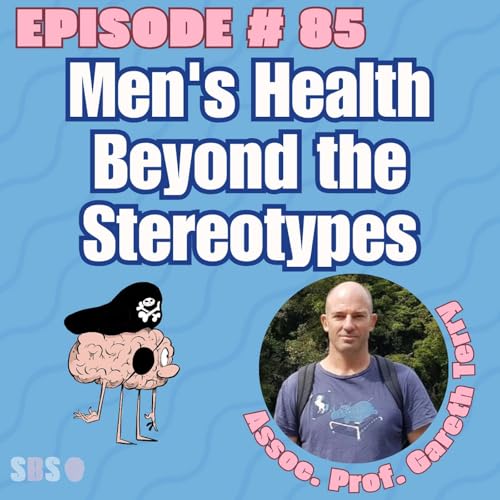
  • #85. Men's Health Beyond the Stereotypes - Associate Professor. Gareth Terry
    2026/04/02

    The episode explores men's mental, sexual, and reproductive health, challenging stereotypes and examining how masculinity influences health behaviors and decisions. Guest Associate Professor Gareth Terry, shares insights from his research on mens identities and how they intersect with things like reproductive health, disabilities, and the social construction of masculinity. We discuss the nuances of the child-free movement, societal perceptions of masculinity, and innovative research ideas in disability and neurodivergence. With the help of questions from our followers, Gareth Terry explores societal pressures, gender dynamics, and future research directions, offering insights into social constructs and personal identities.

    https://www.massey.ac.nz/massey/expertise/profile.cfm?stref=775822

    Support the show

    Support us and reach out!
    https://smoothbrainsociety.com
    https://www.patreon.com/SmoothBrainSociety

    Instagram: @thesmoothbrainsociety
    TikTok: @thesmoothbrainsociety
    Twitter/X: @SmoothBrainSoc
    Facebook: @thesmoothbrainsociety
    Merch and all other links: Linktree
    email: thesmoothbrainsociety@gmail.com


    続きを読む 一部表示
    1 時間 35 分
  • #84. The Moral Psychology of Voluntourism - Dr. Melanie Altemus
    2026/03/19

    Dr. Melanie Altemus of Massey University, New Zealand, explores the complex psychology behind volunteer tourism, including motivations, moral implications, and the impact of the 'white savior' complex. She shares insights from her research on how volunteerism can sometimes do more harm than good and discusses the importance of understanding the underlying psychological traits involved. Dr. Melanie Altemus shares her groundbreaking research on international volunteer tourism, exploring motivations, moral judgments, and community impacts in Fiji and beyond. Discover surprising findings about privilege, cultural exchange, and the true effects of volunteer work.

    Dr. Altemus' Thesis:
    https://openaccess.wgtn.ac.nz/articles/thesis/Stories_of_Saviourism_Examining_the_Moral_Negotiations_in_Volunteer_Tourism/30586076?file=61733902

    Support the show

    Support us and reach out!
    https://smoothbrainsociety.com
    https://www.patreon.com/SmoothBrainSociety

    Instagram: @thesmoothbrainsociety
    TikTok: @thesmoothbrainsociety
    Twitter/X: @SmoothBrainSoc
    Facebook: @thesmoothbrainsociety
    Merch and all other links: Linktree
    email: thesmoothbrainsociety@gmail.com


    続きを読む 一部表示
    1 時間 18 分
  • #83. Dark Chapters in Psychiatry - Jack El-Hai
    2026/03/05

    Jack El-Hai, acclaimed journalist and author of The Nazi and the Psychiatrist and The Lobotomist, takes us inside Dr. Douglas Kelly's psychological examination of Nazi war criminals at the Nuremberg trials. From the lobotomy era to the chilling conclusions about "ordinary" evil, this conversation explores what psychiatry revealed about history's most notorious figures—and what it means for us today.

    Key Topics Covered:

    🧠 The Lobotomist: How a 1968 lobotomy case in Minnesota led Jack down a 20-year rabbit hole into the history of psychiatric surgery and Walter Freeman's controversial legacy.

    ⚖️ Douglas Kelly & The Nuremberg Trials The young US Army psychiatrist who had sole access to 22 Nazi defendants—including Hermann Göring—and what he discovered about their psychological profiles.

    💡 The Disturbing Conclusions and warnings Kelly's finding that the Nazi leaders were psychologically "normal"—and why that revelation was far more terrifying than finding them insane.

    🎬 From Book to Film The 12-year journey from The Nazi and the Psychiatrist to the 2025 film Nuremberg starring Rami Malek—and what changed in adaptation.

    Check out Jack El-Hai's work: https://www.el-hai.com/

    Support the show

    Support us and reach out!
    https://smoothbrainsociety.com
    https://www.patreon.com/SmoothBrainSociety

    Instagram: @thesmoothbrainsociety
    TikTok: @thesmoothbrainsociety
    Twitter/X: @SmoothBrainSoc
    Facebook: @thesmoothbrainsociety
    Merch and all other links: Linktree
    email: thesmoothbrainsociety@gmail.com


    続きを読む 一部表示
    1 時間 13 分
  • #82. How to Build a Conspiracy Theory - Dr. John Kerr
    2026/02/19

    Dr. John Kerr, Senior Research Fellow in the Department of Public Health at the University of Otago and Science Lead for the Public Health Communication Centre, discusses the psychological roots of belief and disbelief in scientific consensus. He shares his journey from neuroscience to science communication, exploring the complexities of conspiracy theories, misinformation, and the impact of AI on public perception. The discussion emphasizes the importance of understanding the psychological traits that influence belief systems and the need for intellectual humility in navigating these issues.

    https://www.otago.ac.nz/wellington/departments/publichealth/staff/john-kerr

    Support the show

    Support us and reach out!
    https://smoothbrainsociety.com
    https://www.patreon.com/SmoothBrainSociety

    Instagram: @thesmoothbrainsociety
    TikTok: @thesmoothbrainsociety
    Twitter/X: @SmoothBrainSoc
    Facebook: @thesmoothbrainsociety
    Merch and all other links: Linktree
    email: thesmoothbrainsociety@gmail.com


    続きを読む 一部表示
    1 時間 21 分