『Women Leading in Male-Dominated Spaces: How to Build Influence Without Losing Your Direction (Gail Quirk)』のカバーアート

Women Leading in Male-Dominated Spaces: How to Build Influence Without Losing Your Direction (Gail Quirk)

Women Leading in Male-Dominated Spaces: How to Build Influence Without Losing Your Direction (Gail Quirk)

無料で聴く

ポッドキャストの詳細を見る
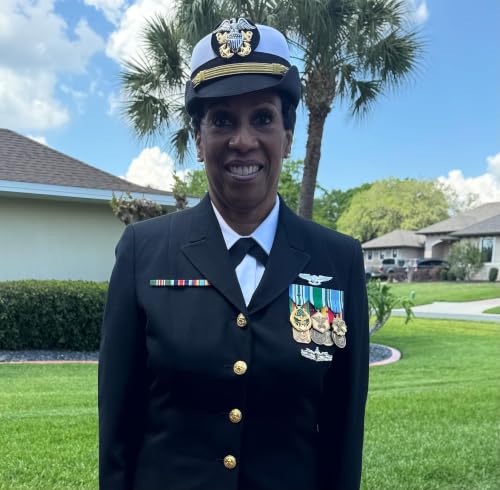
If you've ever entered a room where you were the only woman, the only person of color, the least experienced person, or the one everyone seemed to be watching, Gail Quirk understands the pressure that comes with wondering whether you truly belong there. Her answer is not to pretend the pressure does not exist. It is to know why you entered the room, understand what you are trying to accomplish, and stay committed to the plan—even when the people around you question your ability, resent your progress, or hope you will make yourself smaller. Women leading in male-dominated spaces are often encouraged to speak up, take up space, and make themselves heard. Gail offers a more nuanced form of wisdom. Sometimes leadership means speaking immediately. Sometimes it means listening, observing the power dynamics, understanding how the room operates, and choosing the moment when your voice will have the greatest impact. Gail began her Navy career in the 1980s and eventually became the first Black female E-7 chief in her field. She later became its first Black female officer. She was also the last, because the Navy eliminated the specialty after her. She did not set out with a detailed plan to become a groundbreaking leader. Her original goals were to complete her education, advance professionally, and keep moving forward. Leadership arrived as her rank increased and more people began looking to her for direction. She learned by watching those above her, identifying what she respected and what she did not want to repeat. She also listened to the junior people she led, recognizing that leadership did not mean pretending she always had the best answer. It meant gathering information, making decisions, accepting responsibility, and helping the group work as a team. That approach became especially important when male colleagues questioned why she had been placed in charge. Instead of repeatedly defending her authority, Gail worked beside them. She demonstrated competence through action, created a team structure, and allowed results to answer some of the questions prejudice had raised. But being capable did not protect her from bias. At photography school, Gail encountered an instructor who attempted to remove her from the program. A senior enlisted man intervened and argued that her performance and record did not justify dismissal. She stayed, graduated, and continued advancing. Years later, when she made E-7, a male colleague asked how she had managed to be promoted. He had not realized the extent of her qualifications because Gail did not walk around announcing every achievement. She did the work and expected the record to speak. The episode explores the pressure that comes with being first—particularly for Black women and other underrepresented leaders. Gail knew that people were watching her behavior, language, appearance, and performance, sometimes waiting for proof that she should never have been given the opportunity. She carried the knowledge that her success could create space for those coming behind her. That visibility was not always comfortable. Gail preferred doing the work behind the scenes. But leadership required accepting that others might use her example to decide what was possible for them. Her story is also one of extraordinary personal resilience. At 29, Gail became a widow after only two and a half years of marriage. Later, while serving on active duty, she was diagnosed with a pituitary adenoma after doctors initially dismissed her unexplained weight gain. She photographed President Bill Clinton at the commissioning of the USS Harry S. Truman the day before having surgery to remove the brain tumor. Gail did not share her diagnosis widely because she did not want sympathy to change how people saw her. After recovering, she returned to work, completed additional qualifications, and continued pursuing advancement. Her faith became the foundation beneath that public perseverance. As Gail explains, her private walk with God gave her the strength to handle public problems. She also relied on family, particularly her grandmother, whose encouragement reminded her that she could continue even when life looked nothing like the plan she had imagined. In This Episode, We Talk About: Women leading in male-dominated spaces and establishing credibility when colleagues question their authorityBreaking barriers as a Black woman in the Navy and carrying the pressure of being the firstReading the room strategically before deciding when, how, and through whom to introduce an ideaBalancing authenticity with career goals when women are judged differently for being direct, vocal, or forcefulBuilding a leadership style across generations by learning from senior mentors and listening to junior team membersRecognizing when friendships no longer support your direction and staying committed to your goals without themFacing widowhood and a brain tumor while continuing to lead, serve, and move forwardUsing faith, family, ...
adbl_web_anon_alc_button_suppression_t1
まだレビューはありません