エピソード

  • The Physician's Veto: Why Most Health Tech Pilots Die Before They Scale
    2026/06/03
    The pilot succeeded. The value analysis committee approved it. The implementation team did their job. And then the physician quietly stopped using it. That's the physician's veto: the force that kills more health tech deployments than any technical failure, regulatory gap, or funding problem. And it almost never shows up in anyone's implementation plan. In this episode, Dr. Sarah Matt talks with Bruno Nardone, MHSA, LFACHE, a healthcare operations executive at CMG Health, about what actually happens when a product meets a real clinical environment. Connect with Bruno Nardone on LinkedIn. Discovery and Clarity Session: calendly.com/sarahmattmd


    Resources & Links:

    📖 Get the Book: "The Borderless Healthcare Revolution" is available now on Amazon and major retailers.

    💼 Work with Dr. Matt:
    Looking for a keynote speaker or strategic advisor?
    Visit: drsarahmatt.com

    🔗 Connect on Social:
    LinkedIn: https://www.linkedin.com/in/sarahmattmd/
    YouTube: https://www.youtube.com/@DrSarahMatt-ClinicalRealist

    📧 Subscribe to The Briefing: drsarahmatt.com/newsletter-signup


    Disclaimer:
    The views expressed on this podcast are those of Dr. Sarah Matt and her guests. They do not necessarily reflect the official policy or position of any affiliated institutions. This content is for informational and educational purposes only and does not constitute medical advice or a professional consulting relationship.

    続きを読む 一部表示
    18 分
  • When the Algorithm Is a Device: AI, the FDA, and the Question Almost Nobody Is Asking
    2026/05/27
    The AI tool you bought last quarter, the one bundled into your EHR upgrade, the one your hospital piloted on your unit. Was it cleared by the FDA as a medical device? Most physicians do not know the answer. The vendor's pitch deck almost certainly did not lead with it. And the answer matters, because once an algorithm crosses into FDA medical device territory, the rules that govern what it can claim, how it has to perform, who is liable when it fails, and what evidence the manufacturer had to produce before it reached your practice change categorically. In this episode of The Clinical Realist, Dr. Sarah Matt walks listeners through three questions: when is an AI tool a medical device, what do the three FDA approval pathways actually mean about the evidence behind a product, and what does professional liability look like when the algorithm is the one making the call. What you will take away: - When a clinical AI tool crosses the line into FDA-regulated medical device territory - What 510(k), De Novo, and PMA clearance pathways actually say about the evidence behind a product - Why the word cleared is doing enormous amounts of work in this industry - What changes for physicians, procurement teams, and health system leaders when the algorithm is making the call Book a Discovery and Clarity Session: https://calendly.com/sarahmattmd Subscribe to The Sarah Matt Briefing: https://drsarahmatt.com/newsletter-signup


    Resources & Links:

    📖 Get the Book: "The Borderless Healthcare Revolution" is available now on Amazon and major retailers.

    💼 Work with Dr. Matt:
    Looking for a keynote speaker or strategic advisor?
    Visit: drsarahmatt.com

    🔗 Connect on Social:
    LinkedIn: https://www.linkedin.com/in/sarahmattmd/
    YouTube: https://www.youtube.com/@DrSarahMatt-ClinicalRealist

    📧 Subscribe to The Briefing: drsarahmatt.com/newsletter-signup


    Disclaimer:
    The views expressed on this podcast are those of Dr. Sarah Matt and her guests. They do not necessarily reflect the official policy or position of any affiliated institutions. This content is for informational and educational purposes only and does not constitute medical advice or a professional consulting relationship.

    続きを読む 一部表示
    18 分
  • The Economics Nobody Taught You in Medical School
    2026/05/20
    Medical school teaches you pathophysiology, pharmacology, and clinical reasoning. It does not teach you how the money actually works. In this episode, Dr. Sarah Matt breaks down the economic structures that govern every clinical decision, every technology purchase, and every AI pilot that dies in a committee room: who pays, who decides, who uses, and why those three people are almost never the same person. What you will take away: - The user / decider / payer split and why it explains nearly every failed health-tech deal - How the RVU system shapes physician behavior and silently resists AI adoption - Why value-based care is harder to execute than the architects planned for - The practical questions buyers, vendors, and physicians should be asking before any AI deployment If you want to understand why healthcare moves so slowly, start here. Book a Discovery and Clarity Session: https://calendly.com/sarahmattmd Subscribe to The Sarah Matt Briefing: https://drsarahmatt.com/newsletter-signup


    Resources & Links:

    📖 Get the Book: "The Borderless Healthcare Revolution" is available now on Amazon and major retailers.

    💼 Work with Dr. Matt:
    Looking for a keynote speaker or strategic advisor?
    Visit: drsarahmatt.com

    🔗 Connect on Social:
    LinkedIn: https://www.linkedin.com/in/sarahmattmd/
    YouTube: https://www.youtube.com/@DrSarahMatt-ClinicalRealist

    📧 Subscribe to The Briefing: drsarahmatt.com/newsletter-signup


    Disclaimer:
    The views expressed on this podcast are those of Dr. Sarah Matt and her guests. They do not necessarily reflect the official policy or position of any affiliated institutions. This content is for informational and educational purposes only and does not constitute medical advice or a professional consulting relationship.

    続きを読む 一部表示
    12 分
  • The Patient We Never Designed For (Live from Cornell Ithaca, Extended Cut)
    2026/05/13

    Recorded live at Cornell Ithaca. This is the extended cut of Dr. Sarah Matt's keynote on the central design flaw in modern healthcare: a system optimized for an "average" patient who does not exist.


    When you build clinical workflows, EHR defaults, drug dosing tables, and AI training sets around a statistical mean, every patient outside that mean pays the cost in workarounds, missed diagnoses, and unsafe care. And most patients are outside the mean.


    In this talk, Dr. Matt walks through:


    - Where the "average patient" assumption shows up in clinical AI, and why it compounds bias instead of correcting it

    - The design debt baked into EHRs, order sets, and risk calculators

    - What health systems and physician leaders can do now to design for variance instead of pretending it away

    - Why the patient we never designed for is the patient most likely to be harmed by the tools we are deploying next


    Recorded live at Cornell. Audience Q&A included.


    Resources & Links:


    Get the book: "The Borderless Healthcare Revolution" is available now on Amazon and major retailers.


    Work with Dr. Matt: Looking for a keynote speaker or strategic advisor? Visit drsarahmatt.com


    Connect on social:

    LinkedIn: https://www.linkedin.com/in/sarahmattmd/

    YouTube: https://www.youtube.com/@DrSarahMatt-ClinicalRealist


    Subscribe to The Briefing: drsarahmatt.com/newsletter-signup


    Disclaimer: The views expressed on this podcast are those of Dr. Sarah Matt and her guests. They do not necessarily reflect the official policy or position of any affiliated institutions. This content is for informational and educational purposes only and does not constitute medical advice or a professional consulting relationship.


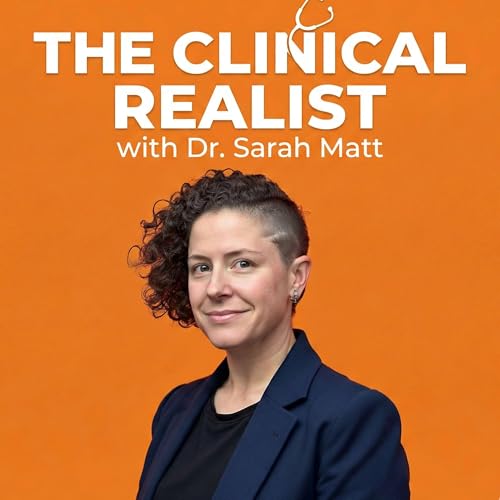
    Resources & Links:

    📖 Get the Book: "The Borderless Healthcare Revolution" is available now on Amazon and major retailers.

    💼 Work with Dr. Matt:
    Looking for a keynote speaker or strategic advisor?
    Visit: drsarahmatt.com

    🔗 Connect on Social:
    LinkedIn: https://www.linkedin.com/in/sarahmattmd/
    YouTube: https://www.youtube.com/@DrSarahMatt-ClinicalRealist

    📧 Subscribe to The Briefing: drsarahmatt.com/newsletter-signup


    Disclaimer:
    The views expressed on this podcast are those of Dr. Sarah Matt and her guests. They do not necessarily reflect the official policy or position of any affiliated institutions. This content is for informational and educational purposes only and does not constitute medical advice or a professional consulting relationship.

    続きを読む 一部表示
    56 分
  • Sunk Cost, Vendor Lock, and the AI Tools Health Systems Can't Let Go Of
    2026/05/06
    Most clinical AI governance frameworks tell you how to evaluate tools before you deploy them. Nobody talks about how to exit a tool that is not working. In this episode, Dr. Sarah Matt walks through the anatomy of sunk cost bias in health system AI: how it starts (month four or five, mixed performance data, a vendor who keeps resetting the clock), how experienced vendor account teams use it to extend bad contracts, and how to build exit criteria into your governance framework before you ever go live. What you will take away from this episode: - Why sunk cost bias in vendor relationships is a governance failure, not a behavioral one - How vendors use remediation roadmaps to reset your evaluation clock - What a real clinical AI exit criterion looks like: specific, measurable, time-bound, established before go-live - How to execute a clean exit without losing six months to organizational politics - Why the cost of staying with a bad tool grows geometrically


    Resources & Links:

    📖 Get the Book: "The Borderless Healthcare Revolution" is available now on Amazon and major retailers.

    💼 Work with Dr. Matt:
    Looking for a keynote speaker or strategic advisor?
    Visit: drsarahmatt.com

    🔗 Connect on Social:
    LinkedIn: https://www.linkedin.com/in/sarahmattmd/
    YouTube: https://www.youtube.com/@DrSarahMatt-ClinicalRealist

    📧 Subscribe to The Briefing: drsarahmatt.com/newsletter-signup


    Disclaimer:
    The views expressed on this podcast are those of Dr. Sarah Matt and her guests. They do not necessarily reflect the official policy or position of any affiliated institutions. This content is for informational and educational purposes only and does not constitute medical advice or a professional consulting relationship.

    続きを読む 一部表示
    9 分
  • The Q2 Governance Problem: When AI Goes Live Without a Safety Net
    2026/04/29
    Most health systems that deployed clinical AI in Q1 are now six to eight weeks post-launch and starting to see the governance gap. Dr. Sarah Matt explains what the gap looks like in production, why retrofitting governance is more expensive than building it before go-live, and the four-step rapid governance build for organizations that are already live and need to catch up.


    Resources & Links:

    📖 Get the Book: "The Borderless Healthcare Revolution" is available now on Amazon and major retailers.

    💼 Work with Dr. Matt:
    Looking for a keynote speaker or strategic advisor?
    Visit: drsarahmatt.com

    🔗 Connect on Social:
    LinkedIn: https://www.linkedin.com/in/sarahmattmd/
    YouTube: https://www.youtube.com/@DrSarahMatt-ClinicalRealist

    📧 Subscribe to The Briefing: drsarahmatt.com/newsletter-signup


    Disclaimer:
    The views expressed on this podcast are those of Dr. Sarah Matt and her guests. They do not necessarily reflect the official policy or position of any affiliated institutions. This content is for informational and educational purposes only and does not constitute medical advice or a professional consulting relationship.

    続きを読む 一部表示
    9 分
  • The Pilot Trap: What Health Systems Get Wrong About Implementation
    2026/04/22
    Your pilot worked. You got approval to scale. Six weeks into full implementation, something is wrong: not catastrophically wrong, just wrong enough to make you wonder whether "it worked in the pilot" meant anything at all. In this episode, Dr. Sarah Matt breaks down the pilot trap: the gap between proving a tool works under controlled conditions and proving an organization is ready to run it under normal operating conditions. Pilots and implementations are not on the same continuum. They measure fundamentally different things. The health systems that scale successfully treat the pilot as a learning vehicle, not a prediction. The ones that get stuck assumed pilot success equaled implementation readiness. What you will take away from this episode: - Why pilot success measures tool performance, not organizational readiness - The three gaps that trap most health systems: motivation, workflow integration, governance - Why resistance to clinical AI is usually not irrational, and how to diagnose the source - How the physician champion role shifts from pilot advocate to implementation steward - Why building governance before implementation begins is the single variable most predictive of scale-up success Website: https://drsarahmatt.com | Book a Discovery and Clarity Session: https://calendly.com/sarahmattmd | LinkedIn: https://www.linkedin.com/in/sarahmattmd/


    Resources & Links:

    📖 Get the Book: "The Borderless Healthcare Revolution" is available now on Amazon and major retailers.

    💼 Work with Dr. Matt:
    Looking for a keynote speaker or strategic advisor?
    Visit: drsarahmatt.com

    🔗 Connect on Social:
    LinkedIn: https://www.linkedin.com/in/sarahmattmd/
    YouTube: https://www.youtube.com/@DrSarahMatt-ClinicalRealist

    📧 Subscribe to The Briefing: drsarahmatt.com/newsletter-signup


    Disclaimer:
    The views expressed on this podcast are those of Dr. Sarah Matt and her guests. They do not necessarily reflect the official policy or position of any affiliated institutions. This content is for informational and educational purposes only and does not constitute medical advice or a professional consulting relationship.

    続きを読む 一部表示
    10 分
  • The Wrong Diagnosis: Why Health Systems Keep Failing at AI
    2026/04/15

    Most health systems that fail at clinical AI adoption are not failing because the tool is bad. They are failing because they diagnosed the problem wrong before they ever touched a vendor pitch. In this episode, Dr. Sarah Matt breaks down the core misdiagnosis that derails AI implementation: health systems treat AI failure as a technology problem when the actual issue is a question problem. The organizations whose AI implementations succeed are not the ones with the best tools. They are the ones who learned to ask the right question first. Dr. Matt draws on direct clinical and advisory experience, including a session with ophthalmologists at SUNY Upstate, where she stopped a room full of smart physicians mid-conversation and asked them what framework their department used to evaluate whether an AI tool was safe for their workflow. The silence that followed is exactly the gap this episode addresses. What you will take away from this episode: - Why tool failure is almost always governance failure in disguise - Why 'should we use this AI tool?' is the wrong first question - The correct first question: do we have the framework to evaluate whether this tool is safe for our workflow? - Why physicians have authority in this conversation that they are not using - How getting the diagnosis right at the start saves 18 months of remediation Website: https://drsarahmatt.com | Book a conversation: https://calendly.com/sarahmattmd | LinkedIn: https://www.linkedin.com/in/sarahmattmd/


    Resources & Links:

    📖 Get the Book: "The Borderless Healthcare Revolution" is available now on Amazon and major retailers.

    💼 Work with Dr. Matt:
    Looking for a keynote speaker or strategic advisor?
    Visit: drsarahmatt.com

    🔗 Connect on Social:
    LinkedIn: https://www.linkedin.com/in/sarahmattmd/
    YouTube: https://www.youtube.com/@DrSarahMatt-ClinicalRealist

    📧 Subscribe to The Briefing: drsarahmatt.com/newsletter-signup


    Disclaimer:
    The views expressed on this podcast are those of Dr. Sarah Matt and her guests. They do not necessarily reflect the official policy or position of any affiliated institutions. This content is for informational and educational purposes only and does not constitute medical advice or a professional consulting relationship.

    続きを読む 一部表示
    9 分