エピソード

  • AIxMultilateralism: Philanthropy's Role in Inclusive, Ethical AI
    2026/05/29

    This is AI x Multilateralism, a playlist of conversations at the UN Library & Archives Geneva where we’re joined by experts who help us unpack the many ideas and issues at the nexus of AI and international cooperation.

    Should philanthropy be a part of the development and governance of AI? We’re exploring this question with Hubert Halopé and Giuseppe Ugazio, both part of the team at the Artificial Intelligence & Philanthropy Project at the University of Geneva. They explore: - Why studying the links between AI and philanthropy matter.

    - The findings in the project's open source book, The Routledge Handbook of Artificial Intelligence and Philanthropy, including how AI can be used within philanthropy itself, and how philanthropy can impact the inclusive and responsible development and use of AI.

    - Why philanthropic organisations should play a key role in AI governance and in the ethical use of AI, and

    - How philanthropy can be present in multilateral AI governance mechanisms at the UN.

    Resources:

    • Learn about the Artificial Intelligence & Philanthropy Project at the University of Geneva.
    • Read The Routledge Handbook of Artificial Intelligence and Philanthropy (open source version), edited by Giuseppe Ugazio & Milos Maricic.
    • Read Giuseppe's recommended book, The Green and The Blue: Digital Politics in Philosophical Discussion, edited by Luciano Floridi and Jörg Noller.

    Production:

    Guests: Giuseppe Ugazio and Hubert Halopé Host, production and editing: Natalie Alexander Julien

    Podcast Music credits:

    Music from #Uppbeat (free for Creators!): https://uppbeat.io/t/img/sequence License code: NXAZUHU70MDKU4E9

    #AI #ArtificialIntelligence #Philanthropy #Governance

    続きを読む 一部表示
    32 分
  • Redrawing the Map: How African States Shaped Multilateralism
    2026/05/08

    In this episode Lynda Chinenye Iroulo, Assistant Professor of International Relations at Georgetown University in Qatar, discusses how African states actively shaped multilateral institutions. Drawing on her research in decolonial international relations and the design of regional organizations, she talks about the history behind the African Union, the African Peer Review Mechanism, and the push for common African positions at the UN.

    Lynda highlights examples such as the shift from non‑intervention to the responsibility to protect, reforms in peace support operations, debates over the ICC, and ongoing calls for UN reform. She argues for a post‑colonial institutionalist lens to make African contributions visible and to rethink how global institutions are designed and implemented.

    Resources: Ask a Librarian! Essays on Global Regionalism

    Acharya, A., De Lombaerde, P., Futák-Campbell, B., Iroulo, L. C., & Batista, J. P. (Eds.). (2026). Essays on Global Regionalism I: The Past, Present and Future of Regionalism Studies. Springer. https://doi.org/10.1007/978-3-032-13642-8

    Where to listen to this episode

    • Apple podcasts: https://podcasts.apple.com/us/podcast/the-next-page/id1469021154
    • Spotify: https://open.spotify.com/show/10fp8ROoVdve0el88KyFLy
    • YouTube: https://youtu.be/

    Content

    Guest: Lynda Chinenye Iroulu, Assistant Professor, Georgetown University in Qatar https://www.qatar.georgetown.edu/faculty/lynda-chinenye-iroulo/

    Recorded & produced at the United Nations Library & Archives Geneva

    続きを読む 一部表示
    32 分
  • AIxMultilateralism: Why We Need Redlines for Data, with Emily Tucker
    2026/04/21

    This is AI x Multilateralism, a playlist of conversations at the UN Library & Archives Geneva where we’re joined by experts who help us unpack the many ideas and issues at the nexus of AI and international cooperation.

    For this conversation we’re joined by Emily Tucker, Executive Director at the Center on Privacy & Technology and Adjunct Professor of Law, at Georgetown Law. There are many calls today to enact redlines for AI, but what about redlines for data? In this episode, we explore Emily’s work and research on what’s called datafication. She shares what this means, the impact of datafication on political participation and the public interest, and the implications for our collective capacity to create the futures we want as communities and societies. She also reflects on three priorities for data redlines, and what multilateral fora should be asking when it comes to how data is collected and used in today’s world.

    Resources:

    • Learn about the Center on Privacy & Technology at Georgetown Law
    • Read Emily's article "To Have Democracy, We Must Contest Data" on TechPolicy.Press
    • Consult Emily's recommendation: "Datafication", by Ulises A Mejias and Nick Couldry (open access article, UN Library & Archives Geneva)
    • Explore the work of The Distributed AI Research Institute, Emily's recommended open access resource.

    Production:

    Guest: Emily Tucker Host, production and editing: Natalie Alexander Julien

    Podcast Music credits:

    Music from #Uppbeat (free for Creators!): https://uppbeat.io/t/img/sequence License code: QZDC3ZLHIU6QJTSO

    #AI #ArtificialIntelligence #Data #DataRedlines #Datafication

    続きを読む 一部表示
    32 分
  • Anticipating Tomorrow: Inside GESDA’s Science Diplomacy Playbook
    2026/03/27

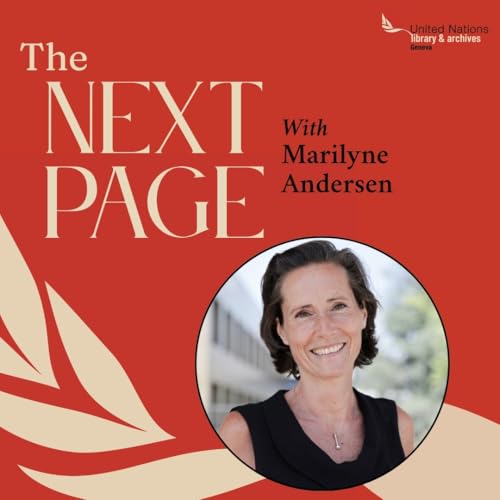
    Professor Marilyne Andersen, Director-General of GESDA explains how anticipatory science diplomacy works: gathering scientists’ foresight, translating breakthroughs into policy and practice, and preparing society for disruptive technologies.

    The episode covers GESDA’s Radar of 5–25-year futures, the Open Quantum Institute’s “Quantum for All” approach, the importance of open science and inclusivity, training for decision‑makers, and the role of art in engaging the public.

    Explore the GESDA Science Breakthrough Radar®: https://radar.gesda.global/

    Resources: Ask a Librarian!

    Where to listen to this episode

    • Apple podcasts: https://podcasts.apple.com/us/podcast/the-next-page/id1469021154
    • Spotify: https://open.spotify.com/show/10fp8ROoVdve0el88KyFLy
    • YouTube: https://youtu.be/

    Content

    Guest: Marilyne Andersen https://www.gesda.global/team-member/marilyneandersen/

    Hosts: Amy Smith and Wouter Schallier Production and editing: Amy Smith

    Recorded & produced at the United Nations Library & Archives Geneva

    続きを読む 一部表示
    38 分
  • AIxMultilateralism: "A Dangerous Master" Revisited - Wendell Wallach on AI, Ethics and Governance
    2026/03/23

    This is AI x Multilateralism, a playlist of conversations at the UN Library & Archives Geneva where we’re joined by experts who help us unpack the many ideas and issues at the nexus of AI and international cooperation. In this episode, we're joined by Wendell Wallach, a bioethicist who's been working on the ethics and governance of emerging technologies for decades. He’s the author of two books – A Dangerous Master, and Moral Machines – and until 2024, co-led the Carnegie Council’s AI and Equality Initiative. He’s also senior advisor to The Hastings Center, and a scholar at Yale University’s Interdisciplinary Center for Bioethics, where for 11 years he chaired Technology and Ethics studies. For this episode, we’re sharing excerpts from a wide-ranging conversation where he shares his views on the ethics and governance of AI, the continued relevance of his books on robots and technologies many years after they were first published, what we can learn from bioethics, and the urgent need for oversight to align technology with human and environmental interests. Resources:

    • Read "A Framework for the International Governance of AI" - Carnegie Council's AI & Equality Initiative.
    • Read the new preface to "A Dangerous Master - How to Keep Technology from Slipping Beyond Our Control" by Wendell Wallach.
    • Visit Wendell Wallach's website.
    • Learn about the UN Global Dialogue on AI Governance and the Independent International Scientific Panel on AI.

    Production:

    Guest: Wendell Wallach Host, production and editing: Natalie Alexander Julien Editorial assistance: Amy Smith and Wouter Schallier

    Podcast Music credits:

    Music from #Uppbeat (free for Creators!): https://uppbeat.io/t/img/sequence License code: 18P7IHFDKCA4SHFM

    Recorded & produced at the Commons, United Nations Library & Archives Geneva #AI #Multilateralism #AIEthics #AIGovernance

    続きを読む 一部表示
    27 分
  • Start Close In: Diplomacy, Technology, and the Ground Beneath Our Feet
    2026/03/06

    Start Close In: Diplomacy, Technology, and the Ground Beneath Our Feet In this episode of The Next Page, we talk with Anja Kaspersen — an IEEE director and former director of the United Nations Office for Disarmament Affairs in Geneva and Deputy Secretary General of the Conference on Disarmament — about having more confident discussions on technology, and how poetry, attention, and disciplined perception can guide diplomacy in an age of emerging technologies.

    Anja argues that the ground for engagement is not technical mastery but institutional literacy. She explains why diplomats should remain at the table, ask architectural questions, and translate between technical and policy worlds.

    The conversation covers science diplomacy, the changing nature of arms control and dual-use technologies, the importance of redundancy, resilience, and interoperability, and the need for anticipatory governance rather than reactive responses.

    Takeaways include strengthening discernment, preserving archives and institutional memory, resisting binary framings, and investing in human skills to govern technology responsibly.

    Resources: Ask a Librarian!

    David Whyte: https://davidwhyte.com/ Maria Popova: https://www.themarginalian.org/

    Where to listen to this episode

    • Apple podcasts: https://podcasts.apple.com/us/podcast/the-next-page/id1469021154
    • Spotify: https://open.spotify.com/show/10fp8ROoVdve0el88KyFLy
    • YouTube: https://youtu.be/w4L1S0nhCoo

    Content

    Guest: Anja Kaspersen

    Hosts: Amy Smith and Wouter Schallier Production and editing: Amy Smith

    Recorded & produced at the United Nations Library & Archives Geneva

    続きを読む 一部表示
    59 分
  • The state of multilateralism: crisis or renaissance?
    2026/02/20

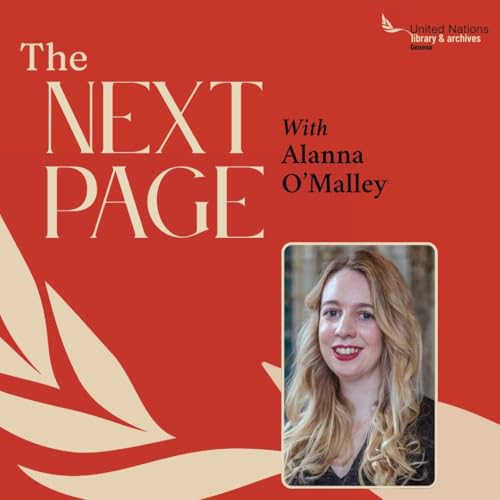
    Historian Alanna O'Malley explores how Global South actors have shaped the United Nations, arguing we should view today's challenges as an opportunity for a UN 'renaissance' rather than a collapse. She highlights invisible histories, multi-alignment strategies, regional and minilateral developments, and the need for Charter reform, greater legitimacy, accountability and public engagement to renew multilateralism.

    Professor O'Malley reflects from a historical point of view on the upcoming process of selection and appointment of the next Secretary-General highlighting the importance that broad global perspective and public traction need to play and urges recognizing the UN as a flexible, multipurpose institution that must be retooled and better resourced to protect sovereignty, human rights and equal representation.

    Resources: Ask a Librarian!

    https://www.eur.nl/en/people/alanna-sylver-omalley

    Where to listen to this episode

    • Apple podcasts: https://podcasts.apple.com/us/podcast/the-next-page/id1469021154
    • Spotify: https://open.spotify.com/show/10fp8ROoVdve0el88KyFLy
    • YouTube: https://youtu.be/kjatLR9EjHY

    Content

    Guest: Professor Dr. Alanna O'Malley

    Host, production and editing: Amy Smith, UN Library & Archives Geneva

    Recorded & produced at the United Nations Library & Archives Geneva

    続きを読む 一部表示
    34 分
  • AIxMultilateralism: Can AI Predict A Crisis? with Dr. Martin Waehlisch
    2026/02/13

    This is AI x Multilateralism, a playlist of conversations at the Commons, our space at the UN Library & Archives Geneva for sharing knowledge on multilateralism. In this series, we’re joined by experts who help us unpack the many ideas and issues at the nexus of AI and international cooperation.

    In this episode we ask: can AI help us better predict, respond to, and recover from crises? We’re joined by Dr. Martin Waehlisch, Associate Professor of Transformative Technologies, Innovation and Global Affairs at the University of Birmingham. He’s also part of the Research Team of the Crisis Computing Project, a global community of scholars and practitioners who are driven to put computation to better use. He shares:

    • what drives his teaching today on transformative technologies, and why he prefers the term “computational global affairs” to “international affairs” in today’s world
    • what exactly crisis computing means, and the kinds of crises he hopes that AI can help us to address, from complex climate prediction to public participation in decision-making
    • the potential of crisis computing at the local, regional and multilateral level, and his thoughts on how crisis computing can be addressed as part of the UN’s Global Dialogue on AI and the Independent International Scientific Panel on AI, both established by the UN General Assembly in 2025, and
    • what is still missing in the global debate when it comes to how we use AI individually and collectively.

    Resources mentioned:

    • The Crisis Computing Project: https://crisiscomputing.org/
    • The Peace and Security Data Hub : https://psdata.un.org/
    • The Complex Risk Analytics Fund (CRAF’d): https://crafd.io/ and the Humanitarian Data Exchange: https://data.humdata.org/

    Production:

    Guest: Dr. Martin Waehlisch Host, production and editing: Natalie Alexander Julien

    Podcast Music credits: Sequence: https://uppbeat.io/track/img/sequence Music from Uppbeat (free for Creators!): https://uppbeat.io/t/img/sequence License code: 6ZFT9GJWASPTQZL0 Recorded & produced at the Commons, United Nations Library & Archives Geneva #AI #Multilateralism #CrisisComputing #CrisisResponse

    続きを読む 一部表示
    29 分