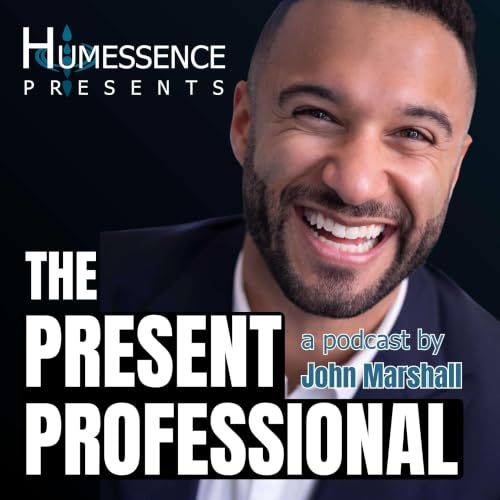
『The Present Professional』のカバーアート

The Present Professional

The Present Professional

著者: John Marshall
無料で聴く

The Present Professional is where leadership meets consciousness.


Hosted by John Marshall — executive coach, speaker, and founder of Humessence — this podcast explores what it means to lead well, live intentionally, and build success with presence.


Each episode dives into conversations and reflections on human-centered leadership, emotional intelligence, and conscious culture. You’ll hear from leaders, coaches, and thinkers redefining the future of work — and learn practical ways to bring balance, clarity, and authenticity to your own leadership journey.


Whether you’re developing yourself, your team, or your organization, The Present Professional helps you integrate who you are with what you do.

© 2026 The Present Professional
マネジメント マネジメント・リーダーシップ 個人的成功 心理学 心理学・心の健康 経済学 自己啓発 衛生・健康的な生活
エピソード
  • 080 - Revolutionizing Leadership Training with AI with Erik Berglund
    2026/07/02

    In this episode of The Present Professional, John Marshall speaks with Erik Berglund, founder of The Language of Leadership and Loominary AI, about the future of leadership development through AI powered practice. Erik shares how his work evolved from coaching leaders on accountability and communication into building skill simulation systems that help people practice real workplace conversations in a psychologically safe environment.

    Together, they explore why traditional training often fails to create lasting behavior change, how the eight critical leadership conversations can transform team performance, and why simulation, feedback, and repetition are essential for true skill development. They also discuss the role of psychological safety, the difference between accountability and conflict, and how AI can help organizations scale leadership training and talent development.

    Takeaways

    • Leadership development improves when people can practice real conversations, not just hear ideas about them.
    • Psychological safety is essential for effective simulation and skill building.
    • The eight critical leadership conversations create a framework for stronger teams and clearer expectations.
    • AI can help scale practical leadership training across organizations.
    • Accountability is not the same as conflict, and recognizing the difference changes how leaders respond.
    • Excuses often reveal a development opportunity, not just resistance.
    • Professional skill intelligence can help organizations understand where to invest training time and budget.

    Resources
    Loominary.io - https://loominary.io
    The Language of Leadership Framework
    https://www.amazon.com/Language-Leadership-Erik-Berglund/dp/XXXXXX

    Connect with Erik Berglund
    LinkedIn - https://linkedin.com/in/erikberglund
    Website - https://loominary.io

    Visit The Present Professional webpage on humessence.com and learn more about how we support leadership development and culture enablement at growth-stage organizations.

    Thank you for listening.

    Coach John Marshall | Instagram | LinkedIn | Facebook

    続きを読む 一部表示
    1 時間 6 分
  • 079 - The 8 Keys to Inspired Leadership with Kevin Asbjornson
    2026/06/25

    In this rich and wide-ranging conversation, John Marshall sits down with Kevin Asbjornson, global leadership development professional, executive coach, keynote speaker, and performing artist, to explore what it truly means to lead with emotional intelligence in the 21st century. Kevin draws on a career spanning more than 70 countries and a lifelong parallel passion for music to make a compelling case that leadership is both an art and a science — and that most organizations have been over-investing in the science while leaving the art largely untouched. He shares his signature Eight Keys to Inspired Leadership model, the powerful practice of using original piano compositions to develop emotional awareness in leaders, and the critical distinction between a leader's tune and their tone. From practical steps for accessing emotional intelligence assessments, to how the best organizations build learn-it-all cultures and measure leadership impact along the way, this episode is a masterclass in what human-centric leadership actually looks like in practice.

    Resources:
    Inspire Imagine Innovate Website - https://inspireimagineinnovate.com
    Howard Gardner's Intelligence ReFramed - https://www.amazon.com/Intelligence-Reframed-Howard-Gardner/dp/0465026117
    Hogan Assessments - https://www.hoganassessments.com
    Daniel Goleman's What Makes a Leader - https://dme.childrenshospital.org/wp-content/uploads/2019/06/What-makes-a-Leader-HBR.pdf

    Connect with Kevin Asbjornson: LinkedIn - https://linkedin.com/in/kevinasbjornson Website - https://inspireimagineinnovate.com

    Takeaways

    • Leadership is both an art and a science, and most organizations have over-invested in the science at the expense of the art.
    • People hear your tune, but they feel your tone — and when those two are out of alignment, connection breaks down.
    • Emotional intelligence is not something we are born with; it is learned through experience and developed intentionally over time.
    • The five pillars of emotional intelligence are self-awareness, self-regulation, motivation, empathy, and social skills — and intrapersonal intelligence must come before interpersonal impact.
    • Leaders inspire people; people motivate themselves — and that distinction changes everything about how we approach leadership development.
    • Closing the gap between identity and reputation is one of the most transformative things a leader can do for their team and their organization.
    • Real-time feedback throughout a coaching engagement is more powerful than waiting for results at the end of the process.
    • The three most common leadership refinements are shifting from tune to tone, distinguishing between urgent and important, and slowing down pace to better connect with the audience.
    • The best organizations invest in learn-it-all cultures rather than know-it-all cultures, and they make emotional intelligence a measurable organizational priority.
    • Leadership effectiveness at work is directly connected to how we show up at home — life, career, and well-being are not separate categories.

    Visit The Present Professional webpage on humessence.com and learn more about how we support leadership development and culture enablement at growth-stage organizations.

    Thank you for listening.

    Coach John Marshall | Instagram | LinkedIn | Facebook

    続きを読む 一部表示
    50 分
  • 078 - Building Connected Teams Through Rhythm, Community & Leadership with Natalie Spiro
    2026/06/18

    In this vibrant and deeply personal conversation, John Marshall sits down with Natalie Spiro, founder and CEO of Drum Cafe North America and CEO of Blue Fire Leadership, to explore how rhythm, community, and intentional connection can transform the way teams and organizations operate. Natalie shares her remarkable journey from growing up in apartheid South Africa to building a thriving corporate team building enterprise out of her garage in San Diego, one drum circle at a time. Drawing on her background in organizational psychology, executive coaching, and Gallup CliftonStrengths, she unpacks the science behind rhythm as a unifying force and offers practical strategies for leaders who want to build deeper connection within their teams. From a resistant employee who became the first to take the stage, to delivering an unforgettable event for Google in Nairobi with borrowed drums tuned over an open fire, Natalie's stories remind us that when people feel seen, heard, and connected, performance follows naturally.

    Connect with Natalie Spiro: Website

    Takeaways

    • Rhythm is a universal language that connects people at a level deeper than words.
    • Community is not a nice to have for teams — it is the foundation of high performance.
    • Leaders who show genuine curiosity about their team members unlock engagement that no incentive program can replicate.
    • Manifesting your future requires both intentional vision and the courage to act when opportunity appears.
    • Self-care is not a luxury — it is the energy source that allows leaders to show up fully for others.
    • The most powerful team building moments come from going deeper than surface level stories.
    • Resilience is built through relationships, not in isolation.
    • When you are truly present with someone, they feel it — and that feeling builds trust.
    • Pivoting in the face of loss is not giving up; it is the most strategic thing a leader can do.
    • If you want to run fast, run alone — but if you want to run far, run together.

    Visit The Present Professional webpage on humessence.com and learn more about how we support leadership development and culture enablement at growth-stage organizations.

    Thank you for listening.

    Coach John Marshall | Instagram | LinkedIn | Facebook

    続きを読む 一部表示
    47 分
adbl_web_anon_alc_button_suppression_t1
まだレビューはありません