エピソード

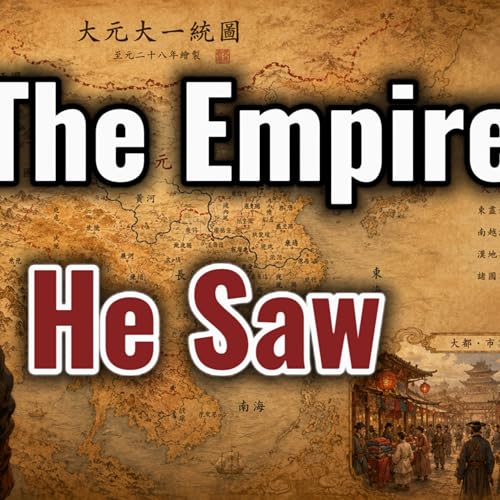
  • What Marco Polo Saw Bankrupted Kublai Khan's Empire
    2026/05/26

    Marco Polo walked into Peking in 1275 and saw something Europe wouldn't believe for 700 years. He went home a liar.

    Marco Polo walked into Kublai Khan's capital in 1275 and saw the first paper money in history. Mulberry bark, soaked and pressed, stamped with the Khan's red seal, declared the only money allowed across an empire stretching from the Pacific to the Volga. Refusal carried the death penalty. Polo recorded every detail in *Il Milione* and was called a liar for the next seven centuries. He was right. By the 1350s, late-Yuan emperors had printed too many notes to fund wars and palaces. One sack of rice that cost a single note under Kublai needed one hundred and fifty notes fifty years after his death. The empire fell in 1368. The paper trick didn't. Eighty years later, salt smugglers who had defied the monopoly that propped up the paper money founded the Ming dynasty — and copied the same trick. What Marco Polo saw in Kublai's capital is what every wallet on earth now carries. Europe took seven hundred years to believe him.

    続きを読む 一部表示
    9 分
  • Marco Polo and the Wood That Bankrupted Kublai Khan's Empire
    2026/05/24

    Marco Polo walked into Peking in 1275 and saw something Europe wouldn't believe for 700 years. He went home a liar.

    Marco Polo walked into Kublai Khan's capital in 1275 and saw the first paper money in history. Mulberry bark, soaked and pressed, stamped with the Khan's red seal, declared the only money allowed across an empire stretching from the Pacific to the Volga. Refusal carried the death penalty. Polo recorded every detail in *Il Milione* and was called a liar for the next seven centuries. He was right. By the 1350s, late-Yuan emperors had printed too many notes to fund wars and palaces. One sack of rice that cost a single note under Kublai needed one hundred and fifty notes fifty years after his death. The empire fell in 1368. The paper trick didn't. Eighty years later, salt smugglers who had defied the monopoly that propped up the paper money founded the Ming dynasty — and copied the same trick. What Marco Polo saw in Kublai's capital is what every wallet on earth now carries. Europe took seven hundred years to believe him.

    続きを読む 一部表示
    9 分
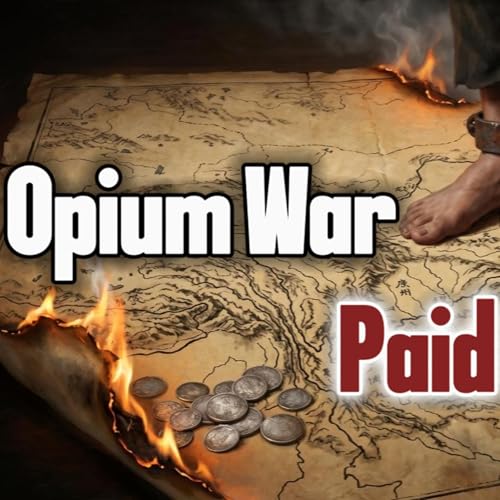
  • How the Opium War Bankrupted the Richest Man on Earth
    2026/04/24

    In 1834, one Chinese merchant was worth more than the entire United States government. Nine years later, he was dead — and his silver was building America.

    Howqua — Wu Bingjian — was the richest man on earth in the 1830s. This Chinese merchant ran the Cohong, the imperial guild that monopolized foreign trade through Canton (Guangzhou) for a century. His personal fortune of $26 million in silver was more than double the annual outlays of the United States federal government. Then the First Opium War brought down the system that made him. This episode of The Silk Ledger audits how Howqua's fortune was built, how the Treaty of Nanking abolished the Cohong in 1842, and how Howqua had already moved his capital offshore to Boston before the collapse came. The story covers the Canton System, the opium trade that passed through Howqua's ledgers, his arrest by imperial commissioner Lin Zexu in 1839, the ransom of Canton in 1841, and the silver Howqua entrusted to a young Boston merchant named John Murray Forbes — silver that outlived him by fifty years, financed American railroads and mines, and built the fortunes of the Forbes, Perkins, and Roosevelt dynasties. A 19th century China history explainer from a forensic financial angle.

    続きを読む 一部表示
    10 分
  • The Boxer Rebellion: How Trade Wars Destroyed China
    2026/04/11

    They were promised magic — that their bodies would stop bullets.

    Eight hundred million dollars later, the dynasty was dead.

    The Boxer Rebellion was not a rebellion. It was the final invoice for an empire destroyed by forced trade. After the Opium Wars, foreign goods flooded China — machine-made textiles, steel, and steamships priced local craftsmen out of existence. In Shandong province, millions of displaced workers joined a movement called the Boxers, demanding the foreigners be expelled. The Empress Dowager Cixi of the Qing Dynasty made them a deal: fight for the throne, and China would rise again.

    She lied.

    When eight nations invaded in 1900, Cixi fled Beijing in the night. The Boxers faced modern rifles with swords and spears. They were decimated. Then came the bill: the Boxer Protocol — 800 million silver dollars, the largest war indemnity in history. Four years of China's tax revenue, extracted from 400 million citizens. The Qing Dynasty collapsed within a decade.

    This is the story of how protectionism fails. How displaced workers become pawns. And how the people always pay twice: first their livelihoods, then their lives. The Boxer Rebellion explained — economics, not mythology.

    続きを読む 一部表示
    8 分
  • The Silver Drain Behind History's Deadliest Civil War
    2026/04/03

    In 1851, a failed scholar declared himself the brother of Jesus Christ and founded a kingdom that would kill 20 million people.


    Hong Xiuquan's Taiping Heavenly Kingdom wasn't just a rebellion — it was a Ponzi state. Confiscate everything. Redistribute nothing. Print money when the loot runs dry.


    170 years later, Hugo Chavez ran the same playbook in Venezuela. Different continent. Same collapse.


    This episode traces the financial architecture of ideological failure — from Nanking to Caracas.

    続きを読む 一部表示
    11 分
  • How One Commodity Bankrupted an Empire
    2026/03/30

    In 1839, a Qing official burned 20,000 chests of opium in a pit outside Canton. Britain responded with gunboats. Three years later, China signed away Hong Kong and 40% of its tax revenue.


    But the bill didn't stop there.


    This episode traces the financial wreckage of the First Opium War — from the silver drain that crippled the Qing treasury to the desperation that would soon ignite history's deadliest civil war.


    The first audit in the Silk Ledger.

    続きを読む 一部表示
    8 分