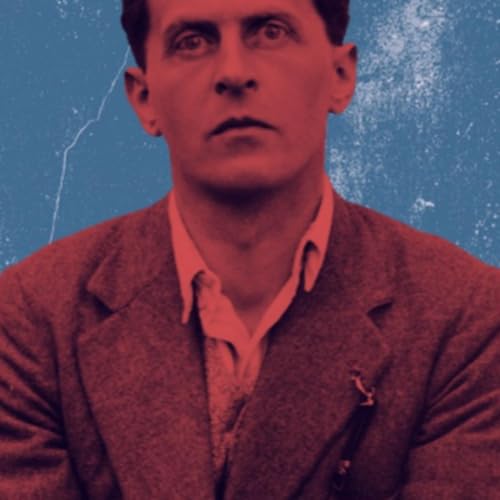
『The Spinoza Triad: Philosophy in our World』のカバーアート

The Spinoza Triad: Philosophy in our World

The Spinoza Triad: Philosophy in our World

著者: John Gibbs Dr Richard Miller & Dan Rowland
無料で聴く

今ならプレミアムプランが3カ月 月額99円

2026年5月12日まで。4か月目以降は月額1,500円で自動更新します。

概要

Welcome to The Spinoza Triad. We are a group of seasoned educators who like to discuss philosophy, culture and any big ideas which interest us. These podcasts are aimed at anyone who enjoys philosophy. Please join us and share in our enthusiasm as we grope around in the great ideas of the world. We aim to be amusing, illuminating and on occasion, thought- provoking. Listen as we fail in the attempt. email: jfgibbs105@gmail.com https://anchor.fm/john-gibbs1/message https://www.facebook.com/groups/333603241740844/ https://www.speakpipe.com/SpinozaFeedback https://sites.google.com/d/1OL94UHCJohn Gibbs, Dr Richard Miller & Dan Rowland 哲学 社会科学
エピソード
  • Wittgenstein: His lfe
    2026/03/18

    This conversation delves into the life and philosophy of Ludwig Wittgenstein, exploring his fascinating background, family influences, and the impact of his experiences during World War I on his philosophical development. The discussion highlights his significant works, including the Tractatus and Philosophical Investigations, and examines the complexities of his character, including his relationships and personal struggles.

    • Wittgenstein was a complex character with a rich background.
    • He attended school with Hitler, which is a fascinating historical coincidence.
    • His family was immensely wealthy, influencing his education and life choices.
    • Wittgenstein's father was involved in the steel industry, making a fortune.
    • Several of Wittgenstein's siblings tragically committed suicide.
    • He was educated in a demanding household that valued achievement.
    • Wittgenstein served in World War I, where he faced death and developed his philosophical ideas.
    • His experiences in war led him to explore spirituality and the meaning of life.
    • The Tractatus was a significant work that he believed solved philosophical problems.
    • Wittgenstein's later work, Philosophical Investigations, challenged his earlier ideas.

    続きを読む 一部表示
    26 分
  • Wittgenstein: The difficulty of Language and Meaning
    2026/03/11

    In this conversation, the John Gibbs, Dr Richard Miller and Dan Rowland delve into Wittgenstein's 'Tractatus Logico-Philosophicus', exploring its complex themes surrounding language, meaning, and the limitations of expression. They discuss Wittgenstein's philosophical ambitions, the structure of language, and how his ideas have influenced modern philosophy. The conversation highlights the challenges of interpreting Wittgenstein's work and the significance of what cannot be said in philosophical discourse.

    • Wittgenstein's 'Tractatus' is structured around seven propositions.
    • The book explores the relationship between language and reality.
    • Wittgenstein argues that many philosophical problems stem from misunderstandings of language.
    • The famous opening line states that 'the world is everything that is the case.'
    • Wittgenstein's work is often misunderstood and not widely read outside philosophical circles.
    • He believed that what cannot be spoken about must be passed over in silence.
    • Philosophy should clarify language rather than add new truths.
    • Wittgenstein's ideas have influenced various branches of modern philosophy.
    • The importance of silence in expressing the inexpressible is a key theme.
    • Wittgenstein's pursuit of truth leads to the conclusion that many things are unknowable.


    続きを読む 一部表示
    38 分
  • Psycho-Politics Byung-Chul Han
    2026/03/04

    In this episode of the Spinoza Triad, John Gibbs and Richard Miller delve into the themes of Byung-Chul Han's 'Psycho-politics', exploring the shift from a disciplinary society to one driven by emotions and individualism. They discuss the implications of neoliberalism on personal identity, the rise of emotional capitalism, and the gamification of life and work. The conversation also touches on the impact of big data and the quantified self, examining how these elements shape our understanding of happiness, success, and personal agency in a data-driven world.

    "You're worth it."

    "Just do it."

    "Data is the new faith."

    • The shift from a disciplinary society to one focused on emotions is significant.
    • Neoliberalism emphasizes individualism and personal achievement.
    • Emotional capitalism manipulates feelings to drive consumer behavior.
    • Gamification blurs the lines between work and play, affecting productivity.
    • The quantified self movement reflects a culture obsessed with measurement.
    • Big data is seen as a new form of faith, replacing traditional narratives.
    • The digital unconscious influences our desires and behaviors without our awareness.
    • Statistics can dehumanize individuals, reducing them to mere data points.
    • The pursuit of efficiency in data can lead to irrational outcomes.
    • True happiness and meaning cannot be quantified or measured.

    続きを読む 一部表示
    1 時間 1 分
adbl_web_anon_alc_button_suppression_c
まだレビューはありません