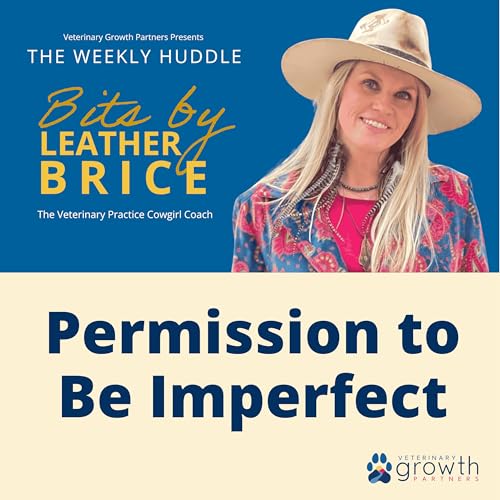
• Permission to Be Imperfect
    2026/04/02

    In this episode, Leather Brice dives deep into the art of handling nerves before important conversations, especially those involving conflict. Leather shares personal insights and actionable steps to help you set yourself up for success, from reframing your inner monologue to practicing with trusted colleagues. Discover why vulnerability is a strength, not a weakness, and how embracing imperfection can actually lead to more authentic and productive dialogue. Whether you’re a leader or team member, these tips will help you keep communication open and effective, even when the stakes are high.

    🐴 Key Takeaways:

    1. Reframe Your Inner Monologue: The story you tell yourself before a conversation shapes your confidence and outcome. Make it positive!
    2. Practice Makes Progress: Role-play tough conversations with a trusted peer, especially when conflict is involved.
    3. Confidentiality Matters: When practicing, choose someone appropriate to maintain trust and avoid triangulation.
    4. Embrace Vulnerability: It’s okay to admit you’re nervous or imperfect—authenticity builds trust.
    5. Keep the Conversation Going: No matter how nervous you feel, open communication is essential for resolution and growth.

    #Leadership #Communication #Podcast #ConflictResolution #BitsByLeather #LeatherBrice

    続きを読む 一部表示
    3 分
  • Reframing Mental Health at Work
    2026/03/26

    When “my mental health” becomes the final word in a tough one-on-one, leaders can leave without clarity, accountability, or a plan. In this episode, Harmony Butler reframes mental health in the workplace—not as a measure of comfort, but as a reflection of capacity and adjustment. Drawing on the formal definition of mental health (including adequate adjustment and the ability to meet the demands of life), Harmony challenges listeners to recognize when “mental health” is being used as a shield to avoid discomfort versus a tool for growth, resilience, and responsibility.

    🔑 Key takeaways

    1. Mental health isn’t about constant comfort; it reflects capacity to adjust, relate, and meet demands.
    2. Using “mental health” as a shield enables avoidance; using it as a tool promotes growth and accountability.
    3. Adequate adjustment and resilience are evidence of healthy mental health.
    4. Support matters, but responsibility still rests with the individual.
    5. In performance conversations: state the problem, describe impact, invite response—then ensure a concrete plan.

    続きを読む 一部表示
    6 分
  • From Rodeo to Role Play
    2026/03/19

    In this episode of Bits by Leather, Leather Brice dives into the art of preparing for meaningful conversations—whether it’s giving feedback, confronting a challenge, or simply communicating more effectively. Drawing parallels between horse training and human interaction, Leather shares why mindset and practice are essential for building confidence and success in any dialogue. She offers practical tips, including the value of role play and structured feedback frameworks, to help listeners overcome nerves and avoid conversation avoidance. If you want to communicate with more clarity and care, this episode is for you!

    🐴 Key Takeaways:

    1. The story you tell yourself before a conversation shapes your experience—shift your mindset to set yourself up for success.
    2. Preparation is crucial: just like training a horse, practicing conversations builds confidence and skill.
    3. Nerves and avoidance are normal, especially when you’re not used to holding difficult conversations—practice is the antidote.
    4. Use tools like feedback frameworks (e.g., six steps for giving feedback) to guide your conversations.
    5. Role play with colleagues or coaches can help you refine your approach and ensure your message lands with care.
    6. Communication is a skill—invest in coaching and structured practice to improve your effectiveness.

    #Leadership #Communication #Podcast #Feedback #PracticeMakesPerfect #BitsByLeather #LeatherBrice

    続きを読む 一部表示
    5 分
  • Wake Up and Pay Attention
    2026/03/12

    In this nostalgic and inspiring episode of Keys to Harmony, Harmony Butler draws lessons from the classic film Sister Act 2 to reveal how hidden talents can transform teams and organizations. Harmony recounts the iconic classroom moment when overlooked students unleash their musical gifts, and connects it to the workplace, where skills often remain masked by appearances, lack of guidance, or toxic culture. Through vivid storytelling, Harmony challenges listeners to look beyond surface issues, nurture potential, and create a culture where everyone’s “superpowers” shine. Whether you’re a leader or a team member, discover practical ways to uncover hidden strengths and foster true harmony in your organization.

    🔑 Key Takeaways:

    1. Hidden talents often go unnoticed due to appearances, lack of guidance, or negative culture.
    2. Leadership isn’t about titles, it’s about empowering others and creating opportunities for growth.
    3. Organizational culture starts with every individual’s contribution, not just management.
    4. Simple changes in appearance, etiquette, and encouragement can reveal untapped potential.
    5. Like Sister Mary Clarence, leaders can inspire teams to “wake up and pay attention” to their own greatness.

    #KeysToHarmony #Leadership #TeamCulture #HiddenTalents #SisterAct2 #Podcast

    続きを読む 一部表示
    6 分
  • What if they quit?
    2026/03/05

    In this episode of Bits By Leather, Leather Brice, CVBL, tackles one of the biggest hurdles leaders face: the fear of having direct conversations. Are you avoiding holding your team accountable because you're afraid they'll get mad, cry, or even quit? Leather explains why assuming the worst is just a "story you're telling yourself" and how shifting your mindset can transform a dreaded conflict into a life-changing lightbulb moment for your employees. Learn how to stop feeling sick over giving feedback and start being the catalyst for positive change on your team.

    🐴 Key Takeaways:
    1. The "What If They Quit?" Trap: Why the fear of losing an employee shouldn't stop you from holding them accountable.
    2. Stop Telling Yourself Stories: How to recognize and overcome the negative assumptions we make about how people will react to feedback.
    3. The Lightbulb Moment: Why direct conversations are often the exact catalyst someone needs to recognize and change toxic behavior.
    4. Curing Pre-Conversation Anxiety: How shifting your mindset before a tough talk can eliminate that "need to vomit" feeling and make you a better leader.

    #BitsByLeather #Leadership #Accountability #DirectConversations #Feedback #LeadershipDevelopment #ManagementTips #MindsetShift

    続きを読む 一部表示
    5 分
  • The Myth of the Emotionless Workplace
    2026/02/26

    Telling a team member to "leave their emotions at the door" is like telling a musician not to feel, it kills the very connection required to perform. In this episode of The VetMed Weekly Huddle, Keys To Harmony, Harmony Butler, CVBL, CCFP, challenges the outdated business mindset that professionalism requires suppressing emotion.

    Harmony explores why emotions in the workplace shouldn't be ignored, but rather treated as valuable data. She breaks down how frustration, anxiety, and excitement are actually signals regarding your business's health, alignment, and clarity. Tune in to learn why "emotional illiteracy" is the true enemy of productivity and how to give your team the structure they need to translate feelings into meaningful action.

    🔑 Key Takeaways

    1. The Musician Analogy: Just as a musician channels emotion to create connection, employees need to channel emotions to create meaningful work. Suppressing feelings only leads to "sad songs"—or in business terms, burnout and disengagement.
    2. Emotions are Data: Treat feelings as diagnostic tools. Frustration often signals misalignment; anxiety can signal a lack of clarity; and a sense of powerlessness may mean your team feels unheard.
    3. The Cost of Suppression: When leaders demand an emotion-free environment, they don't eliminate feelings; they push them underground. This results in quiet quitting, gossip, passive-aggressive behavior, and turnover.
    4. Emotional Illiteracy is the Risk: The problem isn't that emotions exist at work; the problem is that we lack the vocabulary to label them correctly. Misdiagnosing an emotion (e.g., confusing powerlessness with anger) leads to the wrong solutions.
    5. Management vs. Elimination: Healthy workplaces normalize emotions and provide structure. The goal isn't to remove emotions, but to ensure unmanaged emotions don't run the business.

    #KeysToHarmony #EmotionalIntelligence #Leadership #VGP #WorkplaceCulture #Management #HR #VeterinaryLeadership #HarmonyButler

    続きを読む 一部表示
    6 分
  • Hold Your Horses...Accountable
    2026/02/19

    On this ride-along episode of Bits By Leather, Leather Brice, CVBL, shares a barn-side epiphany: even the most reliable horse needs boundaries—and so do your most reliable team members. Using her 20-year-old, rock-steady gelding as a metaphor, Leather explores how leaders often let top performers slide on standards out of fear of “breaking what works.” She unpacks why that mindset backfires and offers a simple reset: clear expectations, consistent follow-through, and courageous conversations. If you’ve got long-time staff who always come through but sometimes skip the process, this is your cue to hold them, lovingly, accountable. Walk away with practical steps for check-ins, coaching, and reinforcing culture without losing the heart of your team.

    🐴 Key Takeaways

    1. Reliability doesn’t replace accountability: Even “rock-steady” top performers need clear standards and consequences.
    2. Tenure bias is real: Longtime team members often get unintentional passes that erode culture and fairness.
    3. Fear fuels avoidance: Leaders sometimes skip hard feedback to avoid “breaking what works,” which enables bad habits.
    4. Consistency is kindness: Apply the same rules to everyone—best performers included—so expectations stay clear.
    5. Address behavior, not person: Praise reliability and contributions while correcting specific process breaks.
    6. Coach for growth: Pair accountability with support—training, resources, and recognition when behavior improves.

    続きを読む 一部表示
    3 分
  • The Feeling Is the Goal
    2026/02/12

    In this heartfelt episode of Keys to Harmony, Harmony Butler invites you to pause and answer a powerful question: How are you really doing?

    With Valentine’s Day around the corner, Harmony explores love — not in the romantic sense, but the kind of love we have (or want to have) for our work, our teams, and the impact we make every day in veterinary medicine.

    Too often, we tie our happiness to someone else’s actions. If they would just change… then I’d love my job. But what if we’ve been setting the wrong goals all along?

    Through a simple but transformative mindset shift, Harmony challenges you to identify your true goal — the feeling you’re actually chasing — and shows how you can start experiencing it today, without waiting on anyone else.

    If your goal is to love your work, feel free, or create a better culture, this episode will help you take ownership of that experience now.

    Because the key to harmony? It starts with you.

    🔑 Key Takeaways
    1. The real goal isn’t the outcome — it’s the feeling you believe the outcome will give you.
    2. Waiting on others to change delays your own fulfillment.
    3. You can experience love for your work now — without external validation.
    4. Small, intentional actions can shift workplace culture.
    5. Personal responsibility is the first step toward creating harmony.

    続きを読む 一部表示
    4 分