00:00 Meet Emma Walker: From Chemistry PhD to Johnnie Walker Master Blender
01:38 Inside the Blending Team: What a Master Blender Actually Does
04:03 10 Million Casks & the Flavor Wheel: How Diageo Talks Taste
06:34 Red to Blue in One Sentence: Breaking Down the Johnnie Walker Range
08:14 How Blue Label Is Built: Selecting Casks, Vattings & 40+ Year Whisky
10:29 Tasting Johnnie Walker Blue Label: Smoke, Fruit, Florals & Texture
14:33 Consistency Over Decades: Recipes, Sensory Panels & Batch Flexibility
17:29 Carrying a 200-Year Legacy: Pressure, Archives & Blending for the Future
19:24 Climate Change, Red Label Redemption, Scotch Myths & India’s Influence
23:58 India Outlook on whisky
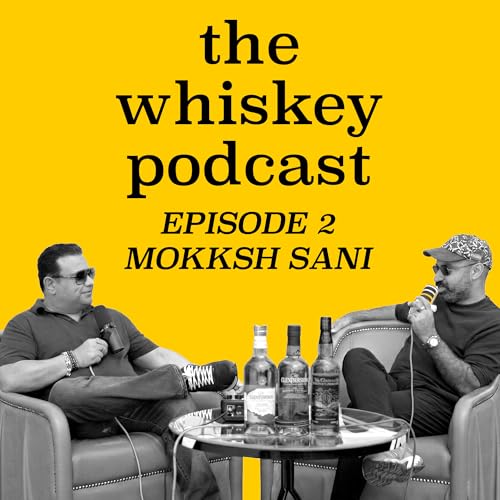
In this episode of The Whiskey Pod, the host interviews Emma Walker, Master Blender for Johnnie Walker, during her visit to India. Emma shares how she went from a chemistry PhD to joining Diageo in 2008 as a project scientist, eventually becoming Master Blender, and explains how a small lab team of 12 blenders oversees quality and blending across Diageo’s Scotch portfolio while representing work done by over 2,000 people across Scotland. She describes the day-to-day work of nosing whisky, signing off blends, assessing cask samples, developing innovations, and using shared sensory language through a flavor wheel that separates distillery character from maturation flavors, enabling nuanced disagreements while staying correlated. Emma discusses Diageo’s inventory of more than 10 million maturing casks sourced from over 30 distilleries, including ghost distilleries and newer operations like Roseisle and the reopened Port Ellen. She gives one-sentence profiles of key expressions—Red Label as distillery-character-forward and mixable; Black Label as bold yet balanced and cocktail-friendly; Johnnie Walker Blonde as designed for mixing worldwide; and Blue Label as an icon of luxury made from casks where only 1 in 10,000 meet the required quality. The conversation explores how Blue Label casks are selected for how they work in the overall blend, including the use of house vatting components such as rare/old vattings (with some whiskies over 40 years old) and sherry-style vattings using European oak ex-sherry casks, and notes the continuity of blending methods seen in century-old archives. They taste Blue Label and discuss its sensory profile—temperate smoke, depth, vibrancy, citrus, white peach, rose petals, berries, hazelnuts, Turkish delight notes, softness from wood mix, and the importance of aged grain whisky for texture and as a ‘seasoning’ element. Emma explains consistency goals across batches, why there is a framework rather than a fixed recipe, and what variations can occur over decades due to broader industry changes in cask types and production methods. She reflects on the pressure of stewarding a 200-year legacy and the responsibility of laying down stocks for future blenders. The episode also covers how climate change may affect distillation, water access, and maturation, while warehouses remain relatively temperature-stable. Emma addresses Scotch myths—quality is not directly tied to age, and single malts are not inherently better than blends—and shares her personal at-home favorites (Red and Black Label, plus Singleton, and Blue Label when gifted). The discussion touches on cocktail culture, including a Black Label espresso martini with miso, and India’s importance as a market, with Emma describing how learning local flavors and drinking habits can influence innovation and future whiskies, including the idea of a whisky created specifically for India.


 2026/02/2027 分
 26 分
26 分 51 分
51 分