エピソード

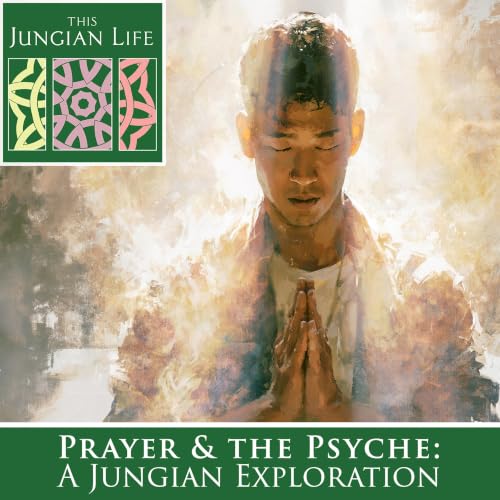
  • Prayer and the Psyche: A Jungian Exploration
    2026/07/09

    Throughout human history, prayer has been a constant. Jung referred to it as “not only one of the most original but also the most frequent means to change the condition of mind”.


    This week Jungian analyst ROBERT SHEAVLY joins Lisa Marchiano and Deborah Stewart for a Jungian exploration of prayer.


    Everyone at some point in their lives will pray (even if we do not call it that). When we reach out for help, or to express gratitude for life’s blessings, we are reaching for a connection with the eternal and the infinite.


    Prayer can be examined from the lens of the ego-self axis. When we pray, it can be understood as ego asking the guiding self for wisdom, from a position of humility and supplication.


    Prayer is also linked to our mortality. It is integral to grief rituals. In desperate times, it gives us an act to perform that acknowledges our helplessness but also offers comfort. When we say grace at the dinner table, we offer expiation and acknowledgement of the life we’ve taken from the world in order to sustain our own life.


    Visit our website to read today’s dream and follow up on the resources we mention in the episode.


    Connect With This Jungian Life

    Download our free Dream Recall Meditation Guide

    Send a dream for us to analyze on the show

    Take a look at This Jungian Life Dream School, our online course in Jungian dream analysis.

    Follow This Jungian Life on Instagram

    続きを読む 一部表示
    1 時間 2 分
  • Life, Liberty and the Pursuit of Individuation: A Jungian Reading of the Declaration of Independence
    2026/07/02

    America’s Declaration of Independence has profoundly influenced the development of democracy and democratic movements all over the world, with its bold assertion:


    “We hold these truths to be self-evident, that all men are created equal, that they are endowed by their Creator with certain unalienable Rights, that among these are Life, Liberty and the pursuit of Happiness.”


    This week Jungian analyst ROBERT SHEAVLY joins Lisa Marchiano for a psychological exploration of the Declaration of Independence, marking its 250th anniversary this Fourth of July.


    The Declaration of Independence grew from a need to separate from an authority that once provided structure and strength, but no longer served. Psychologically, this reflects an archetypal pattern: the movement away from external authority and toward a deeper source of inner authority.


    Jung wrote, “In the last analysis the essential thing is the life of the individual”. His work shares the same sacred idea that we find in the Declaration: that the individual holds his or her own dignity, sovereignty and uniqueness. We are not granted rights by external authorities, these are innate to our humanity.


    Of course, the nation built around the Declaration of Independence failed to live up to its ideals. Thomas Jefferson, the principal author, enslaved hundreds of people throughout his lifetime. At the heart of Independence Day celebrations lies a split, with noble principles dissociated from lived reality.


    The Declaration of Independence’s centering of the individual, however, reinforces the Jungian idea that we can only solve crises in the collective if we each find the strength to withdraw our shadow projections. Cultural transformation begins with the difficult inner work we must find the courage to take on, working toward wholeness at the personal level.


    Visit our website to read today’s dream and follow up on the resources we mention in the episode.


    Connect With This Jungian Life


    Take a look at This Jungian Life ⁠Dream School⁠, our online course in Jungian dream analysis.


    Send a ⁠dream⁠ for us to analyze on the show.


    Watch bonus mini-episodes on our ⁠Patreon⁠ channel.


    Follow This Jungian Life on ⁠Instagram⁠.

    続きを読む 一部表示
    57 分
  • The Descent: A Jungian Exploration of the Underworld
    2026/06/25

    In every culture and every religion, we find the concept of the underworld: sometimes located underground, and usually understood as a final destination after death.


    This week, Jungian analysts Lisa Marchiano and Deborah Stewart circumambulate the notion of the underworld and what it means for us psychologically. James Hillman’s Dreams and the Underworld offers a guide, linking our dreaming life to myths of the underworld.


    We discuss versions of the underworld in Etruscan, Mayan, Christian, Egyptian and Greek mythology, and explore how each culture envisions the threshold between the worlds of the living and the dead, and the extent to which it is possible to enter an underworld and return.


    Psychologically, the underworld can represent a descent into the world of the unconscious, where completely different values apply. Awake, we may feel concerned about our job or our house, but if we listen to our dreams, we’ll often find the unconscious pointing us elsewhere, towards neglected truths or hidden desires.


    A visit to the underworld can also be understood as a transformational loss of innocence, just as Kore is raped and abducted by Hades, and transforms into Persephone, Queen of the Underworld. In life, we will all experience a painful loss of innocence or an experience that feels like a descent into hell. Such descents may become important points of initiation on our life’s journey.


    Visit our website to read today’s dream and follow up on the resources we mention.


    Connect With This Jungian Life


    Take a look at This Jungian Life Dream School, our online course in Jungian dream analysis.


    Send a dream for us to analyze on the show.


    Watch bonus mini-episodes on our Patreon channel.


    Follow This Jungian Life on Instagram.

    続きを読む 一部表示
    1 時間 6 分
  • The Absent Father: Jung and the Missing Masculine
    2026/06/18

    A father who is unavailable - whether due to untimely death, a demanding job, family breakup, or simply an inability to step up and meet his children’s needs - may deprive his children of the emotional bedrock they require. They can struggle to access their capacity for aggression and creativity, or to build the self-esteem necessary for successful adult relationships.


    As many fairy tales show us, an absent father is sometimes experienced alongside an abusive mother, leaving a complicated legacy of emotional wounding to be worked through. First of all, the abuse must be confronted, and then the failure of the absent parent to witness or protect.


    Jung’s life offers us fascinating material with which to explore the impact of the absent father. His father’s powerlessness as an uninspired, struggling pastor planted the seed of Jung’s lifelong quest for the numinous. As a father himself, Jung paid little attention to his children as he developed his life’s work and maintained a relationship with his collaborator Toni Wolff alongside his marriage to Emma Jung.


    Join Jungian analysts Lisa Marchiano and Deborah Stewart this week as they explore what it means to be an absent father, and how we might both survive and transcend the legacy of such a parent.


    Visit our website to read today’s dream, get more detail on the absent father, and follow up on the resources we mention.


    Connect With This Jungian Life


    Download our free ⁠⁠⁠Dream Recall Meditation Guide⁠⁠⁠.


    Check out our ⁠⁠Dream School⁠⁠.


    Watch bonus mini-episodes on our ⁠⁠Patreon channel.⁠⁠


    Follow This Jungian Life on ⁠⁠⁠⁠⁠⁠⁠⁠Instagram⁠⁠⁠⁠⁠⁠⁠⁠.


    続きを読む 一部表示
    1 時間 24 分
  • The Cry of Merlin: A Jungian Approach to the Wizard
    2026/06/11

    Merlin, the mythical prophet, magician, and kingmaker of medieval legend, has lived in the Western imagination for centuries. Arthurian legend gives us more than the idealized government of the Round Table and the hero’s valiant quest for the Holy Grail—it also gives us Merlin’s darkness and power: sorcery, communion with nature, and the prospect of achieving our aims through shadowy transgression.


    This week, our special guest is Jungian analyst and friend DOUG TYLER. Doug guides us through Merlin’s role in Western culture, sharing some of his favorite stories and explaining the profound influence of Merlin on his analytic work and psycho-spiritual landscape.


    Considered through a psychological lens, Merlin models the necessity of journeying downward and confronting our darker aspects. He prefigures Gandalf and Dumbledore, embodying the archetype of the mature masculine in a strong and shadowed relationship with the feminine. Merlin can also be understood as a counterpoint to Christ: although his father was a demon, he was born to a virgin mother and twice offered himself as sacrifice.


    Read the dream we analyze in full on our website.


    Connect With This Jungian Life


    Download our free ⁠⁠Dream Recall Meditation Guide⁠⁠.


    Check out our ⁠Dream School⁠.


    Watch bonus mini-episodes on our ⁠Patreon channel.⁠


    Follow This Jungian Life on ⁠⁠⁠⁠⁠⁠⁠Instagram⁠⁠⁠⁠⁠⁠⁠.

    続きを読む 一部表示
    1 時間 13 分
  • Working with Short Dreams and Fragments
    2026/06/04

    This week, to mark the publication in paperback of Dream Wise: Unlocking the Meaning of Your Dreams, Jungian analysts Lisa Marchiano and Deborah Stewart interpret a selection of short dreams sent in by listeners.


    Many of us dismiss short dreams or fragments of dreams as unworthy of our time. We await the arrival of epic, cinematic dreams, while perhaps overlooking the gold that can be found in more “ordinary” dreams.


    Honoring short dreams by writing them down and spending time with them can yield powerful insights. It can also work as an incentive to your unconscious, helping you remember more dreams, and more of your dreams. The time you spend on fragments and snippets strengthens connection with the unconscious.


    We hope you enjoy today’s discussion of dreams: an overfed fish raising big relationship questions, a meeting with Greek mythology’s star-crossed lover Thisbe, a harsh landscape of volcanic rocks and blood, a bleached Christ figure, and a biting spider at a crossroads in the dreamer’s life.


    Buy the paperback version of Dream Wise: Unlocking the Meaning of Your Dreams


    Read the dreams we analyze on our website.


    Connect With This Jungian Life


    Download our free ⁠Dream Recall Meditation Guide⁠.


    Check out our Dream School.


    Watch bonus mini-episodes on our Patreon channel.


    Follow This Jungian Life on ⁠⁠⁠⁠⁠⁠Instagram⁠⁠⁠⁠⁠⁠.

    続きを読む 一部表示
    59 分
  • The Devouring Mother: Facing Archetypal Darkness
    2026/05/28

    Every archetype has a dual aspect: light and dark, and ‘mother’ as devouring and destructive is the dark side of this ever-present, over-arching archetype. The mother’s life-giving, bright aspect is counterbalanced by her engulfing, attacking aspect. The devouring mother is present across cultures in myth, fairy tale, religion, and literature, and most of us have at least had glimpses of her in our experiences as children or later, as parents.


    In this episode Jungian analysts Lisa Marchiano and Deborah Stewart explore Erich Neumann’s The Great Mother and his and Jung’s concept of the unconscious as devouring mother.


    Drawing on myths of the Aztec goddess Tlaltecuhtli, the Hindu goddess Kali, the tale of Snow White, and the film Black Swan, we examine the archetypal image of the mother who nourishes and devours, protects and possesses.


    We also look at how the devouring mother shows up in ourselves and in our own parents. This dynamic can present as enmeshment, helicopter parenting, fear-based control, or an inability to allow our children to separate and become fully themselves.


    Read the dream we analyze in full on our website.


    Connect With This Jungian Life


    We’re analyzing your short dreams or dream fragments to celebrate the publication of the paperback of our book, Dream Wise: Unlocking the Meaning of Your Dreams: ⁠⁠send your short dream here⁠⁠.


    Pre-order the paperback edition of ⁠⁠Dream Wise: Unlocking the Meaning of Your Dreams.⁠⁠


    Take a look at ⁠⁠This Jungian Life Dream School⁠⁠, our online course in Jungian dream analysis.


    Follow This Jungian Life on ⁠⁠Instagram.

    続きを読む 一部表示
    1 時間 6 分
  • Coniunctio: The Alchemy of Union
    2026/05/21

    In this final episode of our series on Jungian alchemy, we explore coniunctio, the union of opposites that gives rise to new wholeness.


    There are many ways in which we might encounter coniunctio in outer life. We might fall in love, form a partnership, or undertake transformative work with a psychotherapist. In some meaningful, mysterious way, two become one, giving us incremental tastes of transformation.


    At the psychological level, work with one’s shadow represents the first stage of coniunctio. When we recognize and reclaim aspects of ourselves that have been split off or rejected, we begin to heal inner division and move toward wholeness.


    We also discuss the sacred union, the second layer of coniunctio, in which we strive to achieve an inner marriage, creating new vitality, creativity, and psychic spaciousness.


    Ultimately, coniunctio parallels Jung’s concept of individuation, the lifelong process of becoming whole by integrating the hidden, conflicting, and unrealized dimensions of the self and achieving a relationship with the greater Self.


    Read the dream we analyze in full on our website.


    Connect With This Jungian Life


    We’re collecting your short dreams (under 3 sentences): ⁠send your short dream here⁠.


    Pre-order the paperback edition of ⁠Dream Wise: Unlocking the Meaning of Your Dreams.⁠


    Take a look at ⁠This Jungian Life Dream School⁠, our online course in Jungian dream analysis.


    Follow This Jungian Life on ⁠Instagram.

    続きを読む 一部表示
    1 時間 43 分