• The Science of Human Flourishing with Sue Langley
    2026/06/08

    The way we think becomes the way we lead.

    Our habits, emotions, assumptions, and internal stories shape how we show up every day, often without us even realising it. In this episode, Sue Langley explores the science behind human flourishing and why understanding ourselves may be one of the most important leadership capabilities of all.

    I’m joined by Sue Langley, one of Australia’s leading experts in positive psychology, emotional intelligence, and neuroscience. Sue is the founder and CEO of The Langley Group and has spent decades helping leaders, teams, and organisations apply the science of human flourishing in practical and meaningful ways. She’s known for translating complex research into tools leaders can actually use every day.

    This conversation is packed with practical insights, powerful stories, and simple shifts that can help us better understand our emotions, strengthen our relationships, and lead with greater awareness and intention.

    In this episode, we cover:

    • Why habits are not just behavioural, but also emotional and cognitive
    • The neuroscience behind thought patterns and emotional regulation
    • How leaders can strengthen emotional intelligence over time
    • Why wellbeing directly impacts performance and decision-making
    • The difference between powering through versus recognising emotional overload
    • Why positive psychology is not about “being positive all the time”
    • The role of psychological safety, empathy and emotional awareness in leadership
    • How leaders can create healthier conversations and stronger relationships at work through active constructive responding
    • Why accountability and wellbeing must coexist in thriving teams
    • The importance of finding wellbeing strategies that genuinely work for you

    My favourite part of this conversation was Sue's discussion about active constructive responding.

    The questions we ask matter.

    When we respond with curiosity instead of judgement, possibility instead of limitation, we create space for better thinking, stronger relationships, and better outcomes.

    What might change if, instead of asking why something won't work, we started asking what could make it possible?

    If there’s one idea from this conversation that stayed with you, share this episode with someone who’d appreciate it too.

    Until next time, keep leading with curiosity and heart.

    続きを読む 一部表示
    54 分
  • Your Busyness Is a Fear Response: How our Nervous System Responds to Complexity with Jennifer Garvey Berger
    2026/05/25

    If you've been feeling stretched, reactive, or like you're constantly doing more without actually moving the needle, this episode is for you.

    I'm joined by Jennifer Garvey Berger, CEO and co-founder of Cultivating Leadership, Harvard-educated developmental psychologist, and one of the world's leading thinkers on adult development, complexity, and leadership. Jennifer is the author of four widely acclaimed books: Changing on the Job, Simple Habits for Complex Times, Unlocking Leadership Mind Traps, and Unleash Your Complexity Genius. I first came across her work through colleagues at Harvard Kennedy School, and I've been a fan ever since.

    This conversation goes deep on why complexity isn't just a business problem, it's a nervous system problem, and what leaders can actually do about it. We explore how polarity thinking reframes some of the most persistent tensions in organisations, why psychological safety isn't about comfort, and what it means to lead with embodied intelligence in a world where AI is changing everything. So many nuggests of gold in this episode.

    In this episode, we cover:

    • Why complexity is experienced as a threat by the nervous system, and how that drives leaders and teams into reactive busyness instead of purposeful action
    • The honest bind leaders are in right now: needing to project hope while being unable to guarantee anything
    • What it really means to lead from the body, not just the head, and why Jennifer shifted from being a sceptic to a convert
    • The power of polarity thinking: how holding two interdependent goods at once transforms cross-functional collaboration and team dynamics
    • Why psychological safety is not about comfort, it's about the capacity to be in discomfort together
    • How AI is changing the way we connect (including why nervous systems can't co-regulate through a screen the way they can in person)
    • What thriving teams actually have in common: genuine liking, not just functional respect

    I loved this conversation for so many reasons, but the thing that really resonated with me was Jennifer's reframe of busyness. When leaders and team members say 'I'm just so busy right now', she suggests what they're really saying is 'I'm afraid.' And busyness becomes the modern response to a frightening world.

    It connects to something I see constantly in my work: leaders who are doing a lot, but not necessarily doing the right things. Pushing harder on what no longer works. Jennifer's reminder that doubling down is often a fear response, not a strategy, is one I'll be taking into my work with teams.

    Teams thrive when leaders slow down enough to actually show up.

    If this conversation sparked something for you, share it with a leader in your world who's navigating complexity right now. And if you haven't already, follow the Thriving Leaders Podcast so you never miss an episode.

    続きを読む 一部表示
    53 分
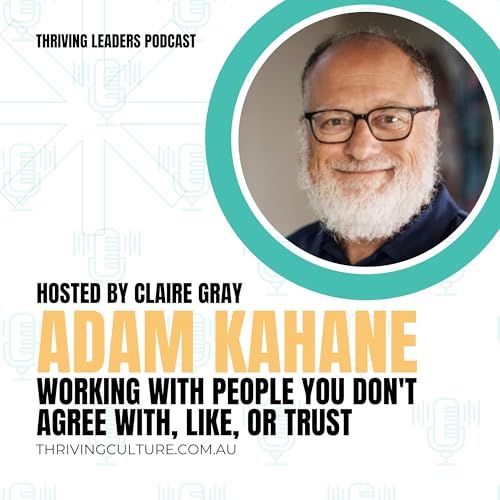
  • Working with People You Don't Agree With, Like, or Trust with Adam Kahane
    2026/05/11

    Most of us know the feeling. There's someone at the table we don't agree with, don't particularly like, or don't quite trust, and the situation isn't going away. Whether it's a difficult peer, a misaligned executive, a stakeholder relationship that's gone a bit stale, or a cross-functional partnership that feels like it's going nowhere, the instinct is often the same: work around it, avoid it, or wait it out. And as Adam Kahane will tell you, that rarely works.

    Adam Kahane is founding partner of Reos Partners, a global organisation specialising in collaborative approaches to complex challenges. Over more than 35 years, he has worked in over 50 countries supporting governments, corporations, and civil society through some of the world's most difficult situations, from the democratic transition in post-apartheid South Africa to peace processes in Colombia. He is the author of six books, including the newly revised Collaborating with the Enemy: How to Work with People You Don't Agree with or Like or Trust (Second Edition, 2025), which carries a foreword from Nobel Peace Laureate Juan Manuel Santos. Nelson Mandela described his earlier work as addressing "the central challenge of our time: finding a way to work together to solve the problems we have created".

    In this conversation, Adam unpacks why working across difference is becoming harder just as it's becoming more essential, and what leaders can actually do about it. We explore his concept of "enemyfying", the limits of conventional collaboration, and why the real breakthrough in any difficult collaboration is rarely about changing the other person.

    In this episode, we cover:

    • Why our capacity to work across difference is declining just as the need for it is increasing, and what's driving that gap
    • What "enemyfying" actually means, why we all do it, and why it's such an unhelpful starting point for getting anything done
    • The difference between conventional collaboration and stretch collaboration, and how to know which one your situation actually calls for
    • Why telling people to "think of the whole" or "leave your interests at the door" is often unrealistic, and in many cases manipulative
    • How complexity and conflict change the rules of collaboration entirely
    • The four options we have in any difficult situation, and why collaboration is just one of them
    • What Adam calls "The Click", the turning point moment that shifts a stuck group toward real progress
    • The most practical thing you can do when you're tempted to keep telling someone they're wrong

    I loved Adam's framing that working with people we don't agree with, like, or trust is not a new idea at all. What's new is how much we've retreated from it, and how much the quality of our leadership, our teams, and our organisations depends on us getting better at it again.

    If this conversation resonated, share it with a leader or team navigating a difficult stakeholder relationship, a silo situation, or a collaboration that feels more stuck than it should be.

    続きを読む 一部表示
    54 分
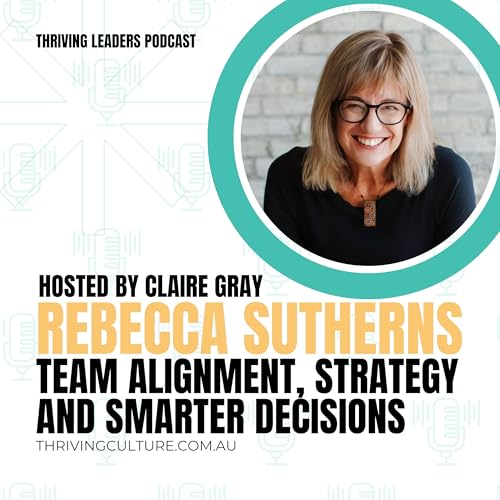
  • Rebecca Sutherns on Team Alignment, Strategy, and Smarter Decisions
    2026/04/27

    What if your team is using the same words, but imagining completely different futures? This conversation is a powerful reminder that alignment is not about sameness, it is about helping people see clearly, think together, and move forward with intention.

    In this episode, I’m joined by Rebecca Sutherns, trusted advisor, bestselling author, master facilitator, certified coach, and someone I deeply admire for the way she helps people unlock courage, clarity and momentum. With more than 25 years of experience, Rebecca works with mission-driven organisations to help leaders reimagine what’s next and get aligned on what matters most.

    In our conversation, we explore what it really takes to get people “watching the same movie” in teams and organisations. Rebecca shares why strategy needs more imagination, why leaders need to get clearer about the problem they are actually solving, and why waiting for perfect information can become the very thing that keeps teams stuck.

    This is such an important conversation right now because so many leaders are navigating complexity, competing perspectives, and decision fatigue. Rebecca brings a grounded, practical lens to all of it, and I think you’ll walk away with fresh ways to lead better conversations and better decisions. Let’s dive in.

    In this episode, we cover:

    • Why teams can use the same words but still be picturing completely different futures
    • How to create a vivid shared vision, not just another polished vision statement
    • Why “what problem are we solving?” is one of the most important questions a leader can ask
    • How to clarify decision-making criteria before people get attached to their preferred solution
    • Why waiting for full information is often just a stall tactic in disguise
    • How facilitation slows teams down at the beginning so they can move faster later
    • Why thriving teams do not just predict the future, they help create it

    I loved this conversation because Rebecca puts language to something so many leaders experience but struggle to name. My favorite part was her reminder that alignment is not about making everyone the same, it is about making thinking visible so people can understand each other, challenge well, and move forward with intention.

    The future does not just happen to teams. The strongest teams help shape it.

    If this episode resonated with you, share it with a leader, facilitator or executive team who is working through complexity and trying to make better decisions together.

    続きを読む 一部表示
    52 分
  • Creativity is Not a Luxury, Building Creative Confidence with Paul Fairweather
    2026/04/13

    So many leaders are not short of ideas. What they are short of is space, confidence, and permission to bring those ideas to life. In fast-moving workplaces, creativity can feel like something we will get to later, but as Paul Fairweather reminds us in this conversation, later rarely comes.

    In this episode, I’m joined by Paul Fairweather, creative leadership speaker, workplace culture facilitator, former CEO of a 55-person architectural practice, award-winning architect, artist, and author of Bold, Brave, and A Bit Quirky. Paul helps leaders and teams reconnect with their creative confidence, not as a nice-to-have, but as a vital capability for problem-solving, connection, and innovation in a world increasingly shaped by AI.

    In our conversation, we explore what creativity really means, why so many capable people don’t see themselves as creative, and how leaders can create the conditions for more original thinking at work. We also unpack the tension between AI and human creativity, why uncertainty is part of the creative process, and what practical leaders can do to build more creative, thriving teams.

    This is such an important conversation right now, because in a world that is becoming faster, noisier, and more automated, the human skills of curiosity, creativity, courage, and connection matter more than ever.

    In this episode, we cover:

    • Why creativity is often misunderstood, and why it is about far more than art
    • How Paul defines creativity as identifying potential or opportunity, then fostering its development
    • What leaders can learn from staying longer in uncertainty, instead of rushing too quickly to clarity
    • The difference between using AI as a helpful tool, versus using it as a substitute for original thought
    • Why many adults have had their creative confidence diminished over time, and how to rebuild it
    • How simple, practical exercises can help teams think differently and unlock fresh ideas
    • What thriving teams need in order to create, connect, and contribute more meaningfully together

    I loved Paul’s reminder that creativity is not just about ideas, it is also about the courage to do something with them. Thriving teams are not built by speed alone. They are built when leaders create enough safety, space, and confidence for people to think, experiment, and contribute in more meaningful ways.

    Creativity thrives when leaders make space for uncertainty, not just answers.

    If this episode resonated, share it with a leader, teammate, or creative thinker who needs a reminder that their ideas still matter.

    Until next time, keep leading with curiosity and heart.

    続きを読む 一部表示
    40 分
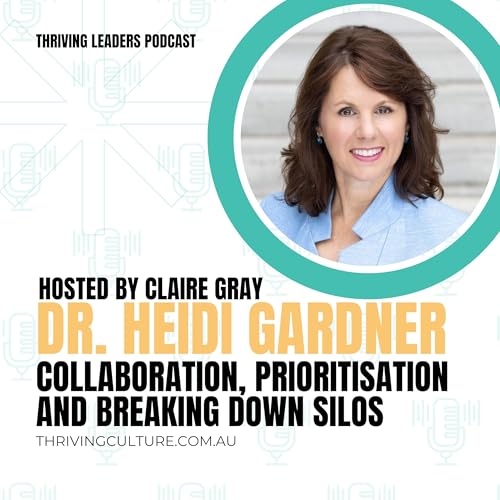
  • Collaboration, Prioritisation and Breaking Down Silos with Dr. Heidi Gardner
    2026/03/30

    Many leaders know collaboration matters, but far fewer have figured out how to make it work across silos, competing priorities, and complex stakeholder relationships.

    In this episode, I’m joined by Dr. Heidi Gardner, Distinguished Fellow at Harvard Law School, former Harvard Business School professor, Thinkers50 ranked thought leader, and co-author of Smart Collaboration and Smarter Collaboration. In this conversation, we explore what smarter collaboration really looks like in today’s workplace, and why working across boundaries is both more necessary and more difficult than ever. Heidi shares practical insights on trust, healthy conflict, over-collaboration, stakeholder alignment, and the leadership behaviours that create the conditions for innovation and high performance.

    In this episode, we cover:

    • Why hyper-specialisation makes collaboration harder, just as the problems leaders face become more complex and multidisciplinary
    • The importance of starting with a shared goal and being clear on each person’s role
    • How over-collaboration drains time, energy, and trust in the very idea of collaboration
    • Why conflict is not the problem, but unmanaged conflict is
    • The difference between competence trust and character trust, and why both matter
    • How leaders can create space for challenge, curiosity, and better decision-making under pressure
    • Navigating collaboration within your team and cross-functional collaboration
    • Practical ways to align with stakeholders, navigate conflicting priorities, and communicate progress toward big goals

    I loved Heidi’s reminder that collaboration is not about involving everyone in everything. It is about being intentional, drawing on the right expertise at the right moment, and creating enough trust for people to challenge each other without tipping into relationship conflict. Which is especially important in the complex environments teams are operating in.

    Smarter collaboration is not more collaboration, it’s better collaboration.

    If this episode resonated, share it with a leader or team who are navigating silos, stakeholder tension, or the complexity of cross-functional work.

    Links:

    • ⁠Smart Collaboration⁠
    • ⁠Smarter Collaboration ⁠
    • ⁠Collaborating with GenAI: Lessons from Heineken’s Use of the “PowerBot”⁠
    • ⁠Using GenAI as a Collaborative Teammate

    続きを読む 一部表示
    51 分
  • Your Team Is Not Disengaged. They Don’t Feel Like They Matter with Zach Mercurio
    2026/03/16

    Many leaders are working hard to build cultures of trust, connection, and performance, yet people still leave work feeling unseen, overlooked, or undervalued. In this conversation, I sat down with Zach Mercurio, researcher, speaker, leadership development facilitator, and author of The Power of Mattering and The Invisible Leader, to explore why the need to matter is so fundamental to how we experience work and leadership.


    What I loved about this conversation is that Zach brings together deep research with practical leadership insight. We explore why mattering is more than belonging or inclusion, how meaningful work is shaped through everyday interactions, and why psychological safety may actually be mattering in disguise. This is such an important conversation for leaders who want to build thriving teams where people feel seen, heard, valued, and needed.


    In this episode, we cover:

    (00:00) – Introduction

    (00:46) – Introduction to Zach Mercurio

    (02:20) – Why mattering is a fundamental human need

    (03:05) – The research behind meaningful work

    (35:23) – Belonging vs inclusion vs mattering

    (37:08) – Why do perks not matter

    (37:33) – Mattering and psychological safety

    (39:05) – How leaders become a secure base

    (44:47) – Recognition vs affirmation

    (45:13) – How to help people see their unique contribution

    (53:04) – The one question leaders should ask their team

    (53:52) – Final Thoughts


    This is a refreshing reminder that people do not just want to belong, they want to know they are significant. They want to feel seen, heard, valued, and needed, and when that happens, it changes how they show up, how they contribute, and how safe they feel to learn, speak up, and grow. It also made me reflect on how easy it is for leaders to focus on structure, process, and performance, while overlooking the small daily moments that communicate care and value. This conversation is a reminder that thriving teams are built in those moments.

    When people feel that they matter, they act like they matter.


    If this episode resonated with you, share it with a leader who is trying to build a more human, grounded, and psychologically safe team.

    続きを読む 一部表示
    56 分
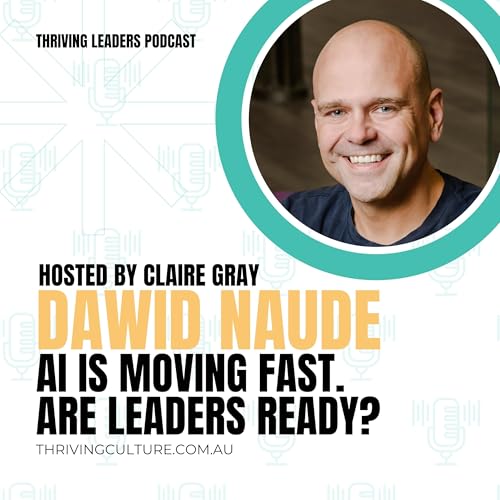
  • AI Is Moving Fast. Are Leaders Ready? Here’s what you need to know!
    2026/03/02

    There is a lot of noise right now about artificial intelligence. Excitement. Fear. Big predictions about job losses. Quiet uncertainty in leadership teams.


    If you’re wondering what AI actually means for your team, your culture, and your role as a leader, this episode is essential listening.


    I’m joined by Dawid Naude, Founder and CEO of Pathfinder, Australia’s leading AI accelerator and an official service partner to OpenAI across Australia and New Zealand. Dawid is one of the region’s most respected AI educators, known for translating complex technology into real world business impact.


    AI is not just changing what teams can do, it is changing what leadership exposes. Dawid unpacks what’s just shifted, AI agents that can act inside your tools, and why this will amplify your leadership habits, good and bad. We also explore the risks most people are not talking about yet, and what thriving teams will need if they want to stay human in a world that is accelerating.


    This is a grounded and practical conversation about leading through one of the biggest shifts of our time.


    In this episode, we cover:

    (00:00) – Introduction
    (00:45) – Introduction to Dawid Naude
    (03:59) – The rise of AI agents and what “AI with hands” means for workflows and decision-making
    (08:13) – Whether entry-level white-collar jobs are really at risk, and what history teaches us about automation
    (11:16) – Why human judgement, curiosity, and accountability will become even more valuable
    (12:13) – Why AI is no longer just a productivity tool, but a strategic thought partner for leaders
    (19:54) – Data privacy myths and the real risks leaders should understand
    (26:18) – How AI could impact psychological safety, collaboration, and team dynamics
    (29:57) – The critical leadership capability of using AI for reflection, self-awareness, and empathy
    (35:00) – The tools leaders should explore now, including ChatGPT, Claude, Gemini, and Copilot
    (47:58) – Final thoughts

    What I loved about this chat was the tools and how to effectively use them. I’ve walked away with a list of things I’m wanting our team to put in place, including connecting systems, using AI as a strategic thought partner in different ways.


    If leaders only use AI to draft emails or summarise meetings, we are missing the opportunity. The real power lies in using AI to stretch our thinking, challenge our assumptions, and hold up a mirror to our leadership behaviours.


    And yet, this technology also tests us. It asks whether we will become more disconnected from each other, or more intentional about human connection.


    Thriving teams in the age of AI will not be built on efficiency alone. They will be built on clarity, curiosity, accountability, and human leadership.

    If this conversation sparked new ideas for you, share it with another leader navigating the future of work. And if you are exploring how to build a thriving, future ready team, this episode is a powerful place to begin.

    Until next time, keep leading with curiosity and heart.

    続きを読む 一部表示
    50 分