エピソード

  • Q&A with Eric and Brianna
    2026/06/24

    In the final episode of season 3 we answer your biggest aging questions, from whether there is a single root cause of aging to why different organs fail in different ways. We also dig into what it would take to run human trials that prove real healthspan gains while staying honest about biomarkers, animal data, and online misinformation.

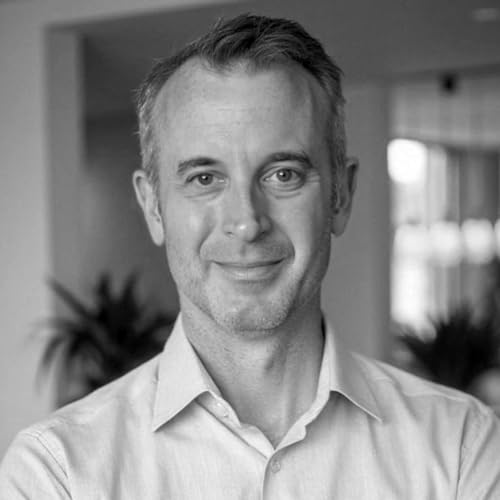
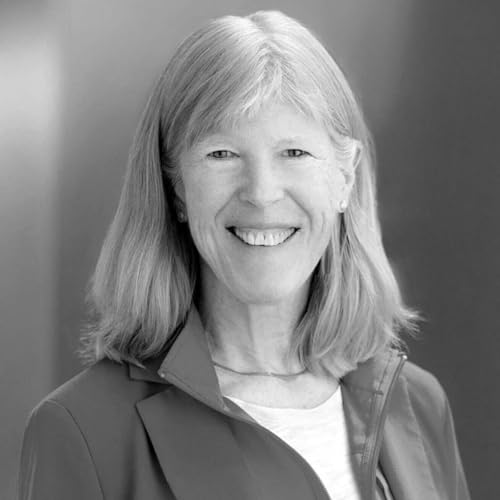
    Eric Verdin, MD and Brianna Stubbs, PhD

    Dr. Eric Verdin is President and CEO of the Buck Institute for Research on Aging and an internationally recognized physician-scientist whose research focuses on the molecular mechanisms of aging, metabolism, and the immune system. A native of Belgium, he earned his medical degree from the University of Liege and completed additional clinical and research training at Harvard Medical School. He has published more than 300 scientific papers, holds 18 patents, and is a member of several prestigious scientific organizations.

    Dr. Brianna Stubbs is a Lead Translational Scientist at the Buck Institute and a world expert in exogenous ketone metabolism and its implications for performance, resilience, and healthy aging. She earned her PhD in metabolic physiology from the University of Oxford and is also a two-time world champion lightweight rower who competed on the British International Rowing Team.

    Together, Drs. Verdin and Stubbs serve as co-hosts of Season 3 of the Live Better Longer podcast, bringing their expertise and passion for longevity science to conversations with leading researchers, clinicians, and innovators in the field of healthy aging.


    Support the show

    続きを読む 一部表示
    41 分
  • Brad Younggren: Filtering Out Aging
    2026/06/10

    What if removing and replacing part of your blood could turn back some of the measurable signs of aging? Brianna Stubbs talks with Dr. Brad Younggren — emergency physician, former Army doctor, and CEO of Circulate Health — about therapeutic plasma exchange (TPE). They cover how the procedure works, what the blinded Circulate trial found (including an average 2.6-year reduction in biological age over three months), TPE's unique potential to clear microplastics from the bloodstream, and the broader impact of our environment—the exposome—on human healthspan.

    Brad Younggren, MD, is CEO and co-founder of Circulate Health, a company dedicated to improving human healthspan. A former U.S. Army physician, Dr. Younggren served as a combat physician in Iraq and was awarded a Bronze Star and Combat Medical Badge. An emergency medicine specialist and seasoned healthcare executive, Younggren has led teams at the cutting edge of medicine for decades. Most recently, he was President and Chief Medical Officer at 98point6, where he led the development and launch of AI-powered primary care solutions. He previously served as Chief Medical Officer at Cue Health, Shift Labs, and Mobisante. At Circulate, Younggren leads an expert team of clinicians and scientists working to harness the potential of therapeutic plasma exchange to advance health and longevity.

    Support the show

    続きを読む 一部表示
    42 分
  • Hanadie Yousef: Cracking the Secretome Code
    2026/04/01

    In this episode, Buck scientist Brianna Stubbs joins Hanadie Yousef, Co-Founder of Juvena Therapeutics, to discuss the cutting-edge of longevity science. Dr. Yousef shares how Juvena is leveraging AI and the secretome—the proteins secreted by stem cells—to develop therapies that target muscle wasting and promote tissue regeneration. From the potential and risks of GLP-1 drugs to the role of AKT signaling in muscle health, this conversation explores how we can move beyond "snake oil" and into a future where science-based therapies help us stay younger, longer.

    Dr. Hanadie Yousef is a scientist, entrepreneur, seasoned executive, and global thought leader in AI-driven regenerative medicine and longevity. With over two decades of experience in biomedical research, she is the Co-Founder of Juvena Therapeutics, where she served as CEO, CFO, and Board Chair from 2017 to 2025. Since the company’s incorporation, she pioneered its evolution from a platform-driven concept into a venture-backed, clinical-stage biotechnology leader. Under her leadership, Juvena secured over $105M in venture capital, non-dilutive grants, and partnerships, and developed a proprietary pipeline of tissue-restorative biologics for muscle and metabolic diseases.

    Support the show

    続きを読む 一部表示
    35 分
  • Cynthia Kenyon: Switching on Resilience
    2026/03/18

    Eric Verdin sits down with Dr. Cynthia Kenyon, a true pioneer in the field of geroscience and the Vice President of Aging Research at Calico. Dr. Kenyon recounts the revolutionary discovery that aging is not merely a process of "wearing out," but is a genetically regulated biological program. In 1993, Cynthia’s pioneering discovery that a single-gene mutation could double the lifespan of C. elegans roundworms while preserving function sparked an intensive study of the molecular biology of aging. The conversation explores how these findings translate from worms to mammals, the potential of drugs like Ozempic and Acarbose to extend human healthspan, and Dr. Kenyon’s proposal for a "World Healthspan Organization" to fund large-scale clinical trials for off-patent, low-cost compounds that currently lack traditional industry incentives.

    Cynthia Kenyon graduated valedictorian in chemistry and biochemistry from the University of Georgia in 1976 and received her PhD from MIT in 1981. She then did postdoctoral studies with Nobel laureate Sydney Brenner at the MRC Laboratory of Molecular Biology in Cambridge, UK. In 1986, she joined the University of California, San Francisco as a Professor of Biochemistry and Biophysics. Dr. Kenyon is a member of the US National Academy of Sciences, the American Academy of Arts and Sciences, and the Institute of Medicine and she is a past president of the Genetics Society of America. She is now the Vice President of Aging Research at Calico.

    Support the show

    続きを読む 一部表示
    38 分
  • Ana Maria Cuervo: Cellular Recycling
    2026/03/04

    What if the secret to a longer, healthier life isn’t found in a new supplement or a complex medical procedure, but in your cells' own innate ability to "take out the trash"? In this episode, host Eric Verdin is joined by Dr. Ana Maria Cuervo, a pioneer in the biology of aging and professor at the Albert Einstein College of Medicine. The conversation explores the critical roles of proteostasis—the cell's protein quality control factory—and autophagy, the body's natural recycling system. Dr. Cuervo explains her discovery of Chaperone-Mediated Autophagy (CMA) and how keeping these cellular "cleaning crews" active can help prevent neurodegenerative diseases like Alzheimer’s and Parkinson’s. The episode concludes with actionable insights into how sleep, exercise, and meal timing can naturally jumpstart these longevity-promoting pathways.

    Ana Maria Cuervo is a Spanish-American physician, researcher, and cell biologist. She is a professor in developmental and molecular biology, anatomy and structural biology, and medicine and co-director of the Institute for Aging Studies at the Albert Einstein College of Medicine. She is best known for her research work on autophagy, the process by which cells recycle waste products, and its changes in aging and age-related diseases.

    Support the show

    続きを読む 一部表示
    47 分
  • Jamie Justice: The New Metrics of Functional Aging
    2026/02/18

    XPRIZE Healthspan Executive Director Jamie Justice joins Brianna Stubbs to discuss the $101 million race to restore 10 years of muscle, cognitive, and immune function within a single year. Moving past binary "alive or dead" metrics—famously called the "toes test" in animal research—the conversation focuses on reclaiming functional independence through clinical trial innovation. Together they explore the potential of accessible markers like RDW (Red Cell Distribution Width), the risks of overlapping treatments, and how unlocking "dark data" can help shift medicine from treating isolated diseases to scaling human healthspan globally.

    Jamie is the Executive Vice President of the Health Domain at XPRIZE Foundation, and Adjunct Professor in Internal Medicine Section on Gerontology and Geriatric Medicine, and Sticht Center on Healthy Aging and Alzheimer’s Prevention at Wake Forest University School of Medicine (WFUSM). She is dedicated to Geroscience research that advances the hypothesis that by targeting the basic biology of aging the incidence of multiple age-related diseases can be delayed or prevented.

    Support the show

    続きを読む 一部表示
    35 分
  • Tony Wyss-Coray: Rejuvenating the Brain
    2026/02/04

    In this episode, Eric Verdin, CEO of the Buck Institute, and Stanford University’s Dr. Tony Wyss-Coray discuss the groundbreaking science of brain rejuvenation through heterochronic parabiosis, a process where young blood factors are shown to restore cognitive function and potentially extend lifespan. Moving from the lab to the clinic, they explore the next frontier: Proteomic Clocks. By measuring thousands of proteins, scientists can now determine the biological age of individual organs, allowing for the detection of Alzheimer’s and other neurodegenerative diseases up to 15 years before symptoms appear. This shift toward high-precision organ tracking marks a new era in preventative geroscience and personalized longevity.

    Tony Wyss-Coray is a Professor of Neurology and Neurological Sciences and the Director of the Phil and Penny Knight Initiative for Brain Resilience at Stanford University. His lab studies brain aging and neurodegeneration with a focus on age-related cognitive decline and Alzheimer’s disease. The Wyss-Coray research team discovered that circulatory blood factors can modulate brain structure and function and factors from young organisms can rejuvenate old brains. Current studies focus on the molecular basis of the systemic communication with the brain by employing a combination of genetic, cell biology, and –omics approaches in killifish, mice, and humans. Wyss-Coray has presented his ideas at Global TED, the Tencent WE Summit, and the World Economic Forum. He co-founded Alkahest Inc. and several other companies targeting Alzheimer’s and neurodegeneration and has been the recipient of an NIH Director’s Pioneer Award, a Zenith Award from the Alzheimer’s Association, and a NOMIS Foundation Award.

    Support the show

    続きを読む 一部表示
    46 分
  • George Church: Rewriting The Rules of Aging
    2026/01/21

    What if aging is less a fate and more an engineering challenge? We sit down with George Church to unpack a future where gene therapy, cellular reprogramming, and AI-driven delivery systems converge to extend healthspan—and possibly lifespan—without sacrificing identity or safety. From bowhead whales and cancer risk to ethics, trial rigor, and how to deliver rejuvenation to the brain, this is a deep dive into what’s coming next and what it will take to get there.

    George Church is Professor of Genetics at Harvard Medical School and Professor of Health Sciences and Technology at Harvard and the Massachusetts Institute of Technology (MIT). He is Director of the U.S. Department of Energy Technology Center and Director of the National Institutes of Health Center of Excellence in Genomic Science. He has received numerous awards including the 2011 Bower Award and Prize for Achievement in Science from the Franklin Institute and election to the National Academy of Sciences and Engineering.

    Support the show

    続きを読む 一部表示
    40 分