エピソード

  • Ameesha Green: Everybody Should Name Their Teddies After Philosophers
    2026/05/11

    Ameesha Green is the founder of The Book Shelf, a book shepherd, philosophy thinker, mentor and proudly neurodivergent entrepreneur.

    In this episode, we explore ADHD, business, creativity, AI, education, philosophy, children’s futures, writing, and why one-size-fits-all thinking simply does not work. From naming her childhood teddies after philosophers to building a publishing business, Ameesha shares a refreshingly honest view on how different minds work, why books still matter, and whether AI is helping us think better — or helping us avoid thinking altogether.

    Key takeaways

    * ADHD can be both a creative advantage and a practical challenge.

    * Self-awareness matters more than forcing yourself into broken systems.

    * One-size-fits-all education does not serve every child.

    * AI can be a sparring partner, not a replacement for thinking.

    * Books still have the power to pass wisdom between generations.

    * Entrepreneurship is rarely linear — sometimes you build by saying yes.

    * Writing can help turn ideas into impact.

    Keywords

    Ameesha Green, ADHD, neurodivergence, AI, creativity, philosophy, books, publishing, entrepreneurship, The Book Shelf, book shepherd, education, children’s future, critical thinking, Stoicism, business ownership, self-awareness, Wit + Grit.

    Chapters

    00:00 Navigating Neurodivergence in Business

    02:46 The Role of Stoicism in Entrepreneurship

    05:03 Philosophy and Its Impact on Decision Making

    07:35 The Importance of Open Conversations with Kids

    10:33 Political Engagement and Community Involvement

    13:18 The Power of Books to Change Lives

    16:17 The Journey of Writing and Publishing Children's Books

    25:33 A Meandering Journey to Business

    28:56 Transitioning to Hybrid Publishing

    30:49 Learning from Authors and Their Stories

    33:03 Navigating Challenges as a Business Owner

    36:03 The Importance of Side Hustles

    38:10 Crafting Your Elevator Pitch

    39:31 The Role of AI in Publishing

    42:00 The Benefits of Writing

    45:05 Reflections on Personal Growth

    46:21 Wit and Grit in Business

    続きを読む 一部表示
    49 分
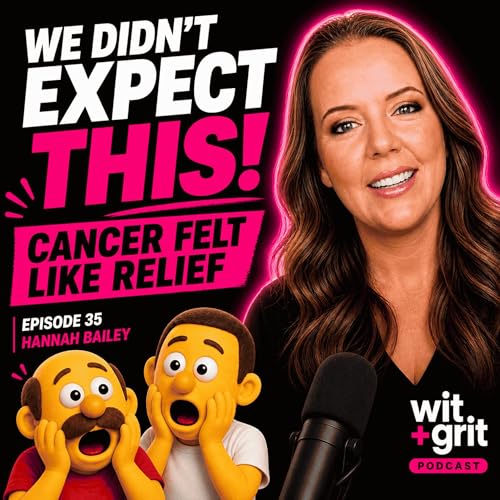
  • Hannah Bailey: The Cost of Always Saying “I’m Fine”
    2026/05/05

    Former police officer Hannah Bailey spent years working in high-pressure frontline roles, telling everyone she was fine while quietly carrying trauma, stress and undiagnosed PTSD.

    In this powerful episode, Hannah shares how a cancer diagnosis brought unexpected relief because it meant she no longer had to go back to work, why real resilience is not the same as silence, and how she rebuilt her life through treatment, therapy, humour and a completely new understanding of wellbeing.

    This is a conversation about trauma, workplace culture, cancer, PTSD, leadership, laughter, and what it really means to be well long term.

    Key takeaways

    * Looking “fine” on paper can hide deep emotional and mental exhaustion.

    * High-pressure cultures can train people to stay silent until they break.

    * Real resilience is not invincibility; it is knowing when to ask for help.

    * Leaders need to notice changes in people, not just performance.

    * Humour and connection can help the brain feel safe again.

    * Wellbeing support must be proactive, genuine and led from the top.

    Keywords

    Mental health, PTSD, trauma, policing, cancer survivor, resilience, workplace wellbeing, burnout, leadership, psychological safety, therapy, BWRT, Blue Light Wellbeing, stress, high-pressure work, police officer, emotional health, workplace culture.

    Chapters List

    00:00 Introduction to the Podcast Journey

    00:20 The Relief of a Cancer Diagnosis

    01:52 The Impact of Workplace Culture on Mental Health

    04:21 The Struggles of a Police Officer

    06:33 The Identity Crisis of a Police Officer

    09:22 The Journey Through Cancer Treatment

    11:47 The Role of Support Systems

    14:06 Finding Hope in Alternative Treatments

    16:51 The Power of Mindset and Resilience

    19:00 The Importance of Long-term Wellbeing

    24:39 Healing Through BWRT: A Personal Journey

    29:14 Understanding Trauma: The Role of the Amygdala and Hippocampus

    34:10 The State of Mental Health in Organisations

    36:19 Recognising Symptoms of Mental Health Issues

    42:12 Addressing Concerns: How to Approach Colleagues

    45:23 Wit and Grit: The Power of Humour and Resilience

    続きを読む 一部表示
    51 分
  • Potential and Power Skills with Kristie Brookes & Olivia Roden
    2026/04/28

    The graduate job market has never been more competitive, with up to 150 applicants per role, but that doesn’t mean opportunity has disappeared.

    In this episode, we sit down with Kristie Brookes and Liv Roden from Aston University to unpack what it’s really like to be a student right now, and what employers might be getting wrong.

    We explore the growing gap between education and employment, why “entry-level” roles now expect experience, and how students can stand out in a world of AI-generated CVs and identical applications.

    From “power skills” and emotional intelligence to hiring for potential over perfection, this is a practical, honest conversation about the future of work - and how both students and employers need to adapt.

    If you’ve got kids heading into the world of work, or you’re hiring the next generation, this one matters.

    Key Takeaways

    The graduate market is tougher than ever — but opportunity still exists

    Differentiation is everything (and it’s not just about grades)

    Employers should hire for potential, not just experience

    AI is changing entry-level work, but human skills matter more than ever

    “Power skills” (leadership, AI, innovation, emotional intelligence) are the real advantage

    Students aren’t lazy - they’re navigating a completely different world

    Your personality, passion, and story are what set you apart

    Themes

    • Future of work

    • Early careers / graduate market

    • AI & employability

    • Emotional intelligence

    • Identity & confidence

    • Social mobility

    • Hiring & leadership

    Keywords

    graduate jobs, early careers, Aston University, employability, Gen Z workforce, hiring graduates, AI in recruitment, power skills, soft skills, student careers, internships UK, graduate market UK, career advice, emotional intelligence at work, leadership skills, entry level jobs UK

    Chapters

    00:00 Meet the Employer Engagement Officers

    01:40 Current Student Experience and Market Challenges

    05:44 Understanding the Role of Employer Engagement Officers

    08:56 Career Journeys of Kristie and Olivia

    13:48 Aston University: Opportunities and Offerings

    16:45 Power Skills and Student Preparedness

    20:02 Perceptions of Young People in the Workforce

    21:50 Emotional Intelligence in the Job Market

    24:57 Demonstrating Passion and Personality

    28:55 The Value of University Experience

    33:10 Overcoming Self-Doubt in Career Paths

    続きを読む 一部表示
    36 分
  • Lewis Matthews: Happiness Is a Choice (Even in Atlantic Storms)
    2026/04/20

    Lewis Matthews has pushed himself to extremes - from international water polo to Ironmans, ultramarathons and rowing the Atlantic for 38 days.

    But this conversation isn’t just about endurance.

    It’s about what happens when life pushes back.

    Lewis opens up about losing his brother and his mom, how grief reshaped his perspective, and why success now looks very different. From “purposeful discomfort” to fatherhood, identity and resilience, this is a raw, honest conversation about what really matters, and how we carry life when it gets heavy.

    Key Takeaways

    • Happiness is a choice - even when life isn’t easy

    • Have a “why” - it gets you through the hardest moments

    • Purposeful discomfort builds resilience

    • Endurance teaches control - focus on what you can influence

    • Grief doesn’t go away - but it changes

    • Empathy often comes from pain

    • Have a “thing” - something that grounds you outside work and life stress

    • Success changes - especially when you become a parent

    • You don’t need to be the best - just keep learning and growing

    • Remember tomorrow - most things pass

    Keywords

    Lewis Matthews, rowing the Atlantic, endurance mindset, resilience, grief, loss, fatherhood, mental strength, stoicism, ultramarathon, Ironman, water polo, personal growth, emotional resilience, mindset, discipline, adversity, purpose, mental health, perspective, Wit and Grit podcast

    Chapters

    00:00 Introduction and Lewis Matthews' Background

    00:55 20 Days into the Atlantic Row: Challenges and Mindset

    02:09 Dealing with Storms and Ocean Conditions

    03:49 Big Storms and Boat Spinning Crisis

    06:01 Building Mental Fortitude and Stoic Principles

    08:28 Lewis' Origin Story and Water Polo Journey

    09:50 Transition from Water Polo to Endurance Sports

    11:52 Lessons from Ultras and Ironmans

    14:07 Why Endurance Challenges? The Mindset Behind the Why

    20:26 Personal Losses and Grief: The Impact of Family Tragedy

    24:56 Grief vs Physical Endurance: Comparing Challenges

    30:40 Lessons from Grief and Moving Forward

    32:37 Jiu Jitsu and Community as a Source of Resilience

    36:36 Redefining Success and Priorities

    38:09 Consciously Unlearning and Embracing New Identities

    42:21 Rowing Record and Scenario Planning

    44:38 Future Goals and Three-Year Vision

    45:37 Wit and Grit: The Balance of Intelligence and Grit

    47:14 Who Was Lewis Matthews? What Broke and What He Became

    続きを読む 一部表示
    50 分
  • Every Kid Is a Natural Red Teamer: Marcus Dimbleby on Critical Thinking and Leadership
    2026/04/13

    In Episode 32 of Wit + Grit, we are joined by Marcus Dimbleby - former Royal Air Force aerospace battle manager turned leadership and critical thinking specialist.

    From the military to major corporate transformation, Marcus shares what he’s learned about leadership, human behaviour and why so many organisations are still getting it wrong.

    This is a wide-ranging conversation covering disengaged workforces, the dangers of promoting people without training them, why young talent is leaving organisations so quickly, and how leaders can unlock the capability already sitting inside their teams.

    Marcus also breaks down critical thinking, red teaming, adaptive leadership, shadow boards, and why AI is only useful when paired with human judgement.

    There’s loads here for leaders, parents and anyone thinking about how we prepare the next generation for a world that’s moving fast.

    Key takeaways

    • Most leaders are promoted without being trained to lead.

    • Only 21% of the workforce is engaged.

    • Leaders don’t need to do it all themselves.

    • Slow down to speed up.

    • Critical thinking is not automatic — it has to be deliberately applied.

    • Every kid is a natural red teamer until the system squeezes it out of them.

    • Diversity of thought is the diversity that unlocks performance.

    • Young talent leaves when you recruit them for fresh thinking but don’t let them use it.

    • A group of high performers is not automatically a team.

    • Shadow boards are one of the smartest ways to bridge generations.

    • AI is a tool, not the answer.

    • The real future is AI plus collective intelligence.

    • What got you here won’t keep you here.

    Keywords

    Marcus Dimbleby, leadership, critical thinking, red teaming, adaptive leadership, workforce engagement, Gen Z, parenting, AI, collective intelligence, shadow boards, team dynamics, military leadership, Royal Air Force, aerospace battle manager, business transformation, disengaged employees, innovation, future of work, human skills, opportunity, Wit and Grit podcast

    Chapters List

    00:00 Introduction to Marcus Dimbleby

    02:45 Leadership Challenges in the Modern Workplace

    05:16 The Importance of Critical Thinking

    08:21 Red Teaming and Its Applications

    11:33 The Role of Parents in Fostering Critical Thinking

    14:24 The Disconnect Between Leadership and Talent

    17:14 Navigating Change in Organizations

    20:18 The Need for Adaptive Leadership

    23:09 Understanding the Real Problems in Organizations

    31:59 Unveiling Leadership Challenges

    34:20 The Importance of Tailored Solutions

    36:31 The Role of Shadow Boards in Leadership

    37:21 Navigating Military Insights and Youth Engagement

    46:07 The Impact of AI on Leadership

    53:44 Advice for the Next Generation

    01:01:50 outro1.mp3

    続きを読む 一部表示
    1 時間 2 分
  • James Cary Says: Pitch It Like You’ve Already Seen It
    2026/03/30

    In Episode 31 of Wit + Grit, we are joined by BBC comedy writer James Cary - the man behind episodes of Miranda, Citizen Khan, My Family and Bluestone 42.

    But this conversation goes well beyond sitcoms.

    James opens up about the constant rejection that comes with writing, even when you’re “successful”, what working in comedy has taught him about teams, why authenticity matters more than trying to be funny, and how character often counts for more than qualifications.

    There’s also brilliant insight on leadership, AI, creativity, criticism, resilience, and why young people need to get better at looking people in the eye.

    Funny, thoughtful and surprisingly practical, this is a conversation about writing, work, identity and the grit it takes to keep showing up.

    Key takeaways

    Rejection never really stops.

    Failure is not just possible - it’s essential.

    You want to find out what doesn’t work early, not when it’s too late.

    Be interested in the thing, not yourself.

    Your limitations can become your strengths.

    Humour is high risk, but authenticity isn’t.

    Teams work best when people care about different things.

    Different motivations can be a strength, not a weakness.

    AI is a tool, not a brain.

    Character matters more than credentials.

    Keywords

    James Cary, BBC comedy writer, Miranda writer, Citizen Khan writer, My Family, Bluestone 42, sitcom writing, rejection, resilience, humour, leadership, teams, authenticity, AI and creativity, storytelling, critical thinking, character, human skills, communication, writing career, comedy writer podcast, Wit and Grit podcast

    Chapters

    00:00 Introduction to James Carey

    00:48 The Journey into Comedy Writing

    02:16 Pathways into Comedy and Early Experiences

    04:36 The Role of Management Consultants in Comedy

    07:10 The Intersection of Theology and Comedy

    10:03 The Stand-Up Theologian

    10:35 Writing and Team Dynamics in Comedy

    13:10 Problem Solving on Set

    15:57 Navigating Egos in the Creative Process

    19:59 The Importance of Writing in Today's World

    21:21 The Impact of Literature on Young Minds

    22:48 The Challenges of Writing and Education

    25:15 Embracing Failure in Creative Pursuits

    28:20 The Role of Humor in Leadership

    32:57 Navigating AI in Creative Processes

    35:58 Overcoming Imposter Syndrome

    38:47 Character Over Qualifications in Success

    続きを読む 一部表示
    43 分
  • Children need Adults to be their Substitute Prefrontal Cortex, says Natalie Costa.
    2026/03/23

    What happens when you’re trying to perform at work while also being a present, patient and emotionally available parent at home?

    In Episode 30, we sit down with Natalie Costa to explore emotional fitness in families, schools and workplaces. Natalie shares her mission to help raise a generation of connected humans by supporting the adults around them - parents, teachers and leaders alike.

    From childhood anxiety and classroom breakthroughs to parental guilt, emotional regulation and the pressure modern families face, this is a thoughtful, practical and deeply human conversation about what children really need, what parents are carrying, and how workplaces can better support the people raising the next generation.

    It’s an episode about pressure, repair, resilience and the courage to stay steady when life feels anything but.

    Key themes
    1. Emotional fitness in children and adults
    2. Parenting under pressure
    3. Childhood anxiety and self-belief
    4. Neuroplasticity and changing old patterns
    5. Parent guilt and the “mental load”
    6. Why connection matters more than ever
    7. How leaders can better support working parents

    Key takeaways
    1. Children need adults to be their substitute prefrontal cortex
    2. There is only room for one adult in the parent-child relationship
    3. You can’t parent perfectly, but you can repair
    4. Emotional regulation is a skill, not a personality trait
    5. Neuroplasticity means we can build new emotional habits at any age
    6. Modern parenting is harder because many families are raising children without a village
    7. Connection with children often starts by taking an interest in their world
    8. Great leadership at work starts with seeing the human behind the behaviour
    9. Supporting parents at work is not a perk — it’s a culture and performance issue

    Pull quotes / soundbites
    1. “We are more connected than ever before, but more emotionally disconnected than ever before.”
    2. “We need to support the people raising the next generation.”
    3. “There’s only space for one adult in the relationship — and it’s not your child.”
    4. “You can’t get it wrong if you are repairing and taking ownership.”
    5. “Neuroplasticity is the muscle of our mind.”
    6. “What are the keys to your kid’s kingdom?”
    7. “Connect before you correct.”
    8. “We’re all big kids walking around trying to run companies.”
    9. “A lot of guilt is really just being pulled between things we value.”

    Suggested chapter titles
    1. 00:00 – Welcome to Episode 30
    2. 00:57 – Natalie’s mission: raising connected humans
    3. 02:34 – From teaching to emotional fitness
    4. 06:16 – The classroom moment that changed everything
    5. 09:16 – Teaching kids what to do with big feelings
    6. 14:17 – Why the work has to include parents
    7. 17:25 – Old stories, childhood beliefs and change
    8. 21:46 – What neuroplasticity actually means
    9. 25:35 – Is it harder than ever to be a parent?
    10. 27:52 – Simple ways to reconnect with your kids
    11. 31:31 – What workplace support for parents should look like
    12. 35:58 – Does the work start with children or adults?
    13. 40:22 – Emotional fitness and sitting with discomfort
    14. 45:14 – What to do at 2am when your mind won’t stop
    15. 48:06 – Progressive leadership for working parents
    16. 51:16 – Final takeaways

    続きを読む 一部表示
    54 分
  • From Live Testing to the Real Thing
    2026/03/09

    After 28 episodes, a live event, and a growing Wit + Grit community, we sit down for a proper catch-up.

    This one is honest, reflective and full of the stuff that sits behind the scenes - what we’ve learned, what’s surprised us, what we’re building, and why Wit + Grit is starting to feel like something much bigger than a podcast.

    We talk about opportunity, identity, grief, ambition, structure, startup energy, and the importance of creating real conversations in a noisy world.

    If you’ve ever started something, doubted yourself, or wondered whether to just press go, this one’s for you. Bring it on.

    Key Takeaways

    Press go first, learn later.

    Opportunity changes everything.

    You don’t need all the answers to start.

    Identity matters.

    Human connection is becoming more valuable, not less.

    Structure matters when things start working.

    Community compounds.

    Success looks different now.

    Keywords

    Wit and Grit, PJ Ellis, Andy Dawson, Birmingham podcast, business podcast UK, human skills, opportunity, personal growth, startup journey, live testing, podcast alumni, community building, leadership, resilience, identity, grief, ambition, entrepreneurship, confidence, AI and identity, young people, future of work, Birmingham business, talent pipeline, real conversations

    Chapters

    00:00 Introduction and Peaky Blinders Premiere

    02:44 The Growth of the Podcast and Its Impact

    05:21 Personal Journeys and Backgrounds

    07:49 Lessons Learned and Insights from the Podcast

    10:13 Opportunities and Future Directions

    12:51 The Importance of Structure and Discipline

    15:31 Looking Ahead: Technology and Growth

    18:26 Ambition and Growth in Podcasting

    20:32 Creating Opportunities for Young People

    22:08 Navigating Challenges in Today's World

    24:33 The Impact of Technology on Youth

    27:42 Finding Balance in a Chaotic World

    31:18 Measuring Success and Impact

    続きを読む 一部表示
    35 分