『Worker and Parasite』のカバーアート

Worker and Parasite

Worker and Parasite

著者: Jerry Brito Stan Tsirulnikov
無料で聴く

Jerry and Stably engage in a fortnightly conversation about a book they have recently read.2021 アート 文学史・文学批評 社会科学
エピソード
  • The Special One by Diego Torres
    2026/06/16

    This episode covers The Special One: The Secret World of Jose Mourinho by Diego Torres, Jerry's pick timed to Mourinho's appointment as Real Madrid manager. Jerry and Stably discuss the book's chronicle of Mourinho's tumultuous 2010-2013 Madrid tenure, focusing on his combative management style: cultivating an atmosphere of fear and favoritism, sidelining players unrepresented by super-agent Jorge Mendes, and blaming referees for losses. They examine his fraught relationship with president Florentino Perez, the locker-room fractures between Portuguese and Spanish players, and his eventual exit following a player revolt. Both note the book's one-sided framing and oddly literal English translation, while drawing comparisons to authoritarian leadership styles. They recommend it for soccer fans despite its insider assumptions.

    続きを読む 一部表示
    1 時間 5 分
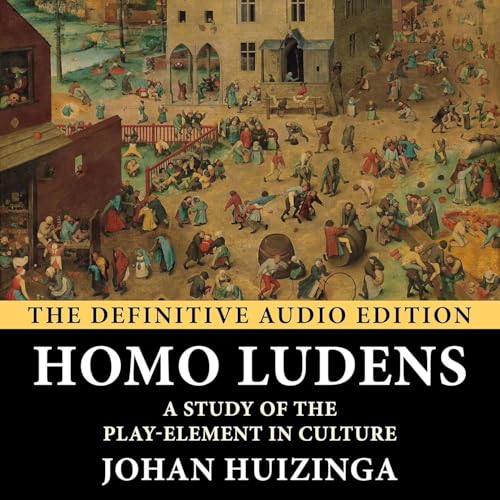
  • Homo Ludens by Johan Huizinga
    2026/06/02

    In this episode Jerry and Stably discussed Homo Ludens: A Study of the Play-Element in Culture by Johan Huizinga. They examined the central thesis that play forms the foundation of human culture and critiqued the author for utilizing vague definitions and romanticizing historical conflict.

    続きを読む 一部表示
    1 時間 8 分
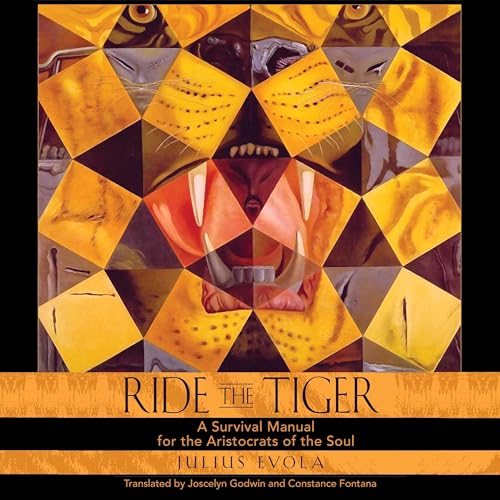
  • Ride the Tiger by Julius Evola
    2026/04/20

    In this episode Jerry and Stably discussed Ride the Tiger, a survival manual for the aristocrats of the soul by Julius Evola. The discussion centered on Evola’s core thesis that the modern world is in terminal decline, having fallen from a traditional, hierarchical society where people found inherent meaning through natural aristocracy. The hosts explained that this decline has left people feeling a lack of meaning, which they attempt to fill through materialism, viewing both capitalism and communism as different expressions of the same materialistic impulse. Evola's prescription, the titular "Ride the Tiger," is an acknowledgment that the forces of decadence are overwhelming and cannot be stopped; therefore, the "differentiated man" must embrace the flow of modernity as a path toward transcendence, prepared to jump off and restart the cycle when the world exhausts itself.

    Jerry noted that the book functions more as a "permission structure" for individuals feeling alienated from the world rather than a literal manual, giving them authorization to be themselves and aim for transcendence. Both hosts acknowledged Evola's background as an actual fascist and Mussolini supporter, but pointed out that the book promotes a stance of apolitia, urging the differentiated man to be detached from all political, moral, and religious identification, as their will is their own morality. While Jerry agreed with the diagnosis of modernity's inability to provide meaning, he criticized Evola's superior, elitist tone and the book's focus on aristocracy, contrasting it with the compassionate ethics of other philosophical traditions. The hosts distinguished the modern issue of lacking meaning from the question of historical happiness, arguing that past societies may have had a clearer sense of meaning despite pervasive physical suffering.

    The conversation detailed Evola’s philosophical critiques of his contemporaries, particularly Nietzsche and the existentialists. Evola respected Nietzsche but saw his philosophy as ultimately materialist, relying on a faith-based ideal of the Superman that Evola compared to Marxist aspirations for a "new model man". Against the existentialist claim that "existence precedes essence," Evola countered that essence, derived from the metaphysical Will, precedes existence, viewing the individual as an instantiation of this universal force. Evola also analyzed certain modern practices that a differentiated man could use for transcendence—what he called "residues of tradition"—such as asceticism, warrior ethics, and even drugs (if used to awaken the mind rather than as an anesthetic against meaninglessness). However, Jerry strongly disagreed with Evola's specific condemnation of "Negro jazz," arguing that its improvisational nature and capacity to create a trance-like state aligns perfectly with Evola's own goal of "lucid inebriation" as a transcendent experience. The episode concluded with Stan announcing the next book pick, Homo Ludens, a study of the play element in culture by Johan Huizinga.

    続きを読む 一部表示
    1 時間 6 分
adbl_web_anon_alc_button_suppression_t1
まだレビューはありません