エピソード

  • 5 Habits Every Homeschool Mom Needs to Teach Any Subject with Confidence
    2026/04/21

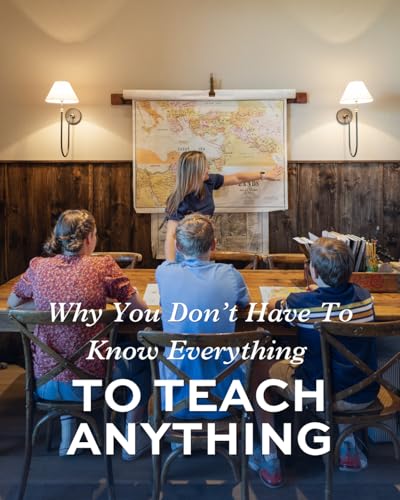
    Do you ever feel like you're not qualified enough to teach your kids? In this episode of the Everyday Educator podcast, host Kelli Wilt and Amy Jones sit down to explore how Classical Conversations' five core habits of grammar — naming, attending, memorizing, expressing, and storytelling — can transform the way homeschool moms approach any subject, including geography. Whether you're in Foundations or beyond, these practical tools will give you the confidence to teach well without needing to be the expert.

    Kelli Wilt, Lead of Program Development for Classical Conversations Multimedia and longtime CC director and tutor, walks through each habit with real-life examples — from how children name stuffed animals to how National Memory Master finalists draw the entire world from memory. You'll come away with a fresh perspective on why classical education works and how to put it into practice at your kitchen table today.

    Kelli and Amy also discuss how the five core habits apply far beyond geography — from chemistry labs to literature — equipping your children with lifelong learning skills that go with them wherever God leads.

    This episode of Everyday Educator is sponsored by:

    Classical Conversations just released "The Habits of a Classical Education"—the long-awaited successor to "The Core." This resource helps you naturally integrate the Five Core Habits into daily life, enabling classical, Christian education where relationships and lifelong learning flourish.

    It's here! Order your copy of "The Habits of a Classical Education: Practicing the Art of

    Grammar" here during the April sale!

    続きを読む 一部表示
    1 時間 7 分
  • Top Homeschool Secrets to Success
    2026/04/14

    What if the secret to classical homeschooling isn't the right curriculum — it's the right habits? In this episode of the Everyday Educator podcast, host Lisa Bailey sits down with Amy Jones and Kelli Wilt to introduce The Habits of a Classical Education: Practicing the Art of Grammar. Together they unpack the five core habits of classical learning, why wonder is the foundation of a truly classical Christian education, and why this book works alongside any curriculum you're already using. Whether you've been homeschooling for a week or a decade, this conversation will remind you why you started.

    Lisa Bailey opens by sharing a realization she came to after years of homeschooling her own daughters: the best homeschool days were the ones that were more about home than about school. That insight is at the heart of The Habits of a Classical Education, CC's newest resource — a book that helps families develop the rhythms and relationships that make learning come alive, whatever curriculum they're using.

    Kelli Wilt, lead of program development at Classical Conversations, introduces the five core habits using the acronym NAMES: Naming, Attending, Memorizing, Expressing, and Storytelling. Her own strongest habits are storytelling and memorizing — skills she developed almost by accident on long van rides with her children, weaving family history and memory work into the journey without her kids ever realizing it was intentional. She's quick to note that the habits didn't come out of nowhere: they're the fruit of a decade of conversations about how God designed human beings to learn.

    Amy Jones, who hosts the Everyday Educator and was a co-author of the book, admits that memorizing is her hardest habit — not because she doesn't value it, but because she had never fully appreciated how foundational it is until working on this book. Her insight is one of the episode's best: the habits aren't subjects. They're a spine, a way of approaching anything new. She walks listeners through the simple exercise of teaching a child something — anything — and noticing that naming, attending, memorizing, expressing, and storytelling show up naturally in every real act of learning.

    The episode's most beautiful section comes when the conversation turns to wonder. Amy quotes a line she encountered in her reading: "You learn nothing without wonder." Wonder, she explains, is God's invitation to his world. It's not an extra. It's the engine. And the habits, properly practiced, don't just cultivate wonder in a child's natural areas of interest — they introduce children (and adults) to wonders they never knew they had. Creation is the curriculum, as Leigh Bortins says, and the habits are the way we learn to read it.

    What You'll Learn

    • The five core habits of classical learning and the acronym that makes them easy to remember (NAMES)
    • Why these habits aren't subjects — they're the way God designed every human being to learn
    • Why the habits work alongside any curriculum you already own, not instead of it
    • How Kelli and Amy each approach the habits differently — and what that means for your own family
    • Why wonder is not a warm fuzzy feeling — it's an essential component of real education
    • How the book is organized so that busy moms can read it in sections at soccer practice
    • Why you don't have to be a perfect homeschooler for this to work — and what the book actually promises
    • Why the habits apply to adults and older students too — not just little ones in the grammar stage
    • What it means that education ought to be more about home than schooling

    This episode of Everyday Educator is sponsored by:

    Classical Conversations just released The Habits of a Classical Education—the long-awaited successor to The Core. This resource helps you naturally integrate the Five Core Habits into daily life, enabling classical, Christian education where relationships and lifelong learning flourish.

    It's here! Order your copy of The Habits of a Classical Education: Practicing the Art of Grammar here during the April sale!

    続きを読む 一部表示
    52 分
  • How to Prepare for the CC Senior Thesis: A Parent's Guide
    2026/04/07

    Your student is approaching Challenge 4 — and suddenly the words "senior thesis" are everywhere. What exactly is it? Who's involved? And how do you help without taking over? In this episode of the Everyday Educator podcast, host Lisa Bailey sits down with Timothy Knotts, Director of Challenge Development at Classical Conversations, and CC grad and Challenge 4 tutor Daniel Shirley to walk parents through every stage of the Senior Thesis project — from choosing a topic all the way to the live defense. Consider this your field guide.
    Lisa opens by clarifying what the Senior Thesis actually is: a two-part project involving a research paper and a live defense in front of an audience that includes parents, peers, judges, and often extended family. It's one of the few programs in classical education that asks students to stand up, present what they've discovered, and answer unrehearsed questions in real time. Terrifying and wonderful, as Tim puts it.
    The heart of the conversation is the question of how to choose a thesis topic — and both guests are emphatic: the topic must come from genuine passion. Daniel offers three examples of thesis statements students should avoid — "the government should not be involved in mental health," "the Bible is the most important book in history," and "toothpaste is very important for dental hygiene" — and explains what all three have in common: they're too broad, too generic, or too obvious to be genuinely arguable. Tim adds that the thesis must be arguable not just to others, but by the student themselves. If they're not wrestling with it, they're not discovering anything.
    Tim offers a liberating reframe: the thesis statement itself is not set in stone. It should remain in conversation with the research and the writing all the way to the final draft. Students who discover they don't care about their topic two months before it's due — and try to start over — are usually headed for a train wreck. But students who remain open to refining their thesis as they learn more will find the process genuinely rewarding.
    Daniel frames the whole project as an Odyssean adventure: navigating by stars, not by GPS. The path is imprecise and full of course corrections. That's not a bug — that's the point. The capstone is meant to ask the student to truly wonder and discover, not to prove what they already think.

    What You'll Learn
    • What the Senior Thesis actually is: the two parts, the people involved, and what it's really preparing students for
    • Why a thesis needs to be something the student can't not ask — and what happens when it isn't
    • Three examples of bad thesis statements (and what makes them bad) so your student doesn't make the same mistakes
    • Why the thesis should be treated like an adventure — not a dissertation
    • How the thesis statement should stay in conversation with the research and writing, all the way to the end
    • What parents should and shouldn't do — the vice of excess and the vice of deficiency
    • How to use memoria to help your student find a topic they genuinely care about
    • The role of a mentor (not the parent, not the director) and why the same question lands differently from different people
    • Research avenues CC families may not know about: CC Plus, the Steelman Library at SEU, and Adler's Synopticon
    • What book Tim recommends parents and students read together before Challenge 4 even begins

    This episode of Everyday Educator is sponsored by:
    Classical Conversations just released "The Habits of a Classical Education"—the long-awaited successor to "The Core." This resource helps you naturally integrate the Five Core
    Habits into daily life, enabling classical, Christian education where relationships and
    lifelong learning flourish.
    It's here! Order your copy of "The Habits of a Classical Education: Practicing the Art of
    Grammar" here during the April sale!

    続きを読む 一部表示
    53 分
  • How to Finish Strong When You Want to Quit Homeschooling
    2026/03/31

    Does homeschooling have you ready to quit? You're not alone — and you're not failing. In this episode of the Everyday Educator podcast, host Lisa Bailey and 7-year Classical Conversations mom DeDe Adetutu get real about the winter doldrums, talk about why finishing strong actually matters, and share the practical strategies — and a little Yoruba wisdom — that have helped their families push through to the finish line. This one is equal parts encouragement and action plan. Lisa Bailey opens by naming what so many homeschool moms feel but rarely say out loud: February is hard. The holidays are over, the calendar looks long, and even families who genuinely love what they do can hit a wall. Her friend's confession — "I just want to quit" — wasn't a crisis. It was completely normal.
    DeDe Adetutu jumps in with a key insight: the winter doldrums aren't random. They're the predictable aftermath of over-investing in holiday intentionality and under-investing in what comes next. We create the problem by making Christmas extraordinary and leaving January with nothing to look forward to. But she also offers a counter-perspective — maybe that emptiness isn't a problem to fix. Maybe it's rest. Winter isn't dead; it's dormant. And the ram, as DeDe's husband says, takes two steps back before charging forward.
    The conversation gets practical fast. DeDe shares what her family has developed over seven years of CC: annual photo reviews with the family after Christmas that double as goal-setting sessions, cross-country training that teaches kids what finishing strong feels like in their bodies, inside jokes that double as one-word pep talks, and short interval study sprints that make the final weeks manageable. Lisa adds her own toolkit — 30-minute focused work blocks, purposeful rest days that involve serving others, and the occasional backwards day to break the monotony for younger kids.
    What You'll Learn
    • Why the winter doldrums are actually something we create for ourselves — and what to do about it
    • Why finishing strong matters so much more than just getting to the end
    • How a senior cross-country runner's wisdom about the hardest part of the race applies to your homeschool right now
    • The Yoruba proverb DeDe's Nigerian husband shares with their family that reframes what rest is actually for
    • Practical strategies for beating mid-year burnout: interval study sessions, backwards day, British accent memory work, and more
    • Why it's okay to grieve unrealistic goals — and how to adjust them without quitting
    • What a German exchange student's dance move taught DeDe's family about finishing strong
    • Why seniors struggle to finish and what parents can do to help them stay present
    • How a plate of Belgian chocolate and a foundations geography lesson became one of the year's best memories
    • How Candyland might have been designed to teach kids how to handle disappointment

    This episode of Everyday Educator is sponsored by:
    Summit Ministries

    Do you want your child to have conversations that challenge, encouragement that endure,
    and friends and faith for life? Summit's Student Conferences equip young Christians with
    the hope, clarity, and confidence they need to follow Jesus boldly in today's world. It's not
    just about getting apologetics answers. Students learn how to live winsomely and bravely in today's world.
    Visit summit.org/cc before March 31, 2026, and lock in the early bird rate. Save an additional $250 when you use the code CC26. Want your child to have conversations that challenge, encouragement that endures, and friends and faith for life? Grab their spot now at summit.org/cc

    Classical Conversations' new 2026 Product Line

    This April, Classical Conversations is launching an exciting portfolio of new products
    designed to strengthen math fluency, develop critical reasoning skills, and equip families
    with practical tools for classical, Christian homeschooling. From flashcard resources and
    reasoning curriculum to hands-on manipulatives and a foundational parent resource, these
    releases deepen the classical learning journey for families at every level.
    Visit ClassicalConversations.com/WhatsNew/ to explore the entire April 2026 product
    collection and start strengthening your family's classical, Christian education today. Don't
    miss the special CC Bookstore sale from April 7 - 28!

    続きを読む 一部表示
    50 分
  • Why a Human Voice Still Matters: Internet Grandpa on Reading Aloud
    2026/03/24
    You may already recognize his voice. For thousands of Classical Conversations families, Charles Hall — known simply as "Internet Grandpa" — has become one of the most beloved figures in the homeschool community, reading rich living books aloud on YouTube and blessing families he has never met. In this episode of the Everyday Educator, host Kelli Wiltsits down with Mr. Hall to talk about how it all started, what it means to hear a human voice read a story, and what happens when faithful work runs into unexpected obstacles. Charles Hall never set out to become Internet Grandpa. It started simply — reading picture books on YouTube so his grandchildren, scattered from Florida to Pittsburgh, could hear his voice. He made the videos unlisted at first, then figured there was no harm in making them public. What followed was something he never anticipated. CC families discovered his recordings, and comments began pouring in — parents of struggling readers, moms multitasking through housework, kids making the transition from Foundations into Challenge who needed a warm, steady voice to carry them through books like The Secret Garden and Carry On, Mr. Bowditch. His subscriber count passed the number of friends and family, and Internet Grandpa was born. Kelli opens the episode by sharing her own family's story — her daughter found Mr. Hall's recordings at exactly the right moment, helping her step into independence as a learner while her mom worked nearby. It's the kind of testimony that appears again and again in his comment section. The conversation turns to why the human voice matters so much. Mr. Hall connects it all the way back to the womb — children hear their parents' voices before they are born, and that bond between voice and love is something no machine can replicate. Jesus, he notes, did most of his ministry through storytelling. People haven't changed much in 2,000 years. He closes with a story about his son Christopher — a boy who hated reading, until his dad started leaving him at cliffhangers. One night his wife found Christopher in bed with a flashlight, finishing the chapter himself. That's what Internet Grandpa hopes for every child who hears his voice. What You'll Learn: - How a grandfather reading Narnia to his kids 40 years ago eventually became a YouTube ministry for thousands - Why stories told by a human voice still matter in an age of AI — and what children hear even before they are born - How Internet Grandpa's recordings have helped struggling readers, busy moms, and kids transitioning into CC Challenge - The cliffhanger trick he used to turn his reluctant reader son into a flashlight-under-the-covers reader - How to support, pray for, and stay connected with Internet Grandpa right now Resources: https://www.youtube.com/@InternetGrandpa This episode of Everyday Educator is sponsored by: Summit Ministries Do you want your child to have conversations that challenge, encouragement that endure, and friends and faith for life? Summit's Student Conferences equip young Christians with the hope, clarity, and confidence they need to follow Jesus boldly in today's world. It's not just about getting apologetics answers. Students learn how to live winsomely and bravely in today's world. Visit summit.org/cc before March 31, 2026, and lock in the early bird rate. Save an additional $250 when you use the code CC26. Want your child to have conversations that challenge, encouragement that endures, and friends and faith for life? Grab their spot now at summit.org/cc Timestamps 00:00 — Welcome and Introduction 01:06 — How Did Internet Grandpa Begin? The Origin Story 01:53 — Reading Narnia to His Kids — 40 Years Before YouTube 02:22 — Recording for Grandkids Far Away and Going Public 03:05 — How CC Families Discovered Him 03:29 — Kelly's Personal Story: How Her Daughter Was Blessed by His Recordings 04:20 — What Drew Him to CC Challenge Books 06:03 — Early Books: The Secret Garden, Carry On Mr. Bowditch, Number the Stars 06:43 — When He Realized He Had Become Internet Famous 07:12 — The Comments That Have Encouraged Him Most 08:01 — Why Reading Aloud Still Matters: Stories, Hearts, and the Art of Attending 08:20 — Why Jesus Told Stories — and Why People Haven't Changed 09:52 — Why a Human Voice Is Different from AI 10:32 — What Children Hear Before They Are Born 11:41 — How He Hopes These Recordings Support Parents at Home 12:24 — Adventures in Odyssey, Car Trips, and Multitasking Moms 12:46 — What He Hopes Children Remember Years from Now 13:57 — The Demonetization Challenge: What Happened and What It Means 15:01 — The Difficult Decisions Demonetization Has Created 16:50 — Rumble and Patreon: Exploring New Platforms 19:09 — What the Ideal Platform Would Look Like 22:04 — How to Support Internet Grandpa Right Now 24:52 — What He Has Learned Through This Season of Difficulty 25:36 — Trusting God When the Path Is Unclear 27:...
    続きを読む 一部表示
    33 分
  • The Habits Every Homeschool Family Needs with Leigh Bortins
    2026/03/17
    What if the most important thing you teach your child has nothing to do with curriculum? In this episode of the Everyday Educator podcast, host Emma Bortins sits down with her mother-in-law and Classical Conversations founder Leigh Bortins to discuss the ideas behind her new book, The Habits: Practicing the Art of Grammar. Together they explore how naming, attending, memorizing, expressing, and storytelling build the foundational habits that help children — and homeschool families — truly flourish. If you're a homeschool mom looking for a classical Christian approach to raising lifelong learners, this conversation is for you. Leigh opens by sharing how it took her twelve years of homeschooling to truly understand what her husband had been telling her all along — that what children need most is consistency. It wasn't until she had a second set of young boys while her older sons were teenagers that the power of habits became undeniable. The routines she had built into Robert and John made it possible to keep the family functioning; without them, the whole thing would have fallen apart. From that personal foundation, the conversation moves into the heart of the book: a framework of five habits — naming, attending, memorizing, expressing, and storytelling — that Leigh calls the building blocks of a grammar education. These aren't abstract academic concepts. They're what every good mother already does instinctively: naming the dog, teaching a toddler not to touch the stove, helping a child memorize where mom will be in Walmart. The point is to recognize these habits, name them, and practice them with intention. The episode takes a fascinating turn when Emma asks about AI and technology. Leigh's position is clear: children under 12 don't need screens at all. Not because technology is inherently evil, but because children who never learn to entertain themselves, sit still, or be alone with their thoughts will struggle with self-control for the rest of their lives — with or without technology. The habits of self-governance have to come first. The episode closes with Leigh's single most important piece of advice for new homeschoolers: find a mentor. Not a curriculum. Not a method. A person who seems to be doing it well and is willing to let you watch. What You'll Learn - What the art of grammar actually means — and why it's about far more than memorization - The five core habits of the grammar stage: naming, attending, memorizing, expressing, and storytelling - Why Leigh says attending is the one habit she'd tell every family to start practicing today - How habits shape not just academic ability but character, self-control, and spiritual formation - Why parents need to self-assess their own habits before they can effectively pass them on - What Leigh thinks about AI and technology — and her recommendation for families with children under 12 - Why feeling inadequate to homeschool is universal — and why it's not actually the obstacle you think it is - How the habits formed in the grammar years show up years later in college anatomy and chemistry courses - Where to find Leigh online and which books to read alongside The Habits This episode of Everyday Educator is sponsored by: Summit Ministries Do you want your child to have conversations that challenge, encouragement that endure, and friends and faith for life? Summit's Student Conferences equip young Christians with the hope, clarity, and confidence they need to follow Jesus boldly in today's world. It's not just about getting apologetics answers. Students learn how to live winsomely and bravely in today's world. Visit summit.org/cc before March 31, 2026, and lock in the early bird rate. Save an additional $250 when you use the code CC26. Want your child to have conversations that challenge, encouragement that endures, and friends and faith for life? Grab their spot now at summit.org/cc Timestamps 00:00 — Welcome and Introduction 02:22 — Leigh's Reaction to Being Interviewed by Her Daughter-in-Law 03:10 — What Took So Long to Understand: The Role of Habits in Homeschooling 04:13 — How a Second Set of Young Boys Changed Everything 05:14 — What Her Husband Was Saying All Along — and When She Finally Heard It 06:40 — What Is the Art of Grammar? Beyond Memorization 07:33 — The Five Habits: Naming, Attending, Memorizing, Expressing, Storytelling 09:33 — Expressing and Storytelling in Everyday Family Life 10:19 — What Happens in Families Without Habits 12:04 — Emma's Daughter and the "Tell Stories, Dance" Moment 13:49 — It's Not Just What Students Know — It's How They Learn 15:45 — The One Habit That Distinguishes Flourishing Students: Self-Control 17:08 — Parents Must Self-Assess First: More Is Caught Than Taught 18:47 — Sitting on Daddy's Lap: Three Very Different Experiences 19:50 — Slowing Down in a World That Moves Too Fast 20:15 — AI, Technology, and Homeschooling with Humans 21:19 — Leigh's ...
    続きを読む 一部表示
    43 分
  • Anti-Burnout Memory Master Tips
    2026/03/10
    Is pushing for Memory Master worth it — and what happens if your child doesn't make it? In this episode of the Everyday Educator podcast, host Amy Jones sits down with veteran CC moms Courtney Bradshaw and Tunrade Schumann to talk about how to challenge your kids with Classical Conversations memory work without overwhelming them or pushing too hard. Whether you're aiming for Memory Master, Subject Master, or just want your child to engage more deeply with the Foundations curriculum, this conversation is full of warm, practical wisdom for every homeschool family. Tunrade shares how her family dove headfirst into Memory Master from day one, with all four kids eventually earning the title — and each one also having that one hard year where it didn't quite come together. Those years, she says, turned out to be among the most valuable. Her daughter once went back as a Challenge A student to earn the one cycle she'd missed years earlier, simply because it still mattered to her. Tunrade herself has spent the last two years earning Mom Memory Master alongside her kids, with a third planned as her capstone. Courtney offers a beautifully different perspective — her family never completed community Memory Master, but has celebrated Subject Masters, a "Master Swordsman" scripture challenge, and countless informal moments where the content showed up in unexpected ways: a college Western Civ class, a Challenge speech, a paper. She's candid about the seasons of life — including adopting three children mid-journey — that meant mom simply wasn't available, and why that's okay. The conversation turns practical in the back half, with both moms sharing specific tips: starting with six weeks of consistent daily review, using CDs and flip books for independent study, leveraging Christmas break to tackle early weeks, pairing up with another Memory Master family for accountability and fun, and tailoring review methods to each child's learning style. Motivation strategies include review game parties, community check-ins, and Tunrade's beloved family tradition: a full week of unlimited screen time after Memory Master — which, she notes, usually loses its charm by day two. The episode closes with a reminder that the real reward isn't the blue shirt. It's a child who knows how they learn, trusts their own mind, and isn't afraid of hard things. What You'll Learn: - The full Memory Master continuum — from Subject Master all the way to the National Memory Master Contest - How two experienced CC families approached Memory Master very differently — and both thrived - Why the hidden benefits of Memory Master have almost nothing to do with memorization - What to do when life gets hard and Memory Master just isn't happening this year - Practical, age-by-age tips for making memory work fun (trampolines, hopscotch, hand motions & more) - How to use Christmas break strategically to get ahead on proofs - Creative ways to celebrate and motivate kids through the February doldrums - Why kids who earn Memory Master aren't scared of hard things later in life - How Tunrade earned Mom Memory Master — and why Courtney is already eyeing it for her last round This episode of Everyday Educator is sponsored by: Summit Ministries Do you want your child to have conversations that challenge, encouragement that endure, and friends and faith for life? Summit's Student Conferences equip young Christians with the hope, clarity, and confidence they need to follow Jesus boldly in today's world. It's not just about getting apologetics answers. Students learn how to live winsomely and bravely in today's world. Visit summit.org/cc before March 31, 2026, and lock in the early bird rate. Save an additional $250 when you use the code CC26. Want your child to have conversations that challenge, encouragement that endures, and friends and faith for life? Grab their spot now at summit.org/cc Timestamps 00:00 — Welcome & Introduction 00:22 — Amy's Homeschool Journey & Why This Topic Matters 00:48 — The Memory Master Continuum: Subject Master to National Contest 03:39 — Meet Courtney Bradshaw: 12 Years of CC, Academic Advisor & 7 Kids 06:30 — Meet Tunrade Schumann: 12 Years of CC, Social Media Director & Graduating Her First 09:18 — What It Means to "Graduate" as a CC Mom 12:09 — Why the Memory Content Is So Rich (and Funny College Moments) 13:21 — Tunrade's Family Memory Master Journey: All Four Kids, Every Cycle 15:09 — Mom Memory Master: When Your Kid Proofs You 16:15 — The Hard Year Every Child Had — and What They Learned From It 18:14 — How a Challenge A Student Went Back for the Cycle She Missed 20:06 — Courtney's Journey: Subject Masters, a Scripture Challenge & Meeting Kids Where They Are 25:28 — Subject Master Deep Dive: Latin, Geography & Leaning Into What They Love 28:34 — It's Not All or Nothing: Finding the Right Level for Your Family 30:33 — Practical Tips: How and When to Start Preparing for ...
    続きを読む 一部表示
    50 分
  • Raising Kids Who Don't Deconstruct Their Faith | Alisa Childers
    2026/03/03

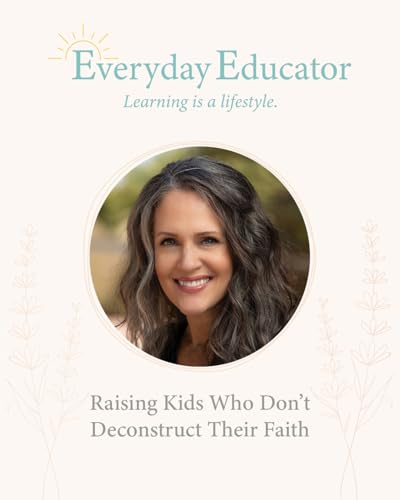
    Is progressive Christianity coming for your kids — and would you even recognize it if it was? In this episode of the Everyday Educator podcast, host Amy Jones and co-host Emma Bortins sit down with author and apologist Alisa Childers to unpack what progressive Christianity actually is, why it appeals to young people, and how Christian homeschool parents can equip their children to stand firm in biblical truth. If you're raising kids in today's cultural climate, this conversation is one you can't afford to miss.
    Alisa shares her own story of encountering progressive Christianity through a pastor who slowly dismantled core doctrines of the faith, and how that crisis ultimately led her to study apologetics and write Another Gospel. She offers a clear definition of progressive Christianity — not by what it affirms, but by what it denies: substitutionary atonement, the authority of Scripture, the reality of hell, and the exclusivity of Christ.
    The conversation turns to the younger generation and how moral relativism has become the dominant worldview of Gen Z, making it harder than ever for kids to understand why biblical truth isn't just "your opinion." From there, the hosts dig into practical parenting strategies: why it's not enough to shelter kids, why you should actually show them progressive content and work through it together, and how modeling confidence in your faith can be more powerful than having a perfect answer.

    What You'll Learn:
    - What progressive Christianity is — and the core doctrines it quietly denies
    - Why young people are so susceptible to progressive theology and deconstruction
    - How social media (including random TikTok videos) is influencing your kids' faith
    - Why the definition of "truth" may be the most important conversation you have with your child
    - A practical, age-by-age strategy for building spiritual resilience at home
    - How to show your kids progressive Christian content without it rattling their faith
    - Why holding a biblical sexual ethic feels different for Gen Z than it did for previous generations
    - The best apologetics resources for parents and students — including Alisa's new student edition

    00:00 — Introduction & Welcome
    00:29 — Introducing Alisa Childers: Author, Apologist & CCM Artist
    02:18 — About Another Gospel & the Student Edition
    03:09 — Alisa's Personal Story: How She Encountered Progressive Christianity
    06:04 — What Is Progressive Christianity? Definitions & Core Denials
    11:13 — Tracing the Gospel Arc: Where Progressive Christianity Goes Off the Rails
    15:02 — Social Justice, Marxism & What Unites Progressive Christians
    16:14 — Is Progressive Christianity Growing? What the Data Doesn't Show
    21:21 — The Most Important Word: How You Define "Truth" Changes Everything
    24:06 — Insulin or Ice Cream: Teaching Objective vs. Subjective Truth
    28:40 — Loving Your Kids' Friends While Holding a Biblical Sexual Ethic
    30:03 — Identity, Sexuality & Untying the Knots for the Younger Generation
    36:06 — Social Media & Progressive Christianity: Where the Influence Is Coming From
    40:10 — Practical Strategies: How to Raise Spiritually Resilient Kids at Home
    44:25 — It's Okay Not to Have All the Answers: Modeling Faith Under Pressure
    47:36 — Secondary Issues, Wrestling with Scripture & Holding Things in Tension
    48:38 — Recommended Resources for Parents & Students
    52:01 — Closing Thoughts: The Beauty of the True Gospel

    Resources:
    https://alisachilders.com/


    This episode of Everyday Educator is sponsored by:
    Summit Ministries
    Do you want your child to have conversations that challenge, encouragement that endure,
    and friends and faith for life? Summit's Student Conferences equip young Christians with
    the hope, clarity, and confidence they need to follow Jesus boldly in today's world. It's not
    just about getting apologetics answers. Students learn how to live winsomely and bravely in today's world.
    Visit summit.org/cc before March 31, 2026, and lock in the early bird rate. Save an additional $250 when you use the code CC26. Want your child to have conversations that challenge, encouragement that endures, and friends and faith for life? Grab their spot now at summit.org/cc

    続きを読む 一部表示
    54 分