エピソード

  • Carrying Worlds Across Languages
    2026/04/11

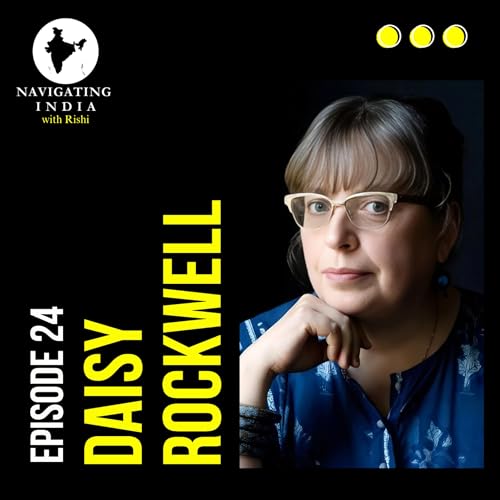
    Daisy Rockwell is an author, translator, and painter based in the United States, who translates from Hindi and Urdu into English, and has brought some of the most significant voices of South Asian literature to readers across the world. Her translation of Geetanjali Shree’s Tomb of Sand won the International Booker Prize in 2022, the first Hindi-language novel to receive that distinction.

    In this episode, I am in conversation with Daisy to talk about her journey into Hindi and Urdu, the craft of literary translation, her first encounter with India, what artificial intelligence means for the future of the craft of translation, and much more. Dive into the episode to find out.

    References:

    1. Daisy Rockwell: Website, Instagram
    2. Alice Sees Ghosts: A Novel by Daisy Rockwell
    3. Works translated by Daisy Rockwell: Tomb of Sand by Geetanjali Shree, Falling Walls by Upendranath Ashk, The Women’s Courtyard by Mastur Khadija, Tamas by Bhisham Sahni
    4. Yashpal: This Is Not That Dawn: Jhootha Sach, Dada Comrade
    5. Speaking of Siva by A.K. Ramanujan
    6. Lessons learned: Susanne and Lloyd Rudolph, in memoriam
    続きを読む 一部表示
    1 時間 2 分
  • What Women Want: Understanding The Female Voter in Modern India
    2026/04/05

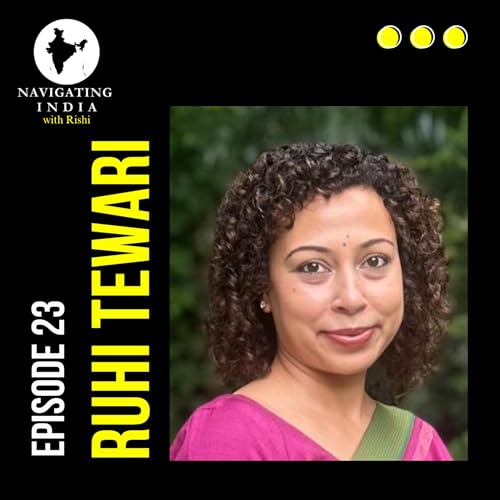
    In the long history of post-Independence India, the woman voter was invisible, rarely spoken about, and almost never listened to. But today, something has changed. Women are voting in greater numbers than ever before, making independent choices and holding politicians accountable. Journalist Ruhi Tewari draws on two decades of travelling across various states in India, covering elections, to trace the emergence of this 'Mahila voter'. She explores how women vote, and why. Tune in to the episode to find out more.

    References:

    1. Ruhi Tewari: Instagram, X, LinkedIn
    2. Book: What Women Want: Understanding The Female Voter in Modern India by Ruhi Tewari
    続きを読む 一部表示
    43 分
  • A Woman of No Consequence: Memory, Letters and Resistance in Madras
    2026/03/30

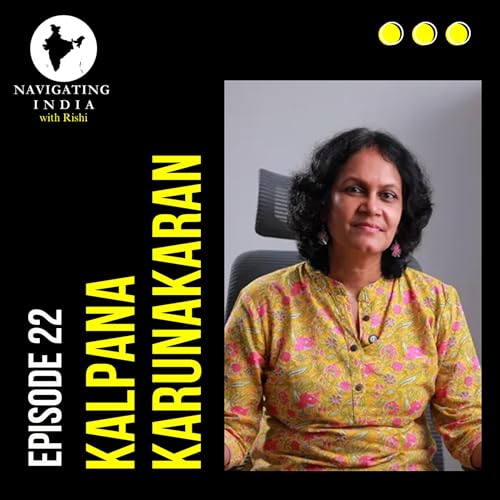
    What does it mean to recover the life of a woman who called herself a ‘humble housewife tied to mundane work’? In this episode, I am in conversation with Kalpana Karunakaran to discuss her book, ‘A Woman of No Consequence: Memory, Letters and Resistance in Madras’, a remarkable excavation of the life of Pankajam, a woman who defies easy categorisation.

    Pankajam was a voracious reader who sought freedom from a fractured relationship with her husband. Her memories are vivid and layered, marked by a deep love for children, a spirit of travel, friendships forged across distances, and an attentiveness to nature, birds, and animals. Through it all, she reinvented motherhood entirely on her own terms. We explore why it matters to study a woman like Pankajam, someone who does not fit neatly into the conventional subject of feminist discourse and what her life reveals about resistance, memory, and selfhood. We also talk with Kalpana about her own mother, Mythily Sivaraman, a well-known Indian women’s rights activist.

    References:

    1. Kalpana Karunakaran: Profile, Instagram
    2. Book: A Woman of No Consequence: Memory, Letters and Resistance in Madras by Kalpana Karunakaran
    3. Tamil Nadu Science Forum
    4. Mythily Sivaraman, Fragments of a Life: A Family Archive by Mythily Sivaraman (Life story of Subbalakshmi)
    5. Indian Association of Women’s Studies, Vina Mazumdar
    6. Jane Austen, Louisa May Alcott (Little Women), Anton Chekhov, Alexander Pushkin, Leo Tolstoy, Katha Prize Stories
    7. Women’s India Association, All India Women’s Conference
    8. Sarda Act: Child Marriage Restraint Act, 1929
    9. Katherine Mayo and her book, Mother India (1927)
    10. Mary Rajamani, Valentina Tereshkova
    続きを読む 一部表示
    1 時間 23 分
  • Faith and Fury: COVID Dispatches from India’s Hinterlands
    2026/03/22

    In this episode of Navigating India, released on March 22nd, 2026, exactly six years after India observed the Janta Curfew, an initiative by the Government of India to combat COVID, we are joined by journalist Jyoti Yadav to discuss her book 'Faith and Fury: Covid Dispatches from India's Hinterlands'. While much of India locked itself indoors during the pandemic, she set out from Delhi to the rural heartlands of Uttar Pradesh and Bihar, documenting the hardships faced by migrant workers, the shortage of oxygen cylinders, the undercounting of deaths, children orphaned by the virus, and the collapse of the state's health infrastructure. Her book is an important record of India's pandemic years, raising serious questions that the nation has been too eager to forget, at a time when the media has largely written Covid off as a closed chapter.


    References

    1. Jyoti Yadav: Website, X, LinkedIn
    2. Book: Faith and Fury: COVID Dispatches from India’s Hinterland by Jyoti Yadav
    続きを読む 一部表示
    1 時間 1 分
  • Periyar: The Life and Times of an Iconoclast
    2025/11/29
    Why is Periyar E.V. Ramasamy Naicker, who passed away over half a century ago, still a controversial yet unavoidable and crucial figure in Tamil Nadu? While this year marks 100 years of the Self-Respect Movement, initiated by Periyar, he was also labelled anti-national, anti-Hindu, anti-Brahmin, and anti-Dalit, generating extreme hate and accusations. Who was Periyar? How did his ideas evolve? What are his key contentions? Did he want a separate country? What was his relationship with Ambedkar, Annadurai, and Kamaraj? How did he leave a lasting impact on the people of Tamil Nadu? In this episode, I’m joined by A. R. Venkatachalapathy and Karthick Ram Manoharan to delve deeper into the life and ideas of Periyar.References:The Cambridge Companion to Periyar, Edited by A. R. Venkatachalapathy and Karthick Ram ManoharanA. R. Venkatachalapathy: Profile, XKarthick Ram Manoharan: Profile, XBooks by A. R. Venkatachalapathy: In Those Days There Was No Coffee, Swadeshi Steam: V.O. Chidambaram Pillai and the Battle against the British Maritime Empire, Who Owns that Song?: The Battle for Subramania Bharati’s Copyright, Tamil Characters: Personalities, Politics, Culture, The Province of the Book: Scholars, Scribes, and Scribblers in Colonial Tamilnadu, The Brief History of A Very Big Book: The Making of the Tamil EncyclopaediaBooks by Karthick Ram Manoharan: Periyar: A Study in Political Atheism, Frantz Fanon: Identity and ResistanceDravidian Movement and Saivites, 1927-1944 by A. R. VenkatachalapathySudras and the Nation: Periyarist Explorations, Freedom from God: Periyar and Religion, In the path of Ambedkar: Periyar and the Dalit question by Karthick Ram ManoharanM.S.S. Pandian: Denationalising the Past-Nation in E V Ramasamy's Political Discourse, Brahmin and Non-Brahmin: Genealogies of the Tamil Political Present V Geetha: Periyar, Women and an Ethic of Citizenship, Towards a Non-Brahmin Millennium: From Iyothe Thass to Periyar (Co-authored with S.V. Rajadurai)Anandhi S.: Women’s Question in the Dravidian Movement c. 1925-1948Robert L Hardgrave Jr: The Nadars of Tamilnad: The Political Culture of a Community in Change Selig S. Harrison: Caste and the Andhra CommunistsLloyd I. Rudolph and Susanne Hoeber Rudolph: The Political Role of India’s Caste AssociationsB.R. Ambedkar: Annihilation of Caste (An Introduction by Arundhati Roy)Vignesh Rajahmani: The Dravidian Pathway: How the DMK Redefined Power and Identity in South IndiaEpisode 18: The Dravidian Pathway: How the DMK Redefined Power and Identity in South India by Vignesh RajahmaniD. Veeraraghavan: Half a Day for Caste? Education and Politics in Tamil Nadu, 1952-55 Nellai R. Jebamani, Cho Ramaswamy, Maraimalai Adigal, K. Veeramani, Maniammai, C.N. Annadurai, K. Kamaraj, J. JayalalithaaBipin Chandra, Aditya Mukherjee, Ranajit Guha, Partha Chatterjee, K. A. Nilakanta Sastri, D.D. Kosambi, Romila Thapar, M.N. Srinivas, Namdeo Dhasal
    続きを読む 一部表示
    2 時間 51 分
  • The Unexpected Force of Non-Violence
    2025/11/18

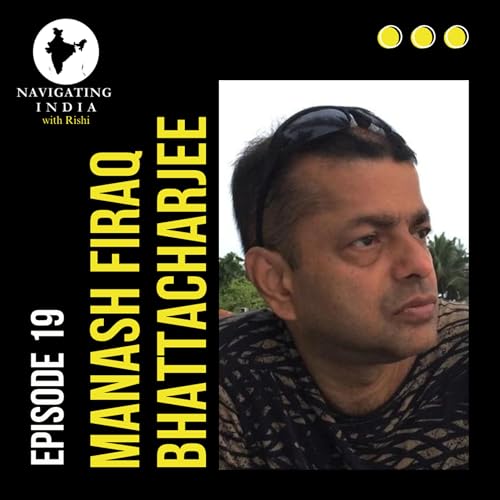
    Gandhi’s method of non-violence faced significant challenges after Jinnah’s declaration of Direct Action Day, continuing until the partition and beyond. The miracle of non-violence seemed to fade, leaving peace as a fleeting hope. To counter the violence, Gandhi walked through areas devastated by violence- Noakhali, Bihar, Calcutta, and Delhi in the last fifteen months of his life, before his tragic assassination. During these travels, he advocated for peace and offered courage to those in need. In his recent book, 'Gandhi: The End of Non-Violence', Manash Firaq Bhattacharjee delves deeper into the questions that remain: Why did a nation that had fought through non-violence descend into violence? What is the psychology behind communal violence? What is non-violence, and how can it transform the human condition? What does it mean ‘to die a beautiful death’? And how can one write the history of a period so tragic? Tune into this episode to find answers to these questions and many others.


    References:

    1. Gandhi: The End of Non-Violence by Manash Firaq Bhattacharjee
    2. Other Works by Manash Firaq Bhattacharjee: Nehru and the Spirit of India, Looking for the Nation: Towards Another India of India, The Town Slowly Empties: On Life and Culture During Lockdown
    3. Manash Firaq Bhattacharjee: X
    4. Hind Swaraj or Indian Home Rule by M.K. Gandhi
    5. Nationalism by Rabindranath Tagore
    6. The Discovery of India by Jawaharlal Nehru
    7. The Intimate Enemy: Loss and Recovery of Self under Colonialism by Ashis Nandy
    8. The Power Game by Paavo Havikko, translated from Finnish by David Barrett
    9. Otherwise Than Being, or Beyond Essence by Emmanuel Levinas, translated from French by Alphonso Lingis
    10. Civil Disobedience by Henry David Thoreau
    11. On Violence by Hannah Arendt
    12. Pakistan or the Partition of India by B.R. Ambedkar
    続きを読む 一部表示
    2 時間 9 分
  • The Dravidian Pathway: How the DMK Redefined Power and Identity in South India
    2025/10/26
    How did a transformative socio-cultural movement become an electorally successful political force? To answer this question, we have with us Vignesh Rajahmani. In his book, ‘The Dravidian Pathway’, he illustrates how the Dravidian movement transformed into an electorally viable political party, the Dravida Munnetra Kazhagam (DMK). We also explore the ideas of the Dravidian-Tamil ethos, key agitations led by the DMK, the foundational role of Periyar and the Self-Respect movement, the importance of reading rooms, the language question, and moreReferences:Vignesh Rajahmani: Biography, LinkedIn, X, Instagram The Dravidian Pathway: How the DMK Redefined Power and Identity in South India by Vignesh RajahmaniInclusive growth in Tamil Nadu: The role of political leadership and governance by Kartik Akileswaran and Luca GraziadeiComparative Grammar of the Dravidian or South Indian Family of Languages by Robert CaldwellTamil Nadu’s new assembly in 33 charts: Lowest women representation in 25 years, OBCs dominate by Gilles Verniers, Vignesh Karthik KR, Mohit Kumar and Neelesh AgrawalThe glossary for addressing the LGBTQIA+ Community by the Social Welfare and Women Empowerment Department, Government of Tamil NaduThe Caste System in Tamil Nadu by K.K. PillayCaste and the Andhra Communists by Selig S. HarrisonAnts among Elephants: An Untouchable Family and the Making of Modern India by Sujatha GidlaThe Political Role of India’s Caste Associations by Lloyd I. Rudolph and Susanne Hoeber RudolphThe Nadars of Tamilnad: The Political Culture of a Community in Change by Robert L Hardgrave JrThe Palace of Illusions by Chitra Banerjee DivakaruniThe First Rebels: When Madras was at the forefront of the struggle for Dalit Emancipation by V SobhaMothers in the Fatherland: Women, the Family and Nazi Politics by Claudia KoonzSixteen Stormy Days: The Story of the First Amendment of the Constitution of India by Tripurdaman SinghHalf a Day for Caste? Education and Politics in Tamil Nadu, 1952-55 by D. VeeraraghavanMovies: Mari Selvaraj’s Karnan, Sukumar’s Rangasthalam, RJ Balaji’s Mookuthi Amman
    続きを読む 一部表示
    1 時間 23 分
  • Anti-Colonialism, Anarchism, and M.P.T. Acharya
    2025/09/10

    In 1908, an Indian revolutionary from Madras arrived in Marseille, France, and later travelled to Paris, London, Lisbon, New York, Berlin, and Russia with two main objectives: to unveil the brutality of British colonialism and to reject the idea of the universalisation of the nation-state. He made significant contributions to our understanding of resistance to oppression in all its forms, as embodied by the nation-state. He was one of India’s most prominent anarchist activists and theoreticians, M.P.T. Acharya. To explain his life trajectory and the various themes that have shaped it, we are in conversation with historian Ole Birk Laursen.

    References:

    1. Ole Birk Laursen: Website, LinkedIn
    2. Anarchy Or Chaos: M.P.T. Acharya and the Indian Struggle for Freedom by Ole Birk Laursen
    3. We Are Anarchists: Essays on Anarchism, Pacifism, and the Indian Independence Movement 1923 - 1953 by M.P.T. Acharya, edited by Ole Birk Laursen
    4. ‘I have only One Country, it is the World’: Madame Cama, Anticolonialism, and Indian-Russian Revolutionary Networks in Paris, 1907–17 by Ole Birk Laursen
    5. John Steinbeck, Charles Dickens, Samuel Selvon, V.S. Naipaul, George Lamming
    6. Spies, Lies and Allies: The Extraordinary Lives of Chatto and Roy by Kavitha Rao (Episode 12 of Navigating India)
    7. Shattered Lands: Five Partitions and the Making of Modern Asia by Sam Dalrymple (Episode 15 of Navigating India)
    8. Magda Nachman: An Artist in Exile by Lina Bernstein
    9. The Ghadar Movement: A Forgotten Struggle by Rana Preet Gill
    続きを読む 一部表示
    1 時間 23 分