エピソード

  • All of Us Are Artists: Bringing Creativity Back to the Classroom
    2026/06/16

    In this episode of The Research to Practice Gap, Dr. Helen Flores sits down with Dr. Hank Samuels to explore the role of creativity, imagination, and arts integration in education. Together, they discuss why so many educators believe they are "not creative," how schools often separate art from learning, and practical ways teachers can incorporate creativity into everyday instruction. Dr. Samuels shares research-based insights and accessible strategies that help educators cultivate joy, deepen student engagement, and create more meaningful learning experiences across all grade levels and content areas.

    Resources for Teachers:

    8 Ways to Use Music in the Language Arts Classroom

    Artist in Residence

    Arts Integration and Universal Design for Learning

    Arts Integration Versus Arts Enhancement

    The Institute for Arts Integration and STEAM

    The Kennedy Center

    Teaching Students to Critique Art

    Why You Think You Aren’t an Artist

    Research and Background:

    Dr. Mary Weems

    Miller, J. A., & Bogatova, T. (2018). Arts in education: The impact of the arts integration program and lessons learned. Journal for Learning through the Arts, 14(1).

    Møller-Skau, M., & Lindstøl, F. (2022). Arts-based teaching and learning in teacher education:“Crystallising” student teachers' learning outcomes through a systematic literature review. Teaching and Teacher Education, 109, 103545.

    Samuels, J. H. (2025). “To Be a Teacher Is to Be an Artist”: An Ethnodramatic Look into Preservice Teacher Experiences with Arts Integration. In The Educational Forum (Vol. 89, No. 3, pp. 312-324). Routledge.

    Samuels, J. H. (2026). Scratching beneath the surface. Technology, Pedagogy and Education, 35(2), 275-295.

    The Science of Arts Integration and Student Success

    Artwork and logo by The Interior Gaze

    Send us Fan Mail

    続きを読む 一部表示
    33 分
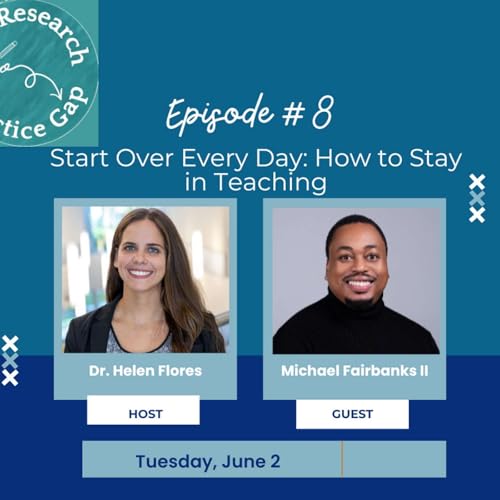
  • Start Over Every Day: How to Stay in Teaching
    2026/06/02

    In this episode of The Research to Practice Gap, Dr. Helen Flores sits down with educator and leadership coach Michael Fairbanks II to discuss one of education’s biggest challenges: teacher retention. Drawing from his experiences as a teacher, principal, and instructional leader, Michael shares practical strategies for sustaining intrinsic motivation, building mental flexibility, and creating systems that help educators stay in the profession longer. From knowing your community to rehearsing lessons and “starting over every day,” this conversation offers honest, actionable insights for both new and veteran teachers navigating the realities of today’s classrooms.

    Michael Fairbanks II

    Resources for Teachers:

    6 Intrinsic Motivators to Power Up Your Teaching (this was written for students but can be applied to us as well!)

    Educators: Make Every Day a Fresh Start

    Knowing the Community

    Leveraging Self-Reflection to Improve your Teaching

    The Power of Rehearsal: The Most Overlooked Step in Instructional Coaching

    Research & Background:

    Costs and Benefits of Teacher Retention

    Exploring Evidence-Based Practices in Teacher Recruitment and Retention Efforts

    Teacher Shortages Fact Sheet

    Billingsley, B., & Bettini, E. (2019). Special education teacher attrition and retention: A review of the literature. Review of Educational Research, 89(5), 697-744. https://doi.org/10.3102/0034654319862495

    Li, X., Pei, X., & Zhao, J. (2025). Intrinsic motivation and self-efficacy as pathways to innovative teaching: a mixed-methods study of faculty in Chinese higher education. BMC Psychology, 13(1), 859. https://doi.org/10.1186/s40359-025-03177-y

    Malone, H. L. S. (2026). Toward a community centric pedagogy: How teachers’ conceptions of the urban community they work in shapes bidirectional learning. Education and Urban Society, 58(4), 460-486. https://doi.org/10.1177/00131245251404012

    Artwork and logo by The Interior Gaze

    Send us Fan Mail

    続きを読む 一部表示
    26 分
  • The Pressure to Perform: Teaching Calm in High-Stakes Systems
    2026/05/19

    In this episode of The Research to Practice Gap, Dr. Helen Flores speaks with Tabitha Lim about the impact of high-stakes testing on student learning, stress, and well-being. Drawing from neuroscience, embodied cognition, and her experiences in both Malaysia and the United States, Tabitha shares practical strategies educators can use to help students regulate stress, improve memory and retrieval, and create calmer learning environments during high-pressure academic periods. The conversation explores the connection between emotions, physiology, and learning—and why supporting student well-being is essential for meaningful academic success.

    Tabitha Lim

    TLS International School

    TNT Consultancy

    Resources for Teachers:

    Battling Test Anxiety

    Brain Targeted Teaching (by Dr. Mariale Hardiman)

    Embodied Learning: How To Bring Movement Into the Classroom, and Why It Matters

    Preparing Students for Assessments

    Teaching About Stress and the Brain (Elementary)

    Teaching About Stress and the Brain (Secondary)

    You Aren’t at the Mercy of Your Emotions: Your Brain Creates Them

    Research & Background:

    Education in Malaysia

    Dr. Lisa Feldman Barrett

    Dr. Mary Helen Immordino-Yang

    The Psychological Toll of High Stakes Testing

    Self Determination Theory (Deci & Ryan)

    The Standardized Tests Debate

    Third Grade Retention Laws and Effects

    Heissel, J. A., Adam, E. K., Doleac, J. L., Figlio, D. N., & Meer, J. (2021). Testing, stress, and performance: How students respond physiologically to high-stakes testing.

    Macedonia, M. (2019). Embodied learning: Why at school the mind needs the body. Frontiers in psychology, 10, 2098.

    Artwork and logo by The Interior Gaze

    Send us Fan Mail

    続きを読む 一部表示
    34 分
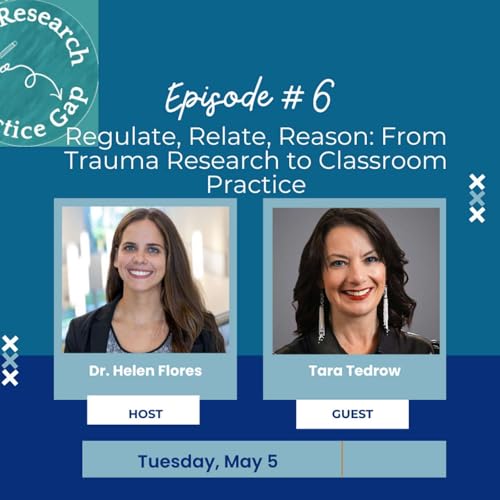
  • Regulate, Relate, Reason: From Trauma Research to Classroom Practice
    2026/05/05

    In this episode, I sit down with Tara Tedrow to explore how trauma impacts learning, behavior, and brain development—and what teachers can do about it. We break down the “regulate, relate, reason” framework and share practical, trauma-informed strategies educators can start using right away.

    Resources for Teachers

    • Culturally Responsive Practices
    • Emotion and Stress Regulation Tool Box
    • The National Child Traumatic Stress Network (includes age related reactions to traumatic events and an educator toolkit, among other resources)
    • The Neurosequential Model by Dr. Bruce Perry
    • Screening Students for Trauma
    • Self-Care Strategies for Teachers
    • Signs of Compassion Fatigue
    • Strengths Based Education
    • Trauma-Responsive MTSS Toolkit
    • Trauma-Informed Care for Students with Developmental and Intellectual Disabilities
    • Two Word Check-In

    Research & Background

    • Adverse Childhood Experiences (ACEs)
    • Dr. Bessel van der Kolk
    • The Council for Exceptional Children
    • Lives in the Balance by Dr. Ross Greene
    • Our Brains Were Not Built for This Much Adversity
    • Qualified Teachers are Choosing Not to Teach in Our Schools
    • Relational Mediated Discipline with Dr. Lori Desautels
    • Scanlan Center for School Mental Health
    • Trauma-Informed Teaching and Learning with Dr. Mays Imad
    • Lawrence-Sidebottom, D., Huffman, L. G., Beam, A. B., Guerra, R., Parikh, A., Roots, M., & Huberty, J. (2024). Rates of Trauma Exposure and Posttraumatic Stress in a Pediatric Digital Mental Health Intervention: Retrospective Analysis of Associations With Anxiety and Depressive Symptom Improvement Over Time. JMIR pediatrics and parenting, 7, e55560. https://doi.org/10.2196/55560

    Artwork and logo by The Interior Gaze

    Send us Fan Mail

    続きを読む 一部表示
    26 分
  • Less is More: Designing Classrooms That Support Attention and Executive Function
    2026/04/21

    This episode explores how classroom design impacts students’ attention, regulation, and learning. Dr. Laura Foster shares research-backed strategies for creating more intentional, less visually overwhelming spaces—and how small shifts in the environment can better support all learners.

    Resources for Teachers

    Heavily Decorated Classrooms Disrupt Attention and Learning In Young Children

    Building Design for Learning with Willam Browning and James Determan

    How to Use Mini Anchor Chart Flipbooks to Save Space and Time in Your Classroom

    Structured and Accessible Classrooms to Support Independence

    Biophilic Design in Schools

    Students Speak

    National Center for Montessori in the Public Sector

    Research Articles & Background

    Isolation of Difficulty

    An Introduction to the Theory of Embodied Cognition

    Evaluating the Effectiveness of Tennessee's Voluntary Pre-K Program

    Fisher, A. V., Godwin, K. E., & Seltman, H. (2014). Visual environment, attention allocation, and learning in young children: When too much of a good thing may be bad. Psychological science, 25(7), 1362-1370.

    Foster, L. K. (2025). Early Childhood Classroom Design: Integrating Montessori Principles with Neuroeducational Research. Journal of Montessori Research, 11(2). https://doi.org/10.17161/jomr.v11i2.24130

    Kaplan, S. (1995). The restorative benefits of nature: Toward an integrative framework. Journal of environmental psychology, 15(3), 169-182.

    Price, J., & Romualdez, A. M. (2025). ‘It just feels unnatural being here’: Autistic secondary school students’ experiences of sensory sensitivities in the school environment. Autism, 29(9), 2228-2238.

    Valentine, C. (2023). Architectural allostatic overloading: exploring a connection between architectural form and allostatic overloading. International Journal of Environmental Research and Public Health, 20(9), 5637.

    Artwork and logo by The Interior Gaze

    Send us Fan Mail

    続きを読む 一部表示
    32 分
  • Beyond Behavior Management: Using SEL to Transform Your Classroom
    2026/04/07

    In this episode of The Research to Practice Gap, I sit down with Dr. Sharde Theodore to discuss how social emotional learning (SEL) can transform classroom culture and improve outcomes for students.

    Articles by Dr. Theodore

    National Center for the Elimination of Educational Disparities

    Resources for Teachers:

    Daily Progress Reports

    Check In/Check Out (CICO)

    Classroom Job Ideas for K-12

    Class Dojo

    Critter Coin (like Class Dojo but more appropriate for secondary students)

    GoNoodle

    Brain Breaks for Middle & High Schoolers

    Encouraging Students to Become Independent Learners

    Research Articles & Background:

    Collaborative for Academic, Social, and Emotional Learning (CASEL)

    Center on Positive Behavioral Interventions and Supports

    Multi-Tiered Systems of Support

    SEL Interventions Discussed:

    Strong Start

    Coping Power

    Social Skills Training

    Social Narratives

    Peer Mediated Instruction and Intervention

    Artwork and logo by The Interior Gaze

    Send us Fan Mail

    続きを読む 一部表示
    28 分
  • Humanizing the Classroom: Restorative Practices & Student Voice
    2026/03/24

    In this episode of The Research to Practice Gap, Dr. D’Annette Mullen of Boston University talks about disrupting disproportionate discipline in schools through art, restorative practices, relationship-building, and student voice.

    Join our newsletter community for practical insights, implementation tips, and resources!

    Semicolon Books

    Works by Dr. Mullen:

    • Racism by Another Name: Black Students, Overrepresentation, and the Carceral State of Special Education
    • Chapter 4: It’s All About Relationships: (Re)Imagining Classroom Dynamics to Foster Student Engagement

    Quote mentioned in the episode:

    “When there's no name for a problem, you can't solve it” - Kimberlé Crenshaw

    Resources for Teachers

    • Recommended restorative practices workbook: Circle Forward: Building a Restorative School Community
    • Using Restorative Practices Proactively
    • Artful Integration: Restorative Practices, the Arts, and Evidence-Based Impact
    • Respect From Day One

    Research & Background

    • Anti-Black state violence, classroom edition: The spirit murdering of Black children by: Bettina L. Love
    • The U.S. spent $30 billion to ditch textbooks for laptops and tablets: The result is the first generation less cognitively capable than their parents by Sasha Rogelberg
    • Answer Sheet: Bill Gates Spent Hundreds of Millions of Dollars to Improve Teaching. New Report Says It Was a Bust by Valerie Strauss
    • The Neuroscience Behind Writing: Handwriting vs. Typing—Who Wins the Battle? (Marano et al., 2025)

    Artwork and logo by The Interior Gaze

    Send us Fan Mail

    続きを読む 一部表示
    31 分
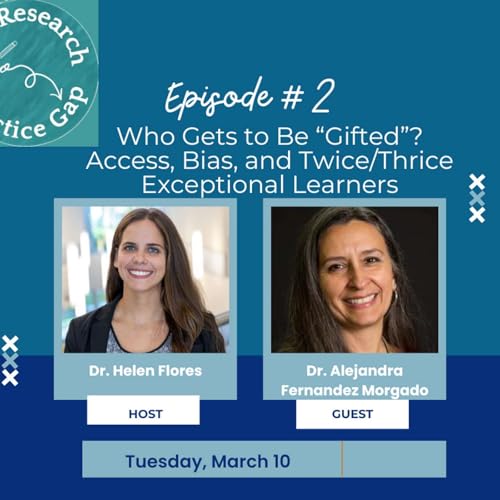
  • Who Gets to Be “Gifted”? Access, Bias, and Twice/Thrice Exceptional Learners
    2026/03/10

    In this episode, Dr. Alejandra A. Fernandez-Morgado shares research-based insights on special education, gifted education, and creating more equitable opportunities for diverse learners.

    Join our newsletter community for practical insights, implementation tips, and resources!

    Find all of Dr. Alejandra Fernandez Morgado’s work here

    Book and quote mentioned in the podcast:

    Quote by Paola Ramos: “Storytelling has always been a form of resistance for generations of Latinos. Some have used it to resist assimilation; others to resist change and preserve the past.”

    Defectors by Paola Ramos

    Resources for Teachers

    • Supporting translanguaging in your classroom
    • School-Wide Enrichment Model
    • The Fairchild Challenge
    • Testimonio
    • More Testimonio
    • Cultural sustaining/relevant/responsive practices
    • Reimagining homework
    • Equity in School–Parent Partnerships: Cultivating Community and Family Trust in Culturally Diverse Classrooms
    • Including student voice in educational decisions

    Research & Background

    • FLDOE Plan B for Gifted
    • Bushi, J., Aliaj, A., & Kristo, E. (2024). Homework and Academic Success: A Critical Appraisal of Research and Practices. Journal of Education and Human Development, 13(2), 57-69.
    • Chávez-Moreno, L. C. (2024). Examining race in LatCrit: A systematic review of Latinx critical race theory in education. Review of Educational Research, 94(4), 501-538.
    • DeNicolo, C. P., González, M., Morales, S., & Romaní, L. (2015). Teaching Through Testimonio: Accessing Community Cultural Wealth in School. Journal of Latinos and Education, 14(4), 228–243. https://doi.org/10.1080/15348431.2014.1000541
    • Floyd, E. F. (2024). Supporting thrice exceptional gifted students. Teaching for High Potential, 4-5.
    • Haller-Gryc, I. (2022). When Teachers Are the Gatekeepers of Gifted and Talented Programs: Potential Factors for English Learners' Underrepresentation and Possible Solutions. Journal of English Learner Education. (14)1.
    • Novak, A. M. (2022). Not white saviors, but critical scholars: The need for gifted critical race theory. In Creating equitable services for the gifted: Protocols for identification, implementation, and evaluation (pp. 246-262). IGI Global Scientific Publishing.

    Artwork and logo by The Interior Gaze

    Send us Fan Mail

    続きを読む 一部表示
    33 分