『The Silk Ledger』のカバーアート

The Silk Ledger

The Silk Ledger

著者: The Silk Ledger
無料で聴く

History, audited. History is not a list of dates. It is a ledger of debts. It is a mirror. Empires rise. Empires fall. The numbers don't lie. The Silk Ledger investigates the forces that built and broke empires and dynasties — and the global trades, wars, and currency shocks that pulled them in. Smuggling syndicates that owned fleets. Embezzlers who stole more than the treasury. Pirates who taxed the Pacific. Currency experiments that ended in hyperinflation. We don't teach history. We audit it. See the receipts — full visual audit on thesilkledger.comThe Silk Ledger
エピソード
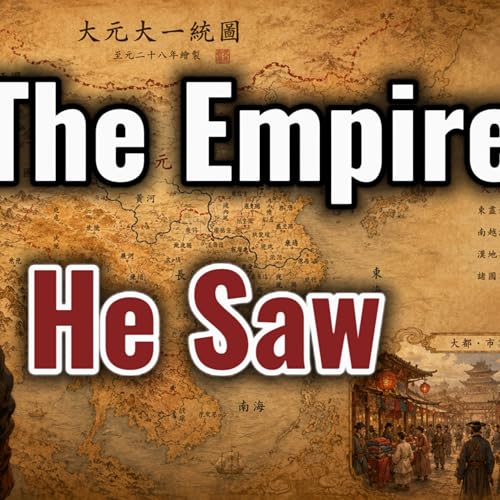
  • What Marco Polo Saw Bankrupted Kublai Khan's Empire
    2026/05/26

    Marco Polo walked into Peking in 1275 and saw something Europe wouldn't believe for 700 years. He went home a liar.

    Marco Polo walked into Kublai Khan's capital in 1275 and saw the first paper money in history. Mulberry bark, soaked and pressed, stamped with the Khan's red seal, declared the only money allowed across an empire stretching from the Pacific to the Volga. Refusal carried the death penalty. Polo recorded every detail in *Il Milione* and was called a liar for the next seven centuries. He was right. By the 1350s, late-Yuan emperors had printed too many notes to fund wars and palaces. One sack of rice that cost a single note under Kublai needed one hundred and fifty notes fifty years after his death. The empire fell in 1368. The paper trick didn't. Eighty years later, salt smugglers who had defied the monopoly that propped up the paper money founded the Ming dynasty — and copied the same trick. What Marco Polo saw in Kublai's capital is what every wallet on earth now carries. Europe took seven hundred years to believe him.

    続きを読む 一部表示
    9 分
  • Marco Polo and the Wood That Bankrupted Kublai Khan's Empire
    2026/05/24

    Marco Polo walked into Peking in 1275 and saw something Europe wouldn't believe for 700 years. He went home a liar.

    Marco Polo walked into Kublai Khan's capital in 1275 and saw the first paper money in history. Mulberry bark, soaked and pressed, stamped with the Khan's red seal, declared the only money allowed across an empire stretching from the Pacific to the Volga. Refusal carried the death penalty. Polo recorded every detail in *Il Milione* and was called a liar for the next seven centuries. He was right. By the 1350s, late-Yuan emperors had printed too many notes to fund wars and palaces. One sack of rice that cost a single note under Kublai needed one hundred and fifty notes fifty years after his death. The empire fell in 1368. The paper trick didn't. Eighty years later, salt smugglers who had defied the monopoly that propped up the paper money founded the Ming dynasty — and copied the same trick. What Marco Polo saw in Kublai's capital is what every wallet on earth now carries. Europe took seven hundred years to believe him.

    続きを読む 一部表示
    9 分
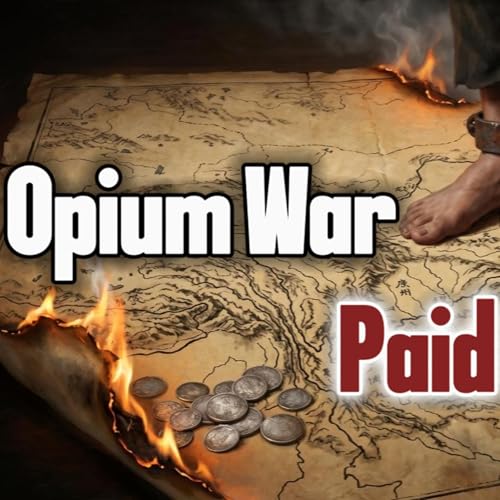
  • How the Opium War Bankrupted the Richest Man on Earth
    2026/04/24

    In 1834, one Chinese merchant was worth more than the entire United States government. Nine years later, he was dead — and his silver was building America.

    Howqua — Wu Bingjian — was the richest man on earth in the 1830s. This Chinese merchant ran the Cohong, the imperial guild that monopolized foreign trade through Canton (Guangzhou) for a century. His personal fortune of $26 million in silver was more than double the annual outlays of the United States federal government. Then the First Opium War brought down the system that made him. This episode of The Silk Ledger audits how Howqua's fortune was built, how the Treaty of Nanking abolished the Cohong in 1842, and how Howqua had already moved his capital offshore to Boston before the collapse came. The story covers the Canton System, the opium trade that passed through Howqua's ledgers, his arrest by imperial commissioner Lin Zexu in 1839, the ransom of Canton in 1841, and the silver Howqua entrusted to a young Boston merchant named John Murray Forbes — silver that outlived him by fifty years, financed American railroads and mines, and built the fortunes of the Forbes, Perkins, and Roosevelt dynasties. A 19th century China history explainer from a forensic financial angle.

    続きを読む 一部表示
    10 分
adbl_web_anon_alc_button_suppression_c
まだレビューはありません